
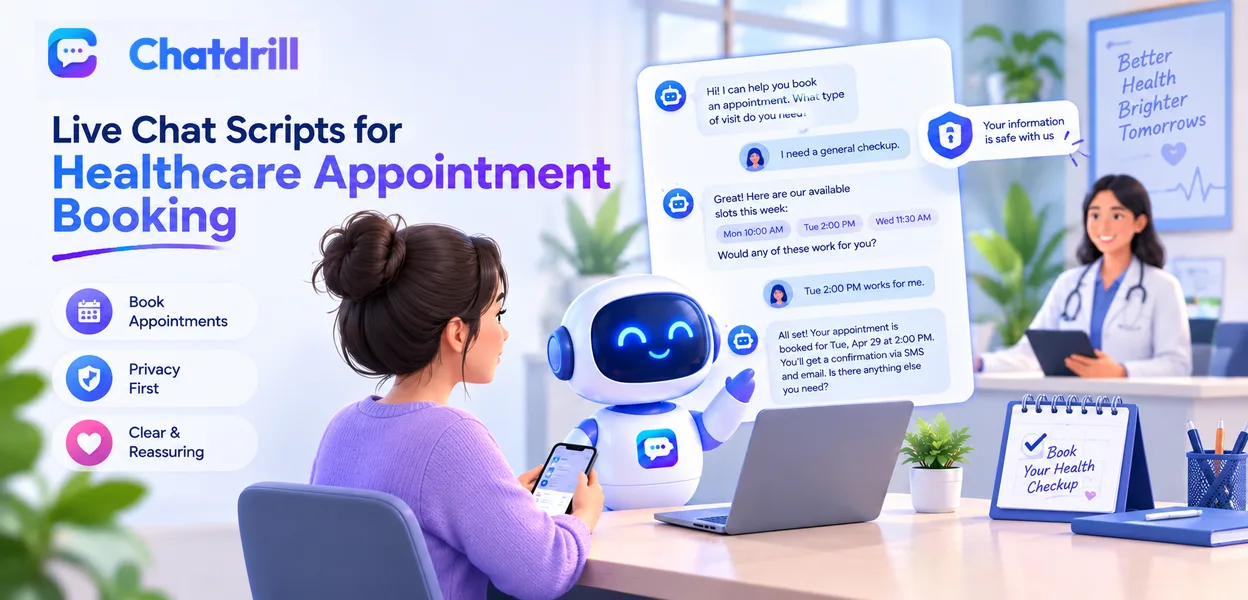
Healthcare appointment booking through chat requires a genuinely careful balance, efficiently helping a patient schedule what they need while maintaining the clarity, reassurance, and privacy sensitivity healthcare interactions specifically demand.
Quick answer: Effective healthcare appointment booking chat scripts prioritize clarity, reassurance, and privacy-conscious language, confirming exactly what the patient needs and offering available times directly, while carefully avoiding any language that could be mistaken for medical advice or diagnosis.
Unlike many other chat contexts, healthcare scripts must consistently avoid any language that could be misread as medical advice, staying strictly within scheduling and logistical territory regardless of what a patient describes.
This guide provides adaptable scripts for common healthcare booking scenarios, along with the specific reasoning behind their careful, deliberate language choices.
This guide covers appointment scheduling scripts, handling symptom mentions appropriately, common mistakes, adapting to your specific practice, and how ChatDrill supports healthcare-appropriate chat.
Appointment Scheduling Scripts
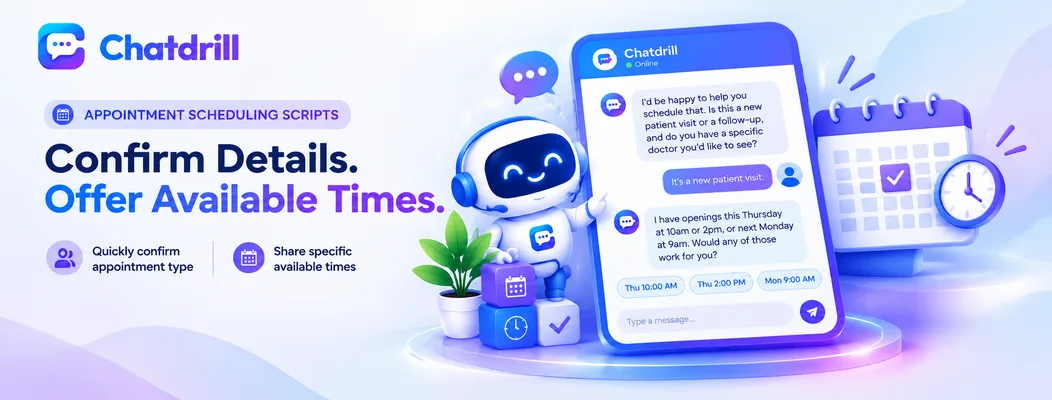
Scheduling scripts should confirm the type of appointment needed and offer specific, available times directly, keeping the interaction efficient and clear.
The initial scheduling request
"I'd be happy to help you schedule that. Is this a new patient visit or a follow-up, and do you have a specific doctor you'd like to see?" quickly gathers the essential details needed to offer genuinely relevant appointment options.
This direct, clear structure respects that most patients reaching out to schedule already know generally what they need, avoiding unnecessary back-and-forth before offering concrete options.
Offering specific available times
"I have openings this Thursday at 10am or 2pm, or next Monday at 9am. Would any of those work for you?" provides concrete, actionable options rather than an open-ended "when would you like to come in?" that requires more back-and-forth.
This concrete-options approach speeds up the scheduling process meaningfully compared to a more open-ended question requiring the patient to propose a time that then needs checking against availability.
Handling Symptom Mentions Appropriately
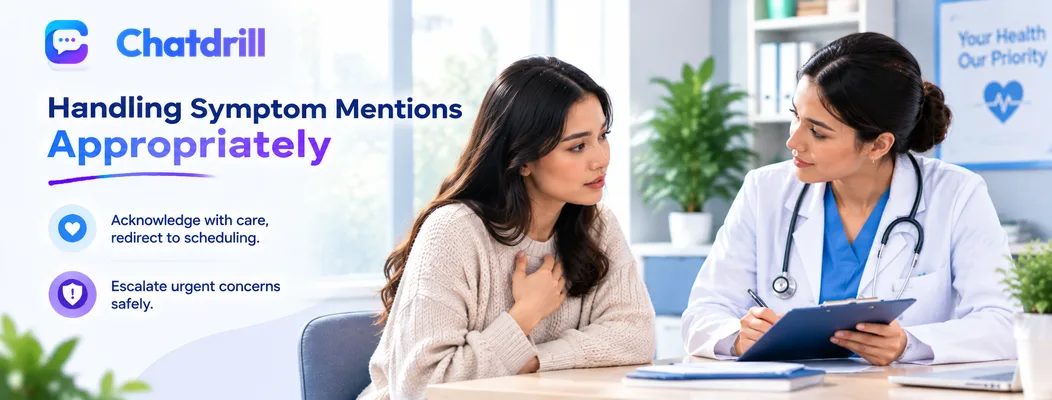
When a patient mentions symptoms while scheduling, scripts should acknowledge with genuine care while redirecting firmly toward scheduling, never toward medical guidance.
Acknowledging without offering medical guidance
"I'm sorry you're dealing with that, let's get you scheduled with the doctor as soon as possible so they can take a proper look." acknowledges the patient's genuine discomfort with warmth while firmly staying within scheduling territory rather than commenting on the symptom itself.
This careful language avoids any implication of medical assessment, which chat staff, human or AI, are generally not qualified or authorized to provide, protecting both the patient and the practice.
Escalating a potentially urgent situation appropriately
"That sounds like it may need prompt attention, if this feels urgent, please call our office directly at [number] or, if this is an emergency, please call emergency services." provides a clear, safe escalation path for anything sounding potentially serious.
This kind of clear redirect to phone or emergency services for anything genuinely urgent-sounding reflects appropriate caution given chat's limitations for handling a potential medical emergency.
Common Healthcare Chat Mistakes
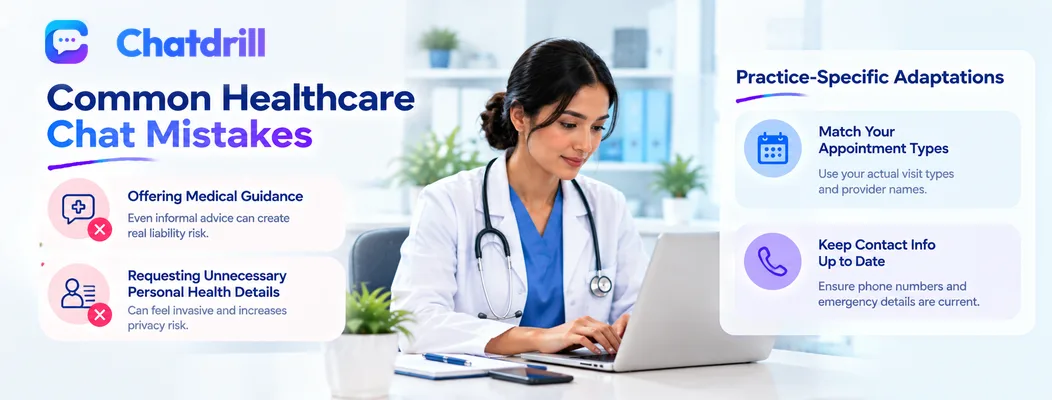
Offering any form of medical guidance, however small, and requesting more personal health information than genuinely necessary for scheduling are the most common healthcare chat mistakes.
Offering any medical guidance, even informally
A response like "that sounds like it could just be a common cold" or any casual medical interpretation, however well-intentioned, oversteps what chat staff are qualified or authorized to provide and creates genuine liability risk.
Staying strictly within scheduling and logistical language, redirecting any medical question to the actual appointment or a phone call, protects against this specific, serious risk.
Requesting unnecessary personal health details
Asking for more detailed health information than genuinely needed to schedule the appropriate type of appointment creates unnecessary privacy exposure and can feel invasive to a patient already possibly anxious about a health concern.
Gathering only what's genuinely needed, the general type of visit and preferred timing, respects patient privacy while still enabling efficient scheduling.
Adapting These Scripts to Your Specific Practice
Customizing the specific appointment types, provider names, and escalation contact details in these scripts produces genuinely accurate, practice-specific conversations.
Reflecting your actual appointment types and providers
Adjusting the scripts to reference your practice's actual appointment categories and specific provider names ensures the scheduling conversation feels genuinely accurate rather than generic.
This specificity also reduces the chance of scheduling confusion that a more generic, one-size-fits-all script might create.
Keeping escalation contact information current
Ensuring the phone number and any emergency guidance referenced in the escalation script stays current and accurate is especially important in healthcare, where an outdated contact detail could genuinely delay care.
Building a regular review habit specifically for this escalation information protects against this particular, higher-stakes risk compared to a general contact detail elsewhere in your content.