
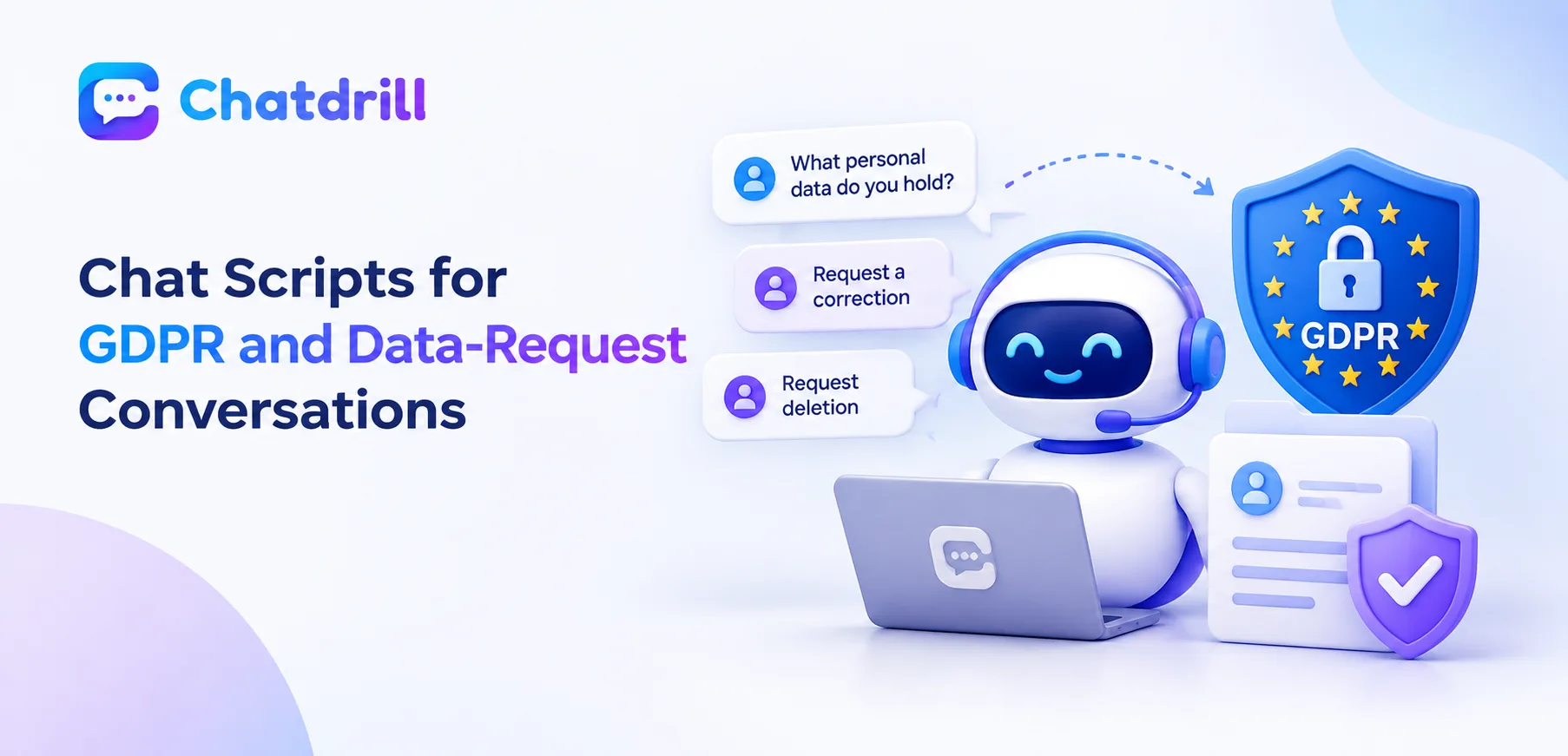
A visitor invoking a GDPR data right through chat, asking what personal data you hold, requesting a correction, or asking for deletion, requires a genuinely careful, consistent response, since GDPR gives individuals specific, legally enforceable rights over their personal data.
Quick answer: Effective GDPR data-request chat scripts acknowledge the request professionally and immediately route it to your designated data protection process, since GDPR gives individuals specific rights, including access, correction, and erasure of their personal data, and getting the specific handling wrong carries real regulatory risk this guide's scripts are designed to help avoid.
Handling this well in chat means acknowledging the request professionally and routing it through your proper internal process immediately, rather than attempting to resolve it entirely within the chat conversation itself.
This guide provides adaptable scripts for the most common GDPR-related chat scenarios, along with the reasoning behind their careful, process-focused structure. It is general, informational guidance, not legal advice, and your specific obligations should be confirmed with your own data protection officer or legal counsel.
This guide covers acknowledgment and routing scripts, handling specific request types, common mistakes, and how ChatDrill supports GDPR-conscious chat handling.
Acknowledgment and Routing Scripts
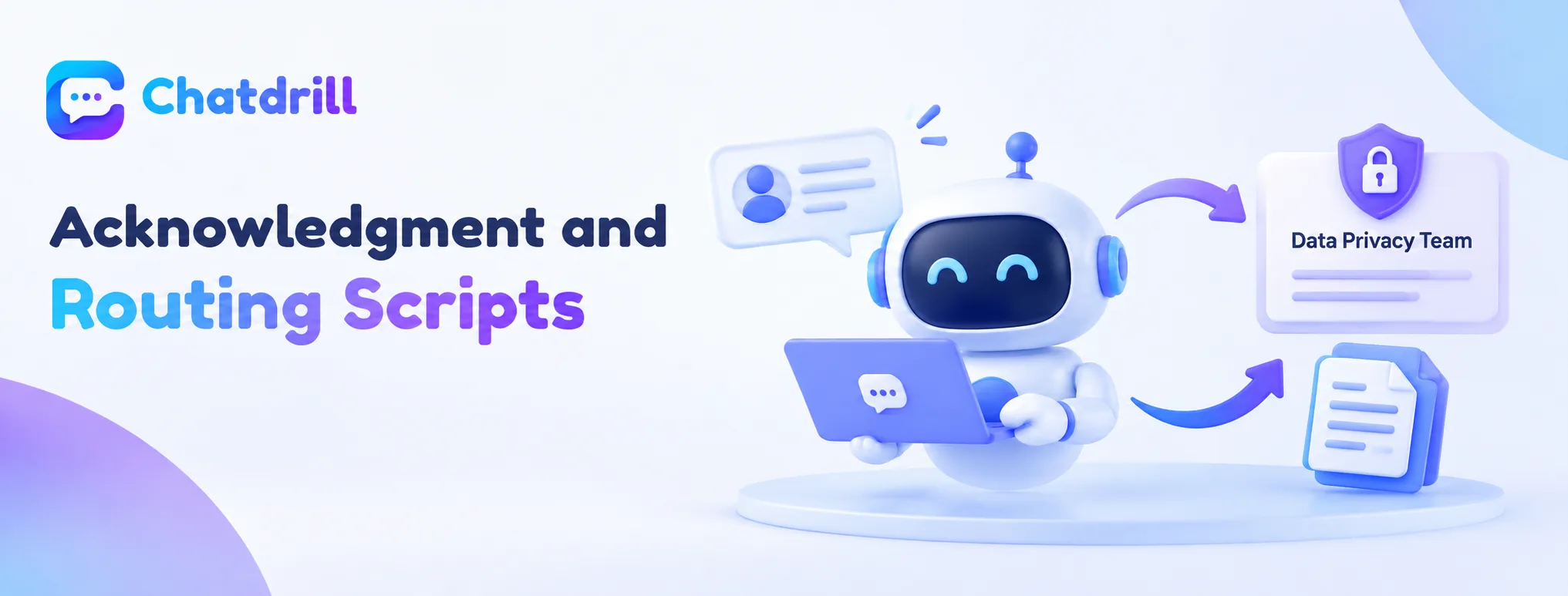
The first response to a GDPR-related request should acknowledge it professionally and route it into your proper internal data-request process immediately.
The initial acknowledgment
"Thanks for reaching out, I want to make sure this gets handled properly. I'm forwarding this to our data privacy team, who will follow up with you directly within the required timeframe." acknowledges the request respectfully while immediately routing it appropriately.
This response avoids attempting to resolve the actual data request within chat itself, since doing so properly typically requires identity verification and system access beyond what a chat conversation alone can safely provide.
Confirming the request type
"Just to confirm, are you asking to see what data we have, correct something, or have your data deleted?"
clarifies the specific right being invoked, since GDPR covers several distinct rights, access, rectification, erasure, each with a somewhat different internal process.
This clarification ensures the request routes to the correct internal process from the outset, rather than requiring a second round of clarification later.
Handling Specific Request Types
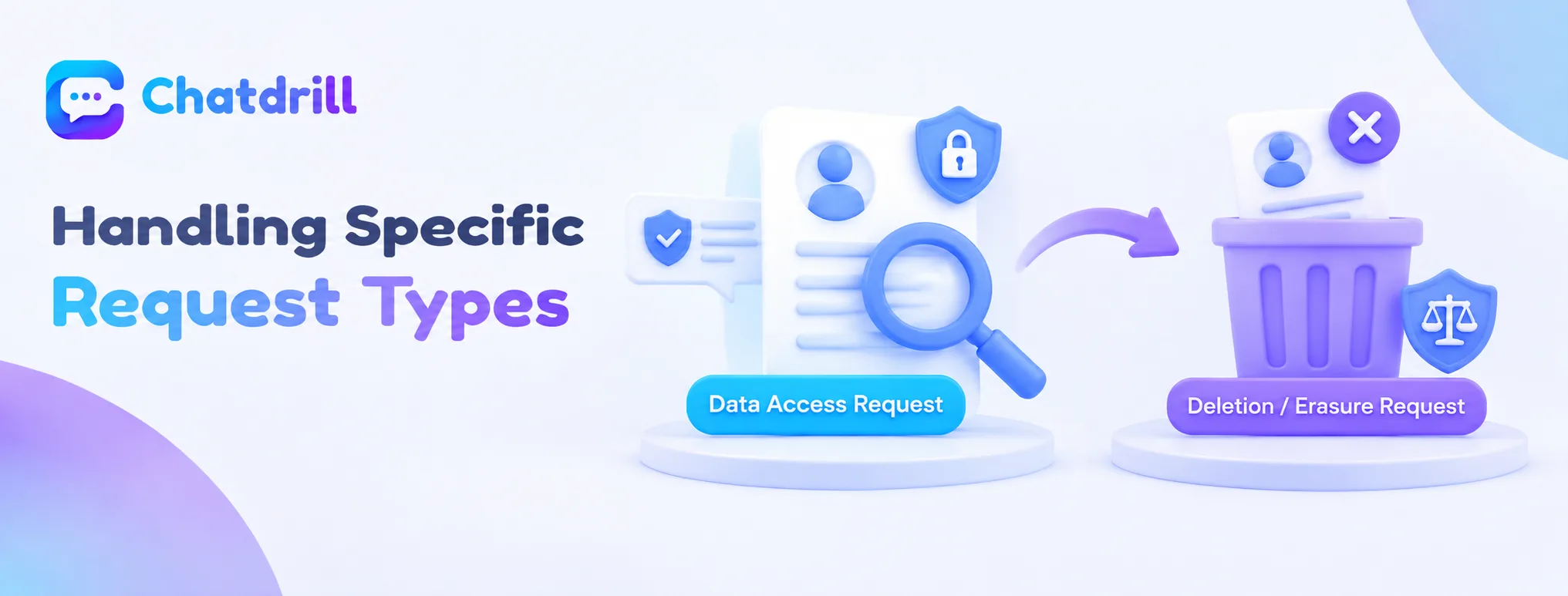
Data access requests and deletion (erasure) requests represent the two most common scenarios, each deserving a consistent, prepared response.
Data access requests
"I've logged your request to see what personal data we hold about you, our privacy team will verify your identity and provide this information within the required legal timeframe." sets a clear, honest expectation for what happens next.
Mentioning identity verification here is important, since confirming a request genuinely comes from the actual data subject protects against a request being fulfilled for the wrong person.
Deletion and erasure requests
"I've forwarded your deletion request to our privacy team. They'll confirm what can be deleted and let you know if any information needs to be retained for a legal or regulatory reason." is honest that erasure isn't always absolute, since certain records may need retention for legitimate legal reasons.
This honest framing avoids overpromising complete deletion in every case, protecting against a commitment the business may not always be able to fully honor.
Common Mistakes in GDPR-Related Chat
Attempting to fulfill a data request directly within chat, and providing an inconsistent or vague response, are the most common, risk-increasing mistakes.
Attempting to fulfill the request directly in chat
Trying to look up and share a customer's personal data directly within the chat conversation itself, without proper identity verification, risks a serious data protection failure if the request didn't genuinely come from the actual account holder.
Routing every genuine data request through your proper, verified internal process, as this guide's scripts recommend, avoids this specific, serious risk.
Inconsistent or vague responses
A vague, uncertain-sounding response to a GDPR request, varying depending on which staff member or AI happens to handle it, creates genuine regulatory risk and can undermine a data subject's confidence that their rights are being taken seriously.
Using consistent, prepared language, as this guide's scripts provide, ensures every genuine request receives the same appropriate, professional handling regardless of who or what handles the initial conversation.