
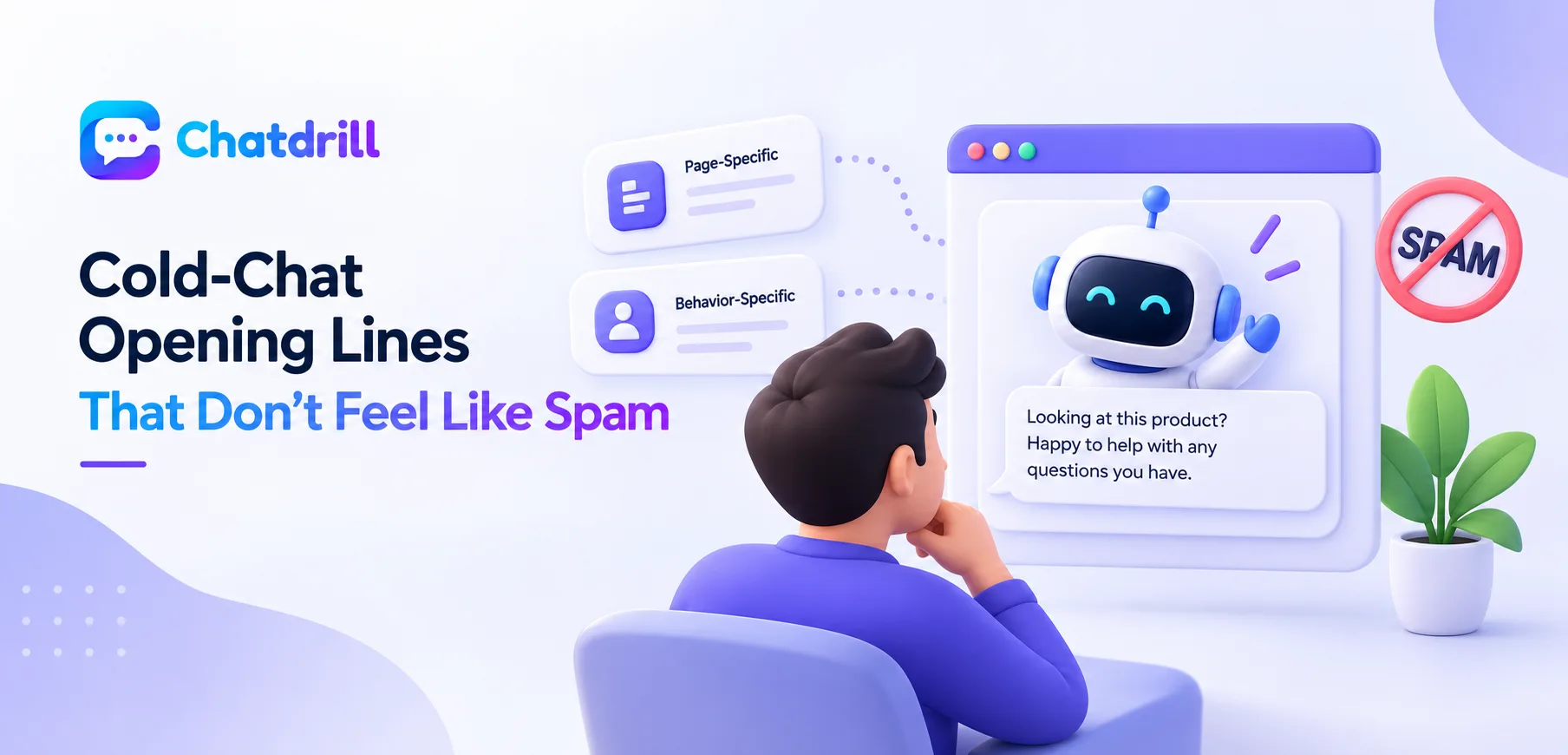
A proactive chat message, one initiated by the business rather than the visitor, walks a genuinely fine line between helpful and intrusive, and the specific opening line used often determines which side of that line a visitor experiences.
Quick answer: Effective cold-chat opening lines reference something genuinely specific about the visitor's context, like the page they're viewing or a recent action, rather than a generic greeting, since specificity is what separates a helpful, well-timed proactive message from an interruption that feels like spam.
The core principle separating an effective proactive opening from one that feels like spam is specificity, referencing something genuinely relevant to the visitor's actual context rather than a generic, could-apply-to-anyone greeting.
This guide provides adaptable opening lines for common proactive chat scenarios, along with the reasoning behind why specificity matters so much in this particular moment.
This guide covers page-specific and behavior-specific openings, timing considerations, common mistakes, adapting to your own site, and how ChatDrill supports non-spammy proactive chat.
Page-Specific and Behavior-Specific Openings
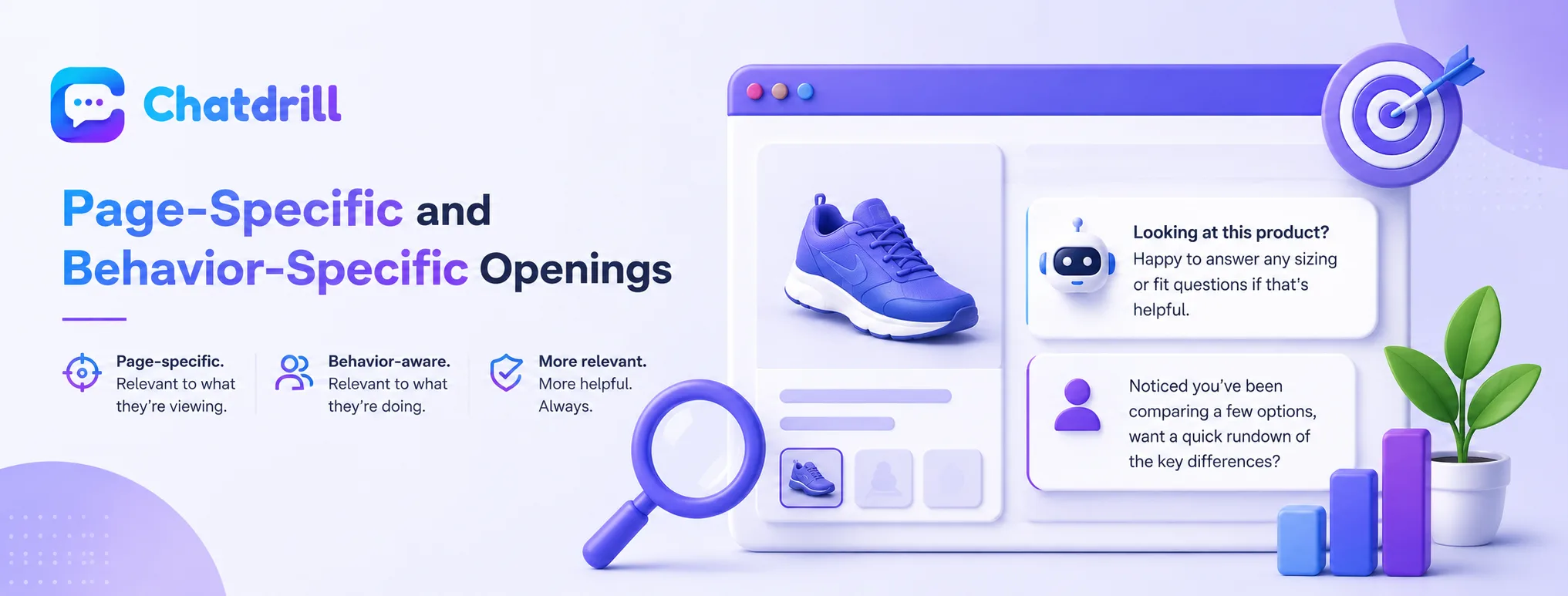
Referencing the specific page a visitor is viewing or a specific action they've taken transforms a generic greeting into a genuinely relevant, helpful-feeling message.
Page-specific opening examples
"Looking at [specific product]? Happy to answer any sizing or fit questions if that's helpful."
references the exact page the visitor is on, immediately signaling genuine relevance rather than a generic, could-apply-anywhere message.
This page-specificity is precisely what distinguishes a genuinely useful proactive message from one that feels like an automated, impersonal interruption regardless of context.
Behavior-specific opening examples
"Noticed you've been comparing a few options, want a quick rundown of the key differences?" references a specific, genuine behavior pattern, comparing items, rather than a generic greeting unrelated to what the visitor is actually doing.
This behavior-awareness signals genuine attentiveness to the visitor's actual situation, considerably more compelling than a scripted greeting that would apply identically regardless of their specific activity.
Timing Considerations for Proactive Openings
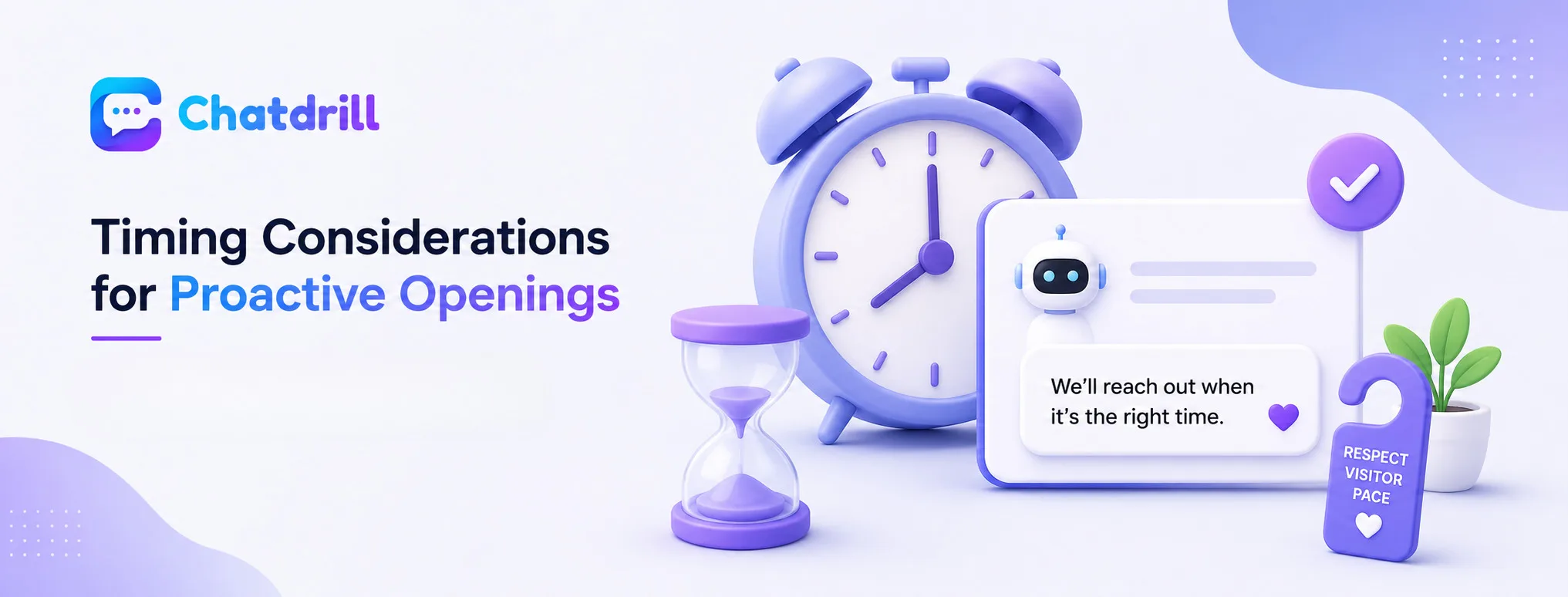
Even a genuinely specific opening line can feel intrusive if triggered too quickly, before a visitor has had a chance to engage with the page on their own terms.
Waiting for genuine engagement signals first
Triggering a proactive message only after a visitor has spent a meaningful amount of time on a page, or scrolled through a meaningful portion of it, respects that an immediate pop-up feels intrusive regardless of how well-crafted the message itself is.
This timing consideration works alongside message specificity, since even a genuinely relevant message delivered at the wrong moment can still feel like an unwelcome interruption.
Avoiding repeated or excessive triggering
Should a proactive message repeat if the visitor doesn't respond?
trigger again immediately on a subsequent page visit, respects that a visitor who didn't engage the first time likely genuinely wants space, not persistence.
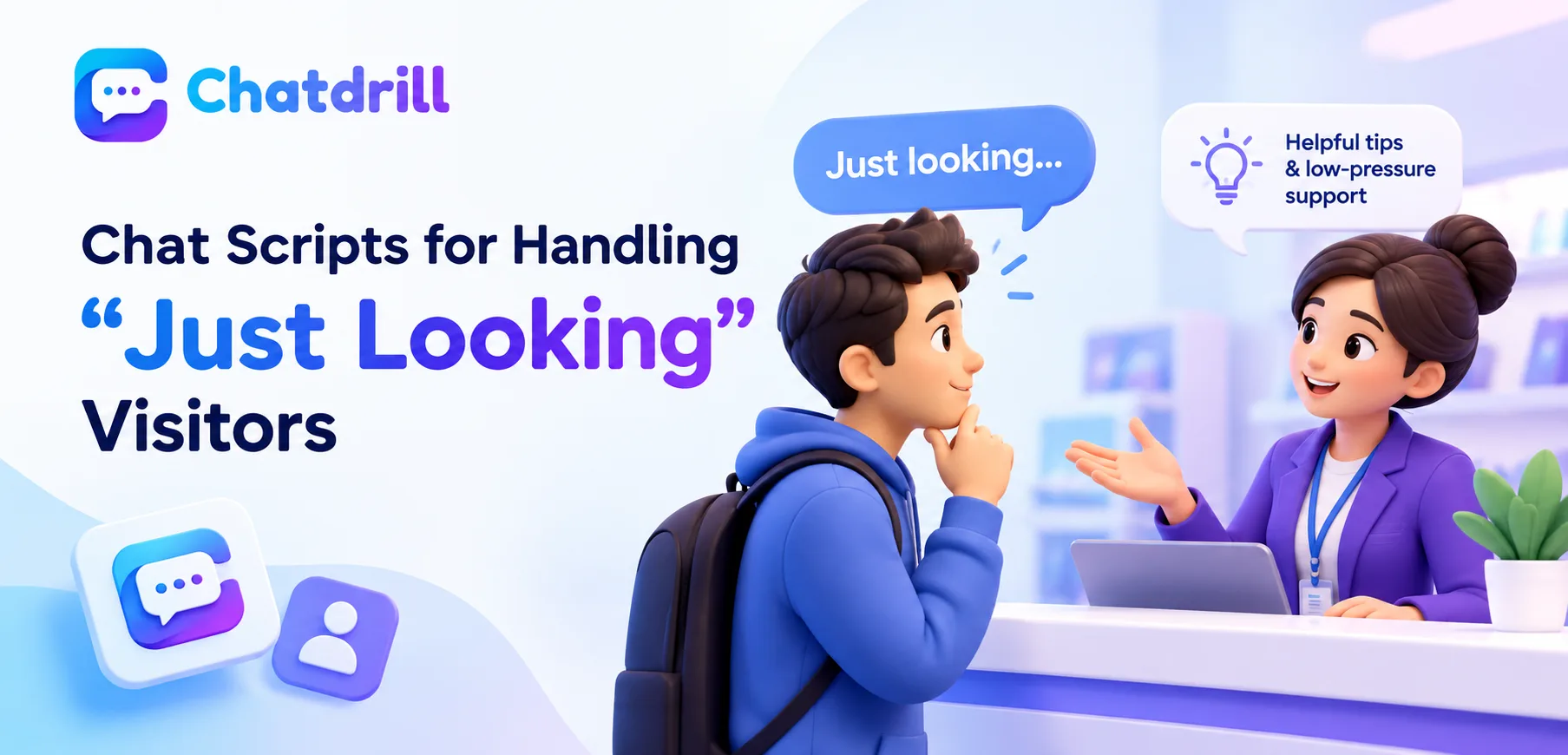
This restraint reflects the same respect-for-visitor-pace principle covered more broadly in handling "just looking" visitors, applied specifically to the proactive-triggering context.
Common Cold-Chat Opening Mistakes
The overly aggressive, sales-focused opening
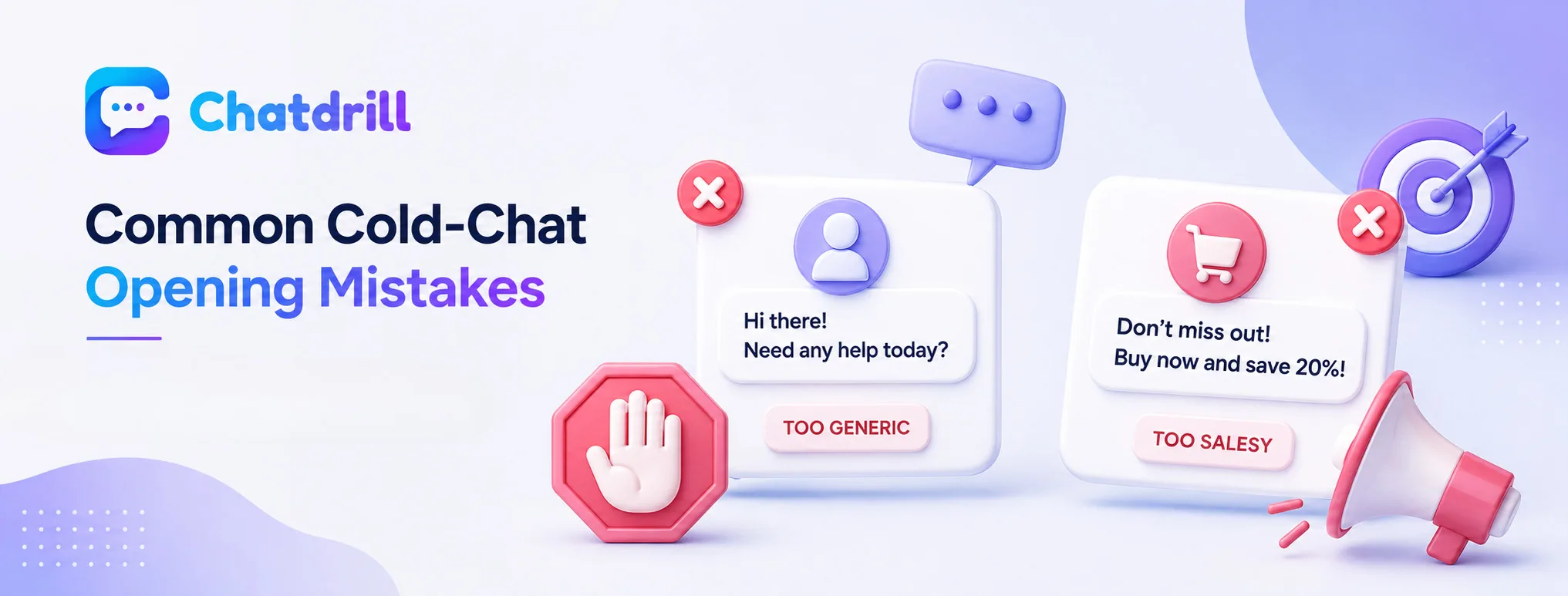
openings are the most common mistakes that make a proactive message feel like spam.
The generic, context-free greeting
"Hi there! Need any help today?" with no reference to the visitor's specific page or behavior feels indistinguishable from an automated, generic pop-up, precisely the spam-like impression this guide's specificity principle is designed to avoid.
This kind of generic opening fails to demonstrate any genuine attentiveness to the visitor's actual situation, undermining the core value proposition a proactive message is meant to offer.
The overly aggressive, sales-focused opening "Don't miss out! Buy now and save 20%!" as an opening line feels like an advertisement rather than genuine, helpful outreach, immediately triggering the same defensive reaction most people have toward obvious spam.
Leading with genuine helpfulness, as this guide's page-specific and behavior-specific scripts demonstrate, rather than an immediate sales push, produces a considerably better first impression.
Adapting These Openings to Your Own Site
Building a library of page-specific and behavior-specific openings tailored to your own site's actual pages and common visitor patterns produces genuinely relevant messaging at scale.
Mapping your key pages to relevant openings
Creating a specific proactive opening for each of your genuinely high-traffic or high-consideration pages ensures visitors on these important pages receive the specificity this guide identifies as essential, rather than a generic fallback message.
This mapping investment pays off disproportionately on pages where proactive engagement genuinely matters most for conversion or support outcomes.
Identifying your own meaningful behavior signals
Reviewing which visitor behaviors on your specific site genuinely correlate with a helpful proactive opportunity, comparing multiple products, returning to a page repeatedly, informs which behavior-specific openings are worth building.
This site-specific behavior analysis ensures your behavior-triggered openings reflect genuinely meaningful patterns rather than an arbitrary, generic trigger.