
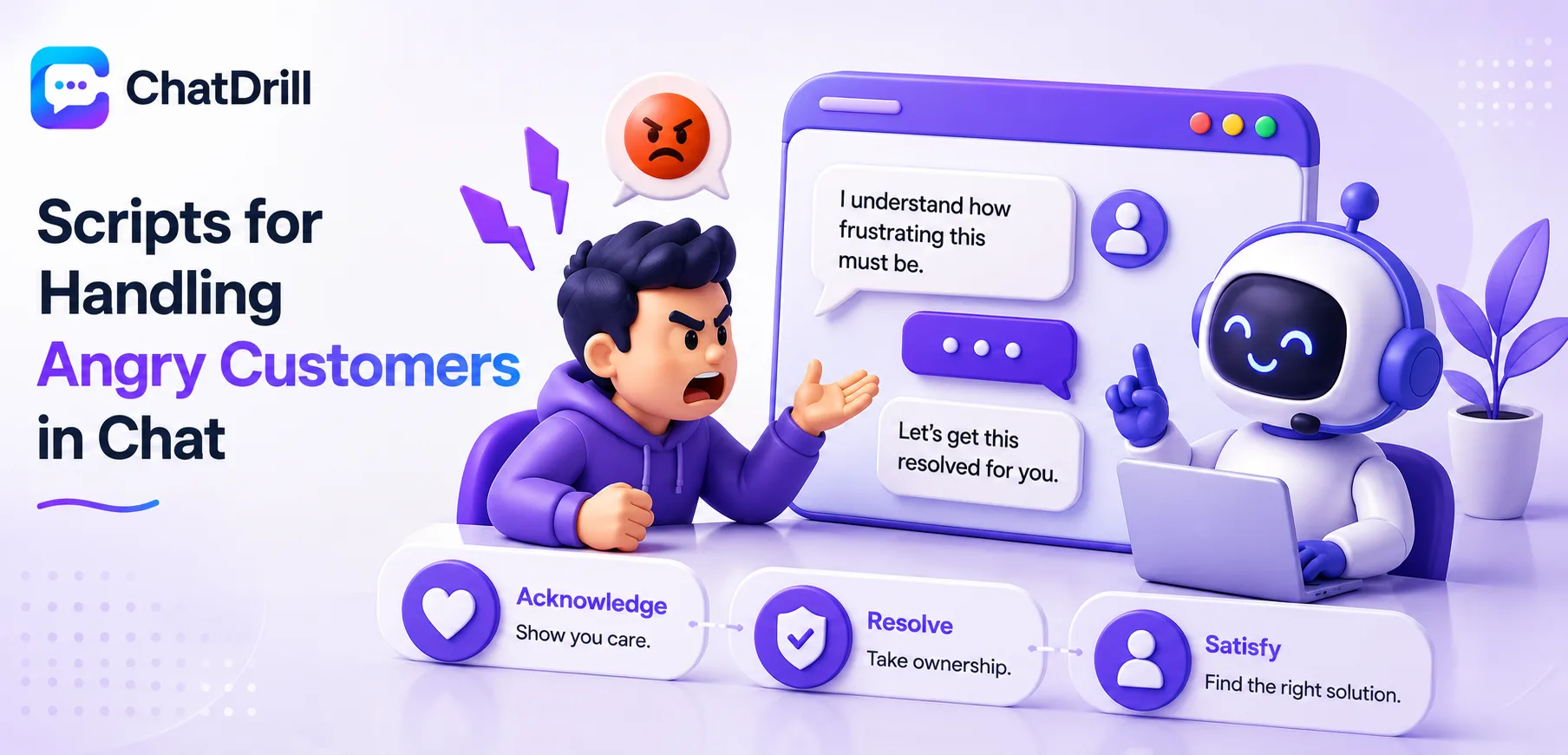
An angry customer in chat needs to feel heard before they'll be receptive to any actual resolution, and a script that jumps straight to policy or solutions without first acknowledging their frustration tends to escalate the situation rather than defuse it.
The scripts here are organized around the natural arc of de-escalating a frustrated conversation, acknowledging the emotion, taking ownership where appropriate, and moving toward a genuine resolution.
Every script should be delivered with genuine tone, not read mechanically, since an angry customer can often tell the difference between authentic acknowledgment and a hollow, scripted response.
This guide provides de-escalation scripts organized by conversation stage, along with guidance on tone and when to escalate to a human.
Quick answer: Handling an angry customer in chat works best by acknowledging their frustration genuinely before offering a solution, avoiding defensive language, and using calm, specific scripts that show you're taking the issue seriously rather than reading from a generic script.
Opening Acknowledgment Scripts
The opening response to an angry customer should acknowledge their frustration directly and specifically, before moving toward any solution, since skipping this step tends to escalate rather than defuse the situation.
Acknowledgment templates
"I can hear how frustrating this has been, and I want to help get this fixed for you."
"That's absolutely not the experience you should be having, and I'm sorry you're dealing with this."
"I understand why you're upset — let's work through this together right now."
Taking Ownership Scripts
Taking ownership means acknowledging the company's role in the issue without being defensive or making excuses, which builds trust that a genuine resolution is coming.
Ownership templates
"This is on us, and I want to make it right."
"You're right to be frustrated — we should have caught this sooner."
"I take full responsibility for getting this resolved for you today."
Moving Toward Resolution Scripts

Resolution scripts should be specific and actionable, giving the customer a clear sense of exactly what will happen next rather than a vague promise to "look into it."
Resolution templates
"Here's exactly what I'm going to do to fix this right now."
"I can offer you [specific resolution] — does that work for you?"
"Let me walk you through the steps I'm taking so you know exactly where things stand."
When and How to Escalate
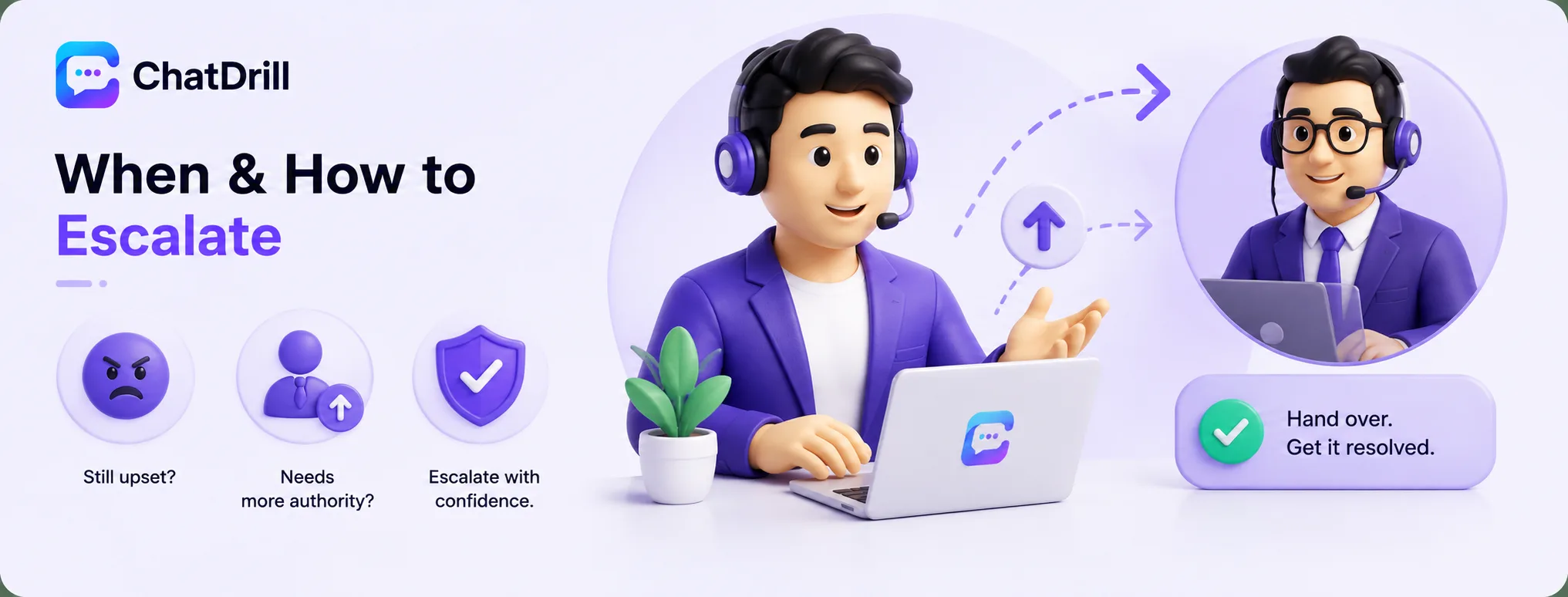
Escalating to a human or a supervisor should happen when a resolution is genuinely beyond what chat or AI can offer, communicated clearly so the customer doesn't feel dismissed.
Escalation scripts for angry customers
"I want to make sure you get the best possible resolution, so I'm bringing in someone with more authority to help right now."
"This deserves a more thorough look — let me connect you with our team lead directly."
Recognizing when escalation is needed
A customer who remains visibly upset despite genuine acknowledgment and a reasonable proposed resolution, or one whose issue genuinely requires authority beyond what's available, both signal a good moment to escalate.
Escalating promptly in these situations, rather than continuing to attempt resolution beyond your actual authority, respects both the customer's time and the genuine complexity of their issue.
Tone Guidance for Angry Customer Conversations
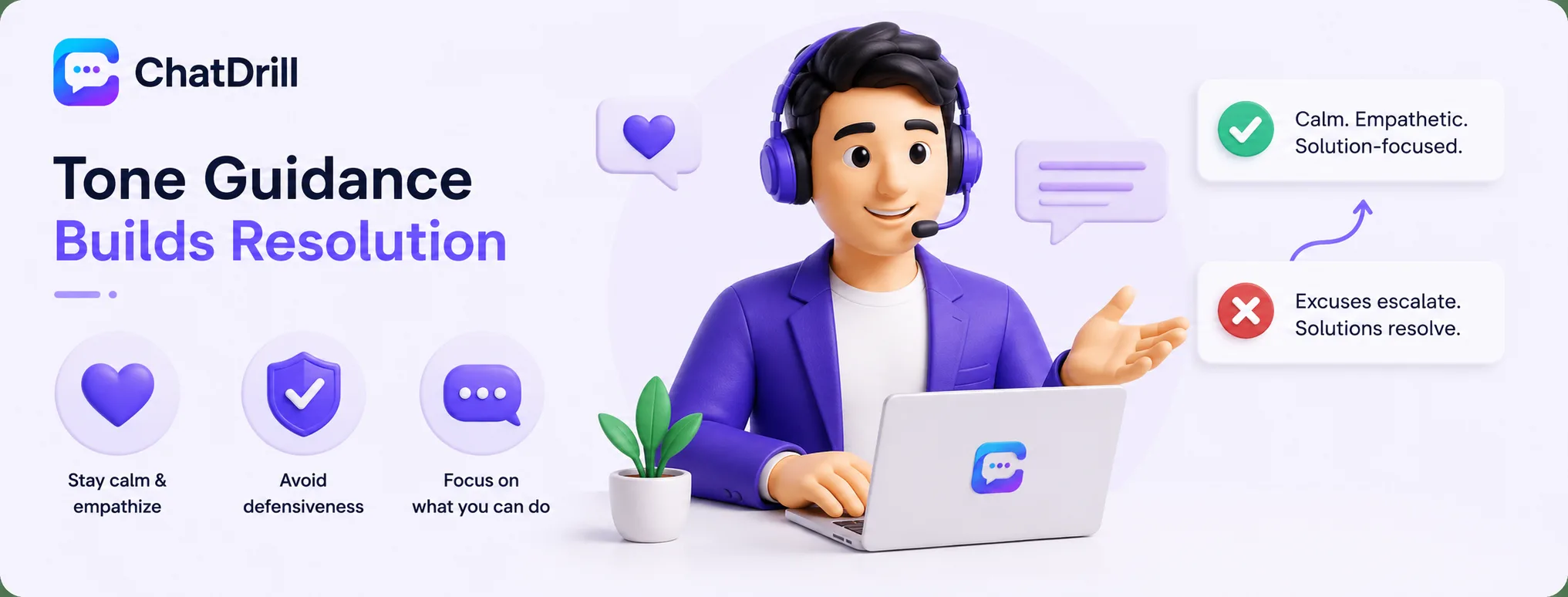
Maintaining a calm, genuinely empathetic tone throughout, avoiding defensive language, and never matching the customer's escalated emotional register keeps the conversation moving toward resolution rather than further conflict.
Staying calm and avoiding defensiveness
Responding to frustration with calm, measured language, rather than becoming defensive or matching an escalated tone, keeps the conversation from spiraling further.
This doesn't mean being passive or non-committal, it means staying professionally composed while still being genuinely responsive to the customer's actual concern.
Avoiding language that sounds like an excuse
Phrases like "that's just our policy" or "there's nothing I can do" tend to escalate frustration further, since they can read as dismissive rather than genuinely helpful.
Reframing toward what can be done, even when the underlying answer is similar, tends to land considerably better than a flatly negative response.
Common Mistakes When Handling Angry Customers
The most common mistakes are jumping straight to a solution without acknowledgment, sounding scripted rather than genuine, and delaying escalation when a conversation has clearly moved beyond what chat can resolve.
Skipping acknowledgment entirely
Moving directly to policy or a proposed fix, without first acknowledging the customer's frustration, tends to make them feel unheard even if the eventual resolution is reasonable.
Leading with genuine acknowledgment, every time, sets up a considerably more receptive conversation for whatever comes next.
Sounding scripted rather than genuine
Delivering a de-escalation phrase mechanically, without adapting it to the specific situation, can come across as hollow to a customer who's already frustrated and looking for real attention.
Adjusting scripts slightly to reference the customer's actual issue, rather than reciting a generic line, makes the acknowledgment feel authentic.
Delaying escalation too long
Continuing to attempt resolution well past the point where a supervisor or specialist is clearly needed can prolong a customer's frustration unnecessarily.
Recognizing the signals that call for escalation, and acting on them promptly, respects the customer's time as much as the acknowledgment itself does.