

A cart abandoned mid-checkout usually reflects a specific, addressable hesitation, not a lost cause, making the right chat script at the right moment genuinely capable of recovering a sale that would otherwise be gone.
Generic recovery messages, a simple "still interested?", tend to underperform scripts that address a likely specific reason for hesitation directly, since they don't actually resolve whatever caused the pause in the first place.
Timing matters as much as message content, a proactive trigger based on genuine cart-page behavior tends to catch a customer while their interest is still fresh, rather than after it's already faded.
This guide provides recovery scripts organized by likely hesitation, timing guidance, common mistakes, and how ChatDrill supports proactive cart-recovery triggers.
Quick answer: Effective abandoned-cart recovery chat scripts address the customer's likely specific hesitation, shipping cost, sizing uncertainty, price comparison, directly and helpfully rather than a generic 'still interested?' message, and work best triggered proactively based on real cart-page behavior rather than a fixed delay.
Why Targeted Scripts Outperform Generic Ones
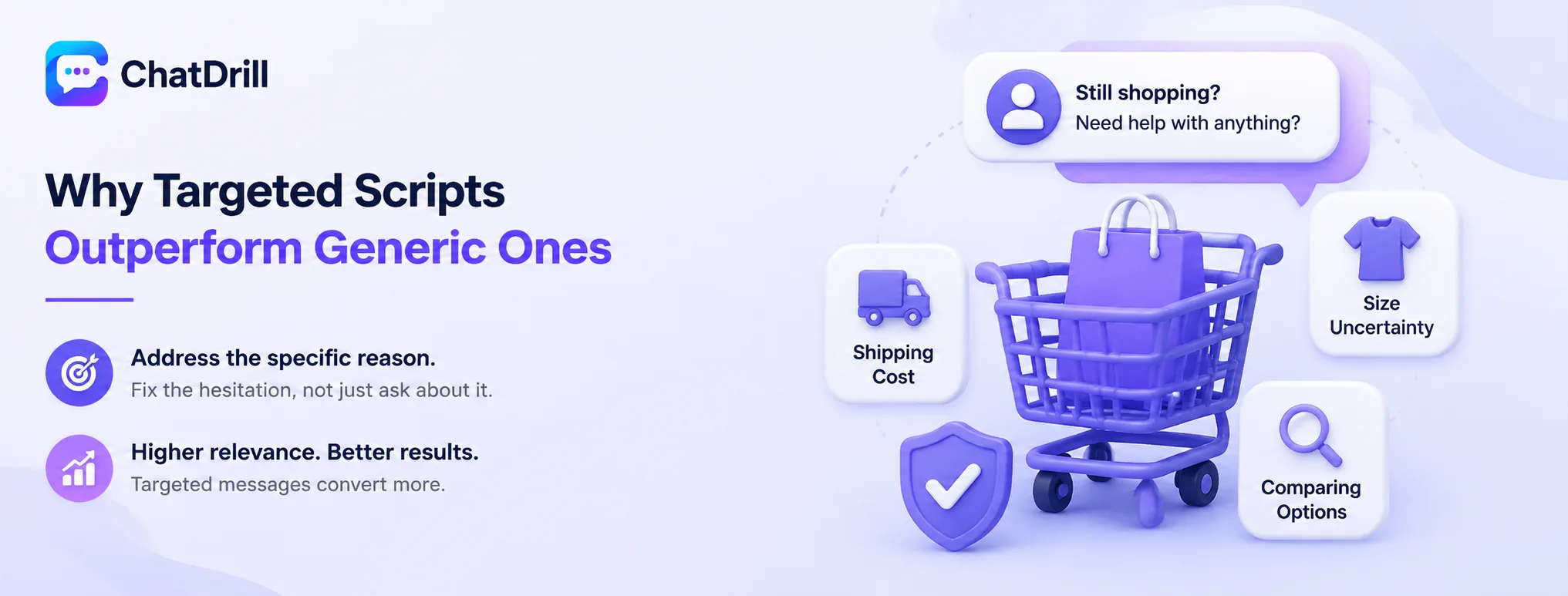
A cart abandonment usually has a specific, identifiable cause, and addressing that likely cause directly resolves the actual hesitation rather than restating generic interest.
The specificity advantage
A script addressing a likely, common hesitation, unexpected shipping cost, sizing uncertainty, directly resolves that concern rather than leaving the customer to re-discover and re-address it themselves.
This targeted approach tends to convert meaningfully better than a generic "did you forget something?" message that doesn't actually address why the cart was abandoned.
Common cart abandonment reasons worth addressing
Unexpected shipping or total cost, uncertainty about sizing or fit, and simple comparison-shopping hesitation represent some of the most common, addressable reasons behind a typical cart abandonment.
Scripts built around these specific, common reasons tend to resonate more directly than a one-size-fits-all recovery message.
Recovery Scripts by Likely Hesitation

Scripts addressing shipping cost concerns, sizing uncertainty, and general comparison hesitation each target a different, common reason behind cart abandonment.
Shipping cost concern scripts
"Noticed you didn't finish checking out — happy to clarify shipping costs or let you know about any current promotions!"
"Quick note: shipping is [cost/free threshold] — let me know if you have questions about your order total."
Sizing or fit uncertainty scripts
"Not sure about sizing? I can help you find the right fit based on what you're looking at."
"Happy to answer any fit questions before you complete your order — we also offer [easy returns/exchange policy] if needed."
General comparison hesitation scripts
"Still deciding? Happy to answer any last questions about [product] before you check out."
"Let me know if there's anything holding you back — I'm here to help you finish up whenever you're ready."
Timing the Recovery Trigger Well
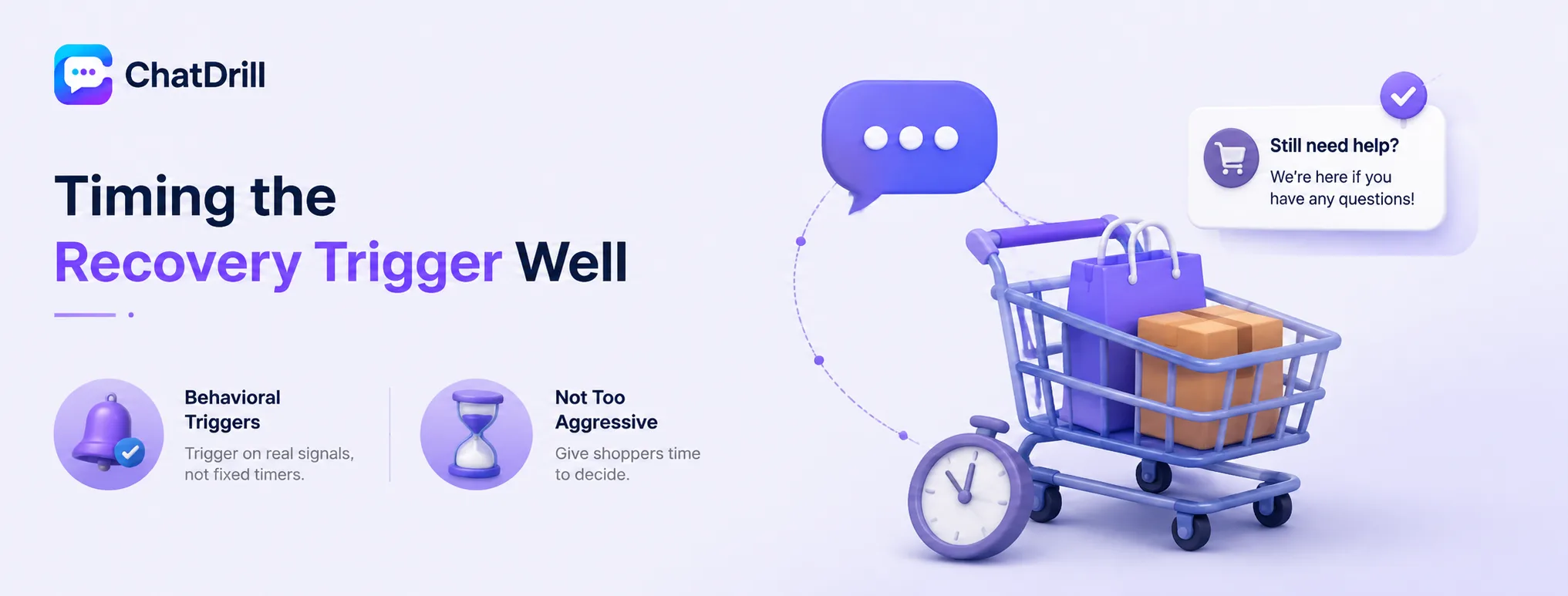
A trigger based on genuine cart-page behavior, meaningful time lingering or an attempted exit, tends to catch a customer while interest is still fresh better than a fixed, generic delay.
Behavioral triggers over fixed timers
Configuring the recovery message to fire based on real signals, extended time on the cart page, an exit-intent movement, targets the actual moment of hesitation rather than an arbitrary fixed delay.
This behavioral approach tends to feel more naturally timed to the customer than a generic trigger applied uniformly regardless of actual behavior.
Avoiding a trigger that's too aggressive
A recovery message firing the instant a cart page loads, before the customer has had any real chance to consider checkout, can feel presumptuous rather than helpful.
Allowing a reasonable amount of genuine consideration time before triggering respects the customer's own decision-making process.
Common Mistakes in Cart Recovery Chat
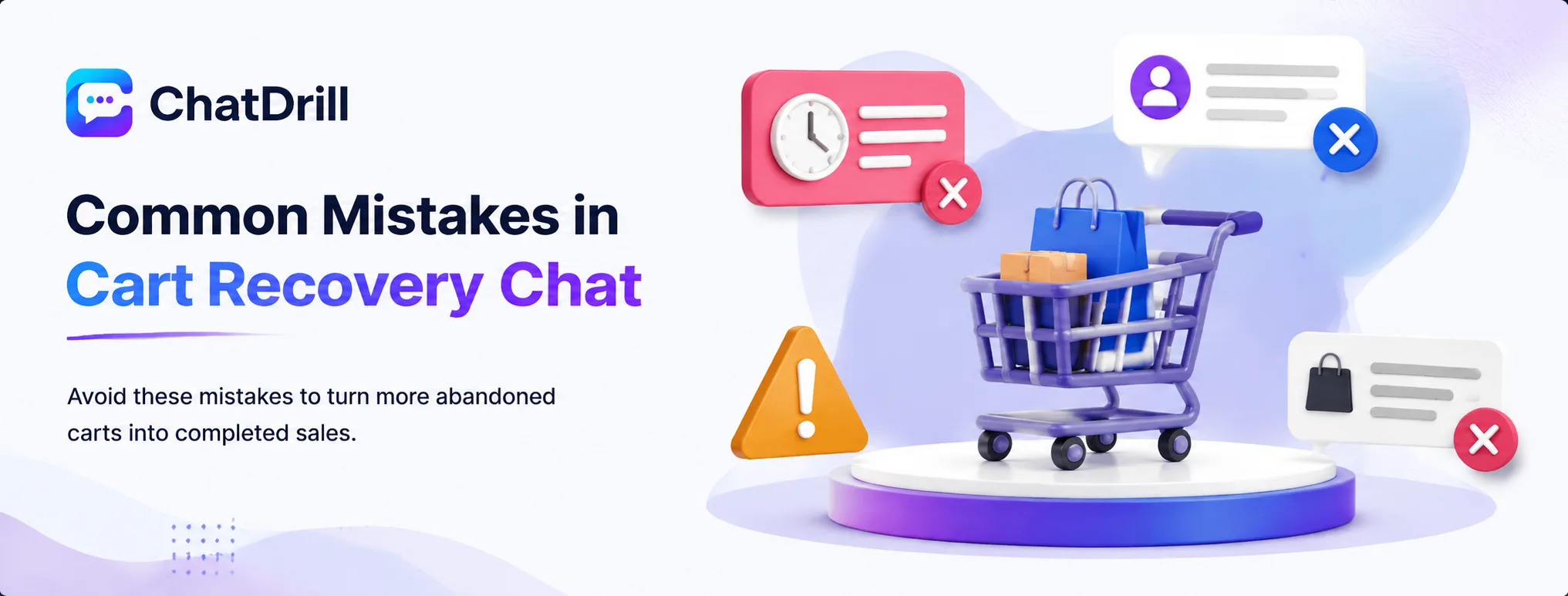
The most common mistakes are using a single generic message for every abandonment, triggering too early or too aggressively, and not connecting chat to real cart data for accurate, specific responses.
One generic message for every abandonment
Using the same "still interested?" message regardless of likely hesitation reason misses the opportunity to directly address what's actually causing the pause.
Building a small set of hesitation-specific scripts, even without knowing the exact reason for certain, tends to outperform one universal message.
Triggering too early or too aggressively
Firing a recovery message immediately upon cart-page load, or repeating it multiple times in quick succession, can feel intrusive rather than helpful.
A single, well-timed trigger based on genuine behavioral signals respects the customer's own pace better than an aggressive, repeated prompt.
No connection to real cart data
A chatbot unable to reference the actual items in a customer's cart limits the recovery conversation to generic reassurance rather than specific, relevant help.
Connecting chat to real cart data lets the conversation reference the actual product, price, and relevant details specifically.
How ChatDrill Powers Abandoned-Cart Recovery
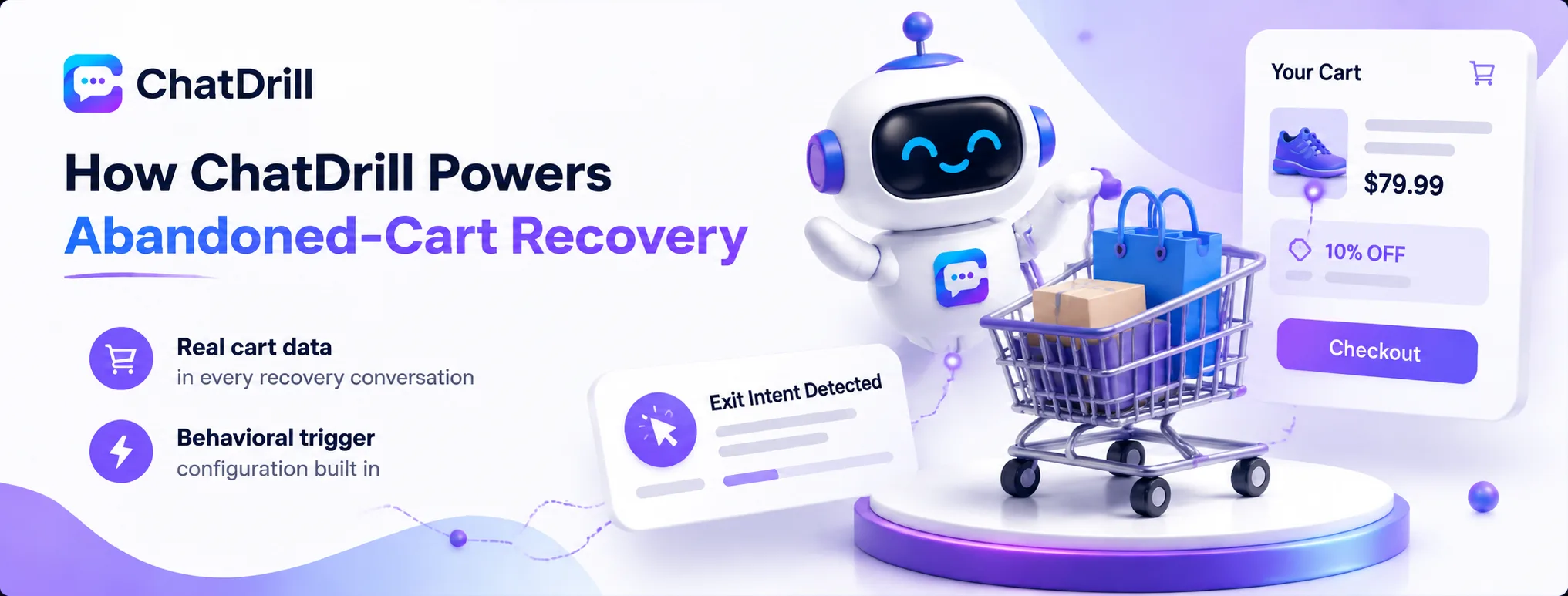
ChatDrill connects directly to your store's cart data and supports genuine behavioral triggers, letting recovery conversations reference specific cart contents and fire at the right, naturally timed moment.
Real cart data in every recovery conversation
ChatDrill's ecommerce integration lets the AI reference the actual items, price, and any relevant promotion in a customer's specific cart, rather than a generic, disconnected recovery message.
This specificity is what turns a recovery attempt from a generic nudge into a genuinely helpful, relevant conversation addressing the customer's actual situation.
Behavioral trigger configuration built in
Setting up a cart-page trigger based on genuine dwell time or exit-intent signals, rather than a fixed timer, is a standard configuration option within ChatDrill's trigger settings.
Testing and refining this trigger timing directly against your own store's real cart-abandonment patterns helps you find the balance between catching genuine hesitation and avoiding an overly aggressive prompt.