
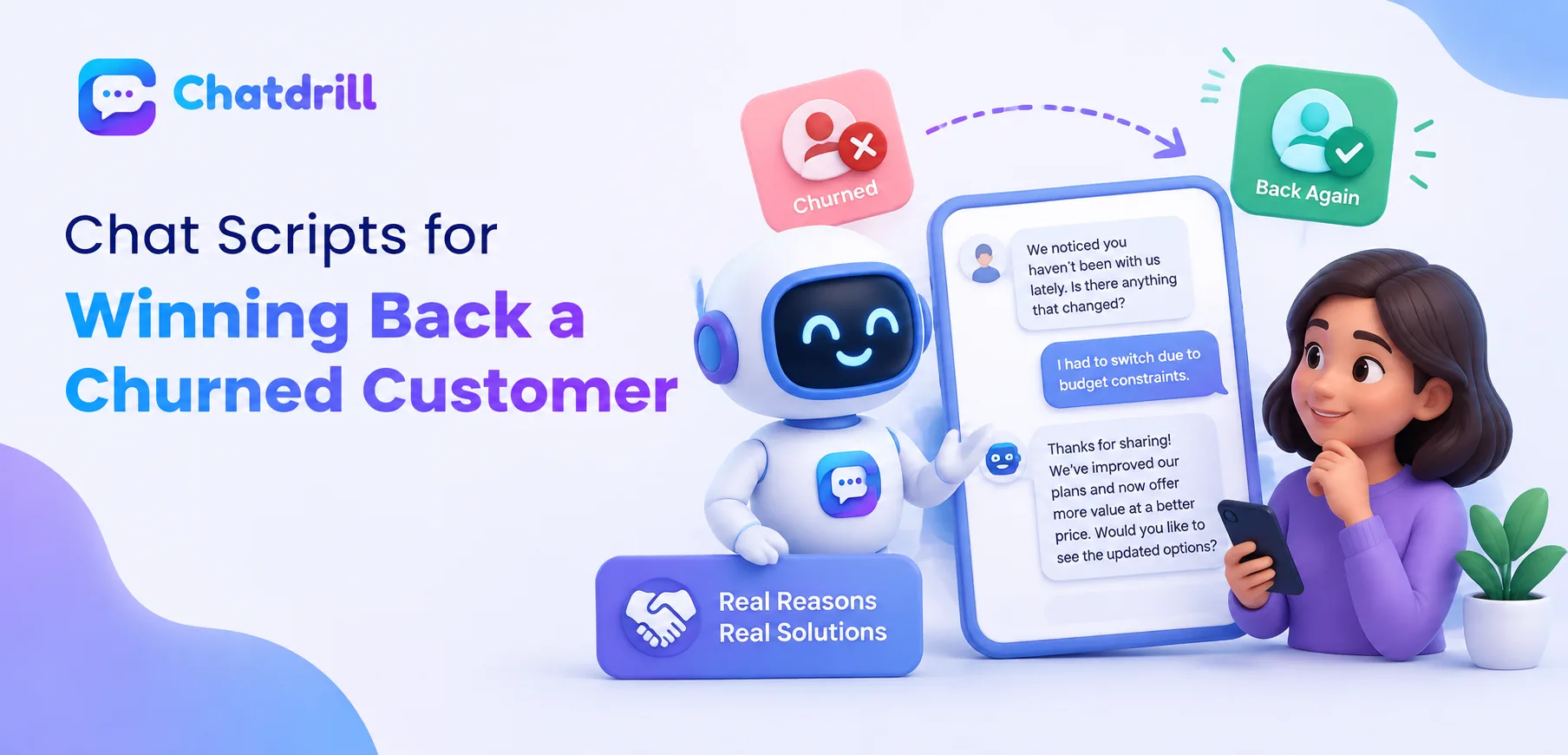
Winning back a churned customer through chat requires genuine honesty about why they left, rather than a generic "come back" message that ignores the specific reason behind their original decision.
Quick answer: Effective win-back chat scripts open by genuinely acknowledging the customer's decision to leave without pressure, ask honestly what changed, and offer something concretely improved or relevant rather than a generic "we miss you" discount, since a churned customer typically left for a specific, identifiable reason worth actually addressing.
The most effective win-back conversations treat the churn reason as genuinely important information to understand and address, rather than an obstacle to route around with a generic discount offer.
This guide provides adaptable scripts for approaching win-back conversations honestly and effectively, along with the reasoning behind why addressing the genuine reason tends to outperform generic incentives alone.
This guide covers honest opening scripts, addressing the specific churn reason, common mistakes, adapting the offer to your business, and how ChatDrill supports genuine win-back conversations.
Honest Opening Scripts
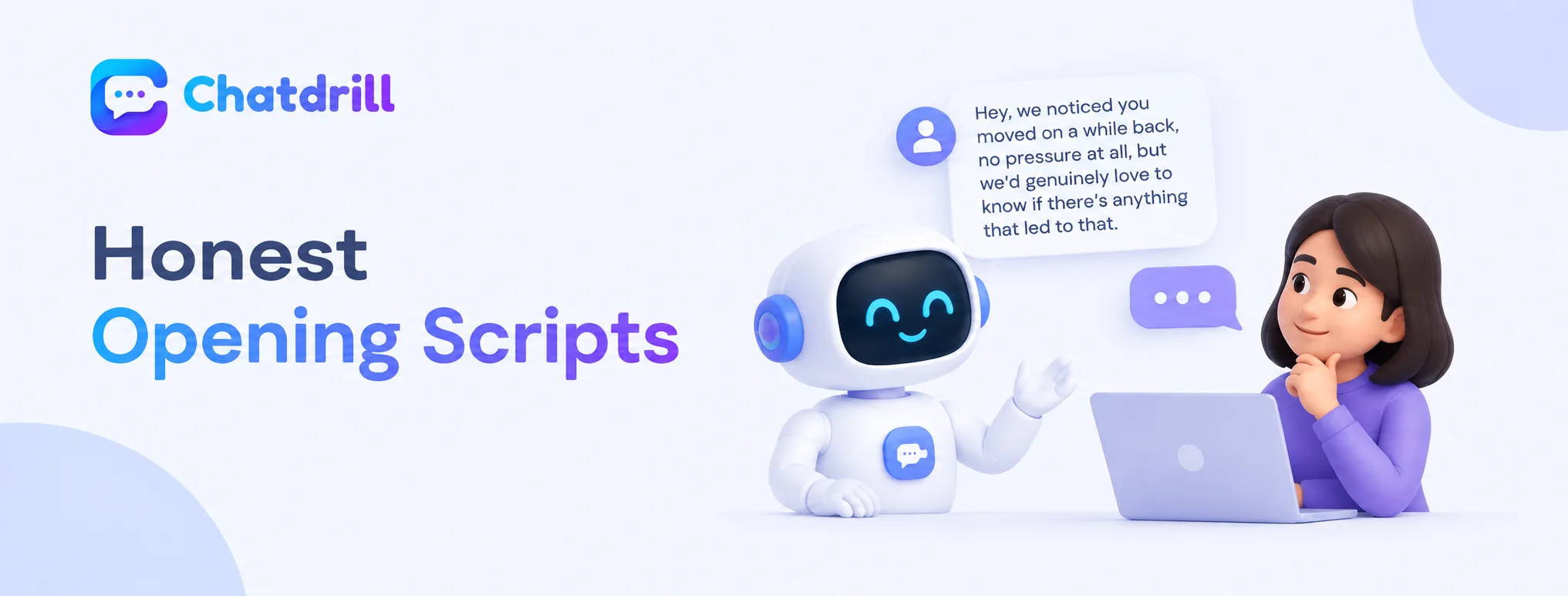
Win-back conversations should open by genuinely acknowledging the customer's departure without pressure, inviting honest feedback about what changed.
The genuine, low-pressure opening
"Hey, we noticed you moved on a while back, no pressure at all, but we'd genuinely love to know if there's anything that led to that, it helps us do better." opens with genuine curiosity rather than an immediate pitch to return.
This low-pressure framing, prioritizing understanding over an immediate ask, tends to produce more honest, useful responses than an opening that jumps straight to a win-back offer.
Following up when the customer shares a specific reason
"That makes total sense, thanks for sharing that. Since then, we've actually [specific relevant change or improvement], would that change things for you?" directly addresses the stated reason rather than pivoting to an unrelated generic pitch.
This direct address of the actual stated reason is what separates a genuinely effective win-back conversation from one that merely appears to listen before delivering the same generic message regardless.
Addressing the Specific Churn Reason
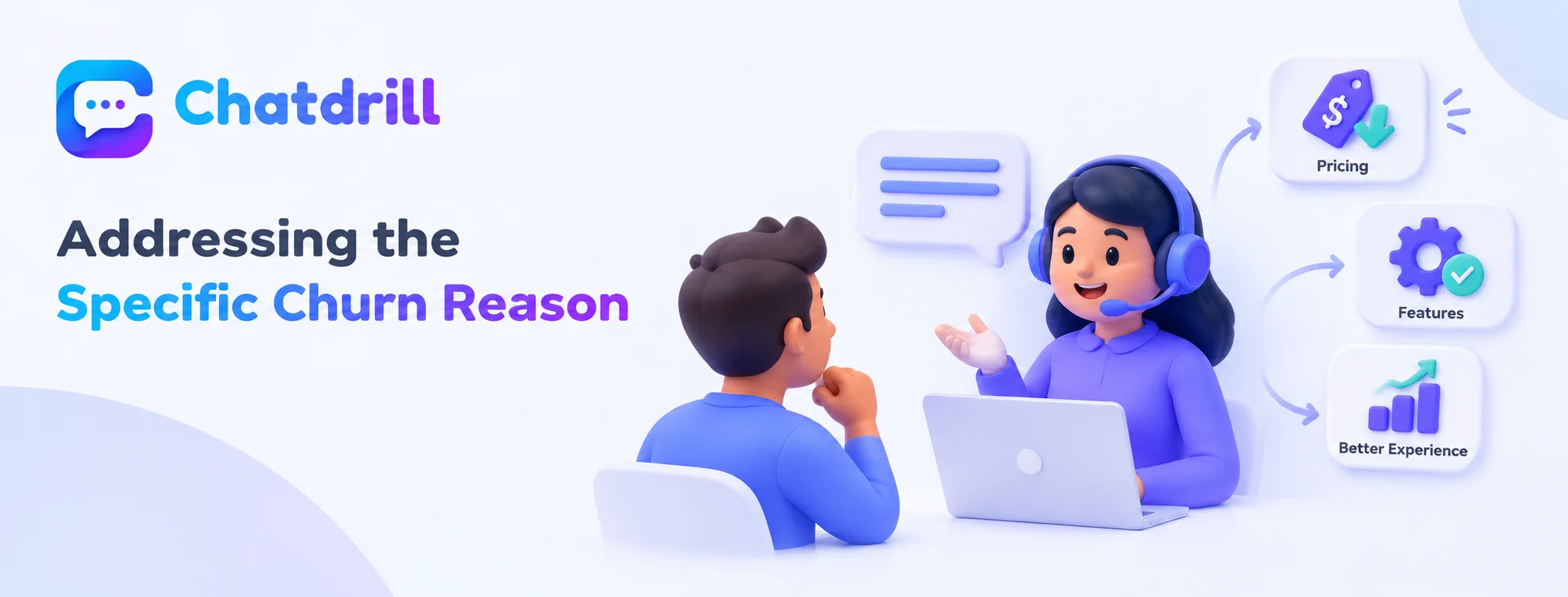
Rather than a generic offer, connecting your win-back proposition directly to whatever specific issue drove the original departure produces genuinely more compelling, relevant messaging.
Addressing a price-related departure
"I understand cost was a factor, we've actually introduced [specific pricing change or tier] since then that might be a better fit, want me to walk you through it?" directly addresses a stated price concern with a genuine, specific response rather than a generic discount.
This specificity matters because a customer who left over price genuinely wants to know something has changed, not just that a temporary discount exists that doesn't address their underlying original concern.
Addressing a feature-gap or experience-related departure
"That's really helpful feedback, we've actually built [specific feature] since then that directly addresses that gap." connects a genuine product improvement directly to the customer's stated original frustration.
This kind of specific, product-connected response demonstrates genuine listening and improvement, considerably more compelling than an unrelated incentive that doesn't address why they actually left.
Common Win-Back Mistakes
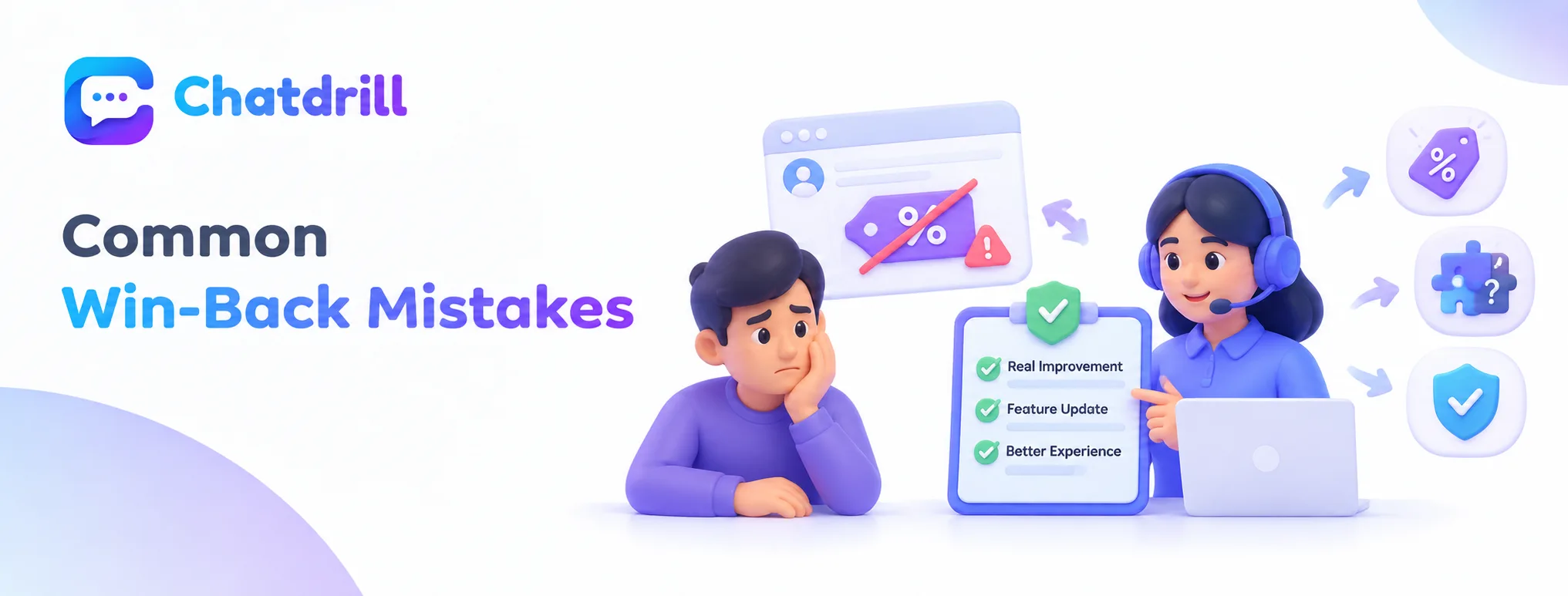
Leading with a generic "we miss you" discount without understanding the churn reason, and failing to follow through on any promised change, are the most common win-back mistakes.
The generic discount without understanding why
Opening a win-back attempt purely with a discount offer, without first understanding why the customer actually left, misses the opportunity to address whatever genuine issue drove the departure in the first place.
A customer who left over a genuine product gap, for instance, is unlikely to return purely for a temporary discount that doesn't address that underlying gap at all.
Failing to follow through on a promised change
Claiming a relevant improvement exists to win back a customer, without ensuring that claim is genuinely, currently accurate, risks a damaging, credibility-destroying experience if the customer returns and finds the claimed improvement doesn't actually exist or work as described.
Verifying the accuracy of any specific claim made during a win-back conversation protects against this particularly damaging kind of broken promise.
Adapting Your Win-Back Approach to Your Business
Building a reference connecting common churn reasons to your genuine, current improvements ensures win-back conversations stay accurate and relevant as your business evolves.
Tracking common churn reasons systematically
Maintaining a genuine record of common reasons customers cite for leaving, gathered through exit surveys or direct feedback, provides the raw material needed to prepare relevant, accurate win-back responses for each common reason category.
This systematic tracking turns win-back conversation preparation from guesswork into an evidence-based process reflecting your actual customer base's genuine experience.
Keeping win-back talking points current
Regularly updating the specific improvements or changes referenced in win-back scripts ensures these claims stay genuinely accurate as your product and pricing continue to evolve.
This currency matters given the credibility risk this guide identifies with claiming an improvement that isn't actually, currently true.