
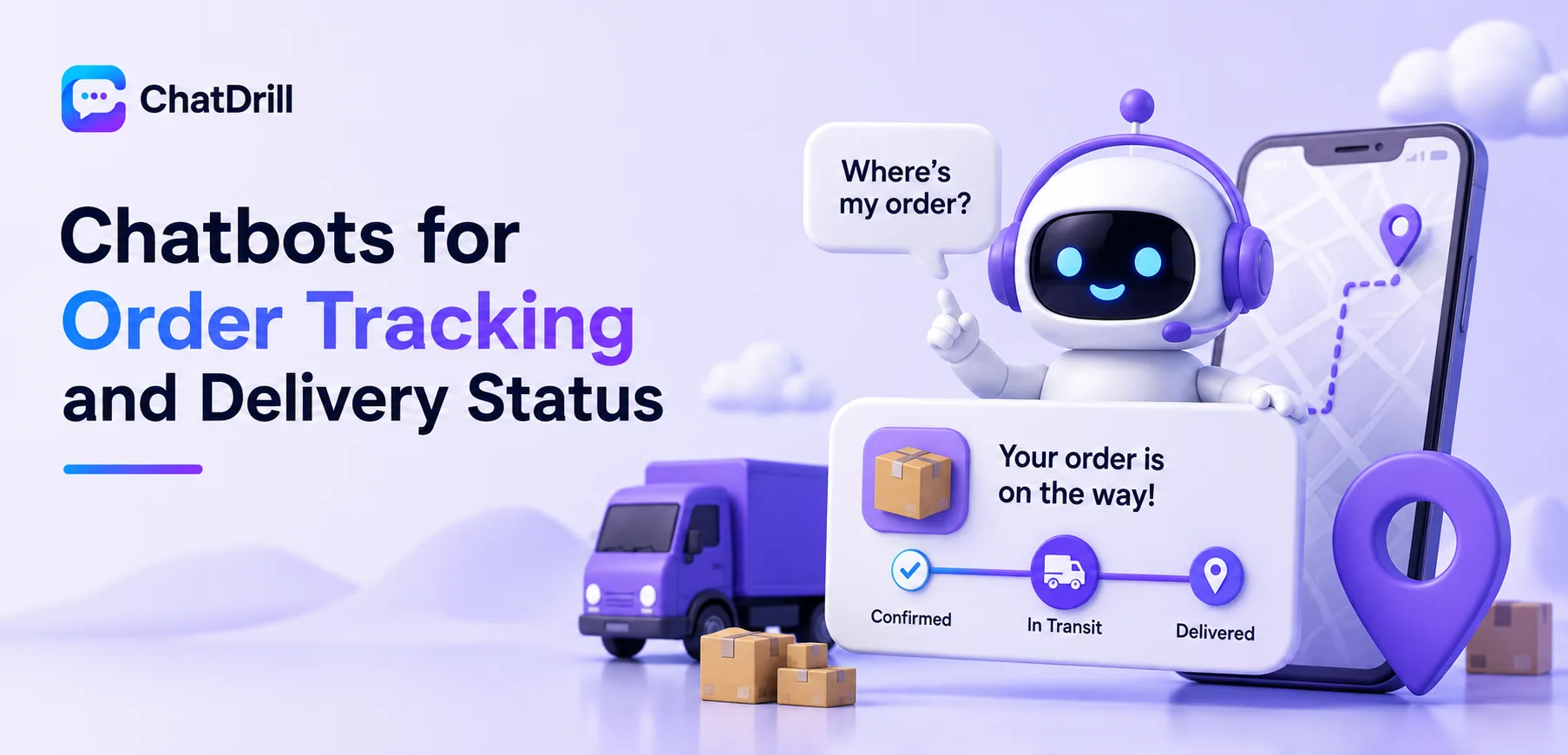
"Where's my order" is consistently one of the highest-volume questions any business selling physical products receives, making it one of the clearest, most measurable wins available from chatbot automation.
The value here is almost entirely a function of data connection quality, a chatbot linked directly to your order system or shipping carrier's live tracking data can resolve this instantly, while one without that connection can only repeat generic, unhelpful information.
Beyond the basic status check, a well-built order-tracking chatbot can also proactively flag a delay before the customer even asks, turning a potential complaint into a moment of transparency that builds trust instead of eroding it.
This guide covers why data connection quality determines everything here, what a strong order-tracking chatbot needs, a practical setup approach, and mistakes worth avoiding.
Quick answer: An order-tracking chatbot answers "where's my order" instantly by pulling live status directly from your order management or shipping carrier system, resolving what is typically the single highest-volume support question for any business that ships physical products.
Why Data Connection Quality Determines Everything
An order-tracking chatbot's usefulness depends almost entirely on whether it has real, live access to order and shipping data, since this single high-volume question can't be answered well without it.
The volume concentration in this single question
For nearly any business shipping physical products, order status questions represent an outsized share of total support volume, making this one category worth prioritizing above almost any other automation opportunity.
This concentration means even a modest improvement in how well this specific question is handled delivers meaningful overall efficiency gains.
What separates a useful chatbot from a frustrating one here
A chatbot connected to real, current order and shipping data can give an exact, accurate answer, while one without this connection can only offer generic information the customer likely already has.
This gap is what determines whether customers actually trust and use the chatbot for this purpose, or route around it to a human agent for the same basic question.
What a Strong Order-Tracking Chatbot Needs
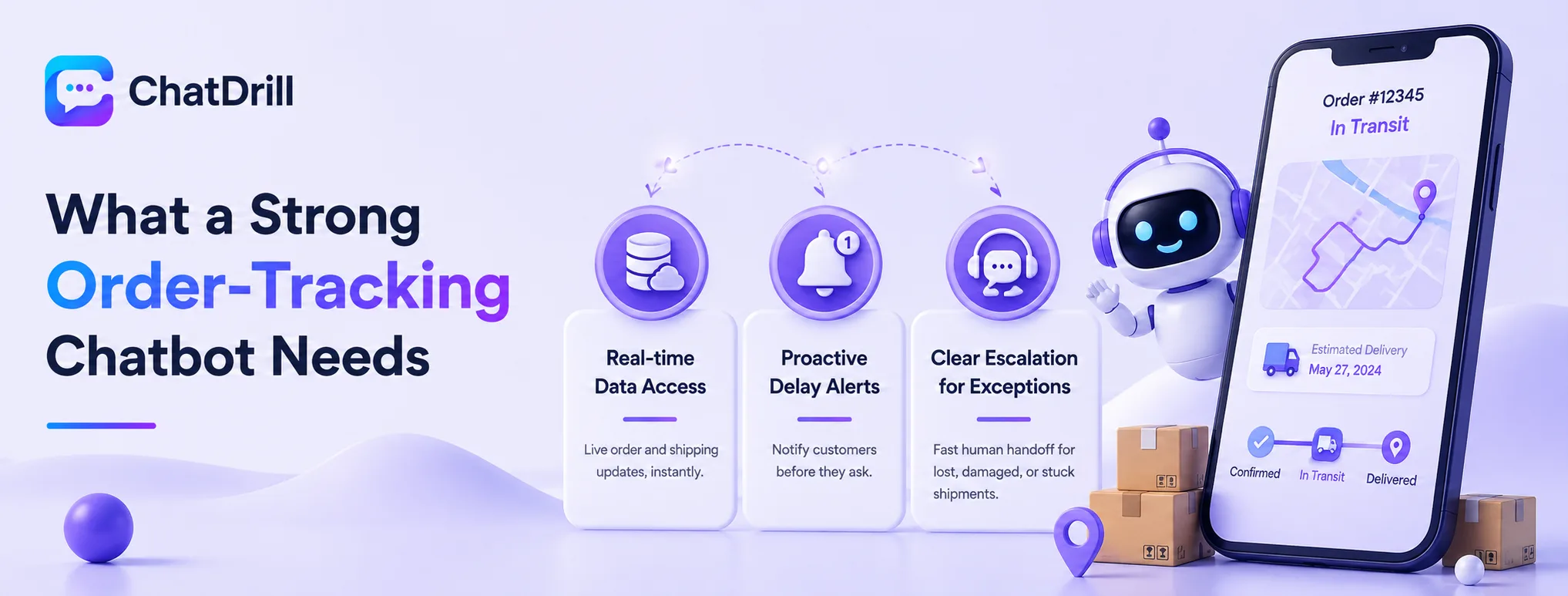
A genuinely useful setup needs real-time connection to order and shipping data, the ability to proactively flag delays, and clear escalation for exceptions like a lost or damaged package.
Real-time order and shipping data access
Connecting chat directly to your order management system and shipping carrier's tracking API lets the chatbot give an exact, current status rather than a generic estimate.
This connection is the foundational requirement, everything else about this use case depends on having accurate, current data to work from.
Proactive delay notifications
A chatbot that can flag a known delay to a customer before they ask, rather than waiting to be asked, turns a potential frustration into a moment of proactive transparency.
This proactive capability requires the same underlying data connection, just triggered by a status change rather than only in response to a direct question.
Clear escalation for exceptions
A lost package, significant damage, or a genuinely stuck shipment represents a smaller but higher-stakes category deserving fast escalation to a human agent rather than a generic automated response.
Building explicit recognition for this exception category, distinct from routine status checks, ensures a frustrated customer with a real problem gets appropriately prioritized help.
Setup Playbook for Order Tracking Chatbots
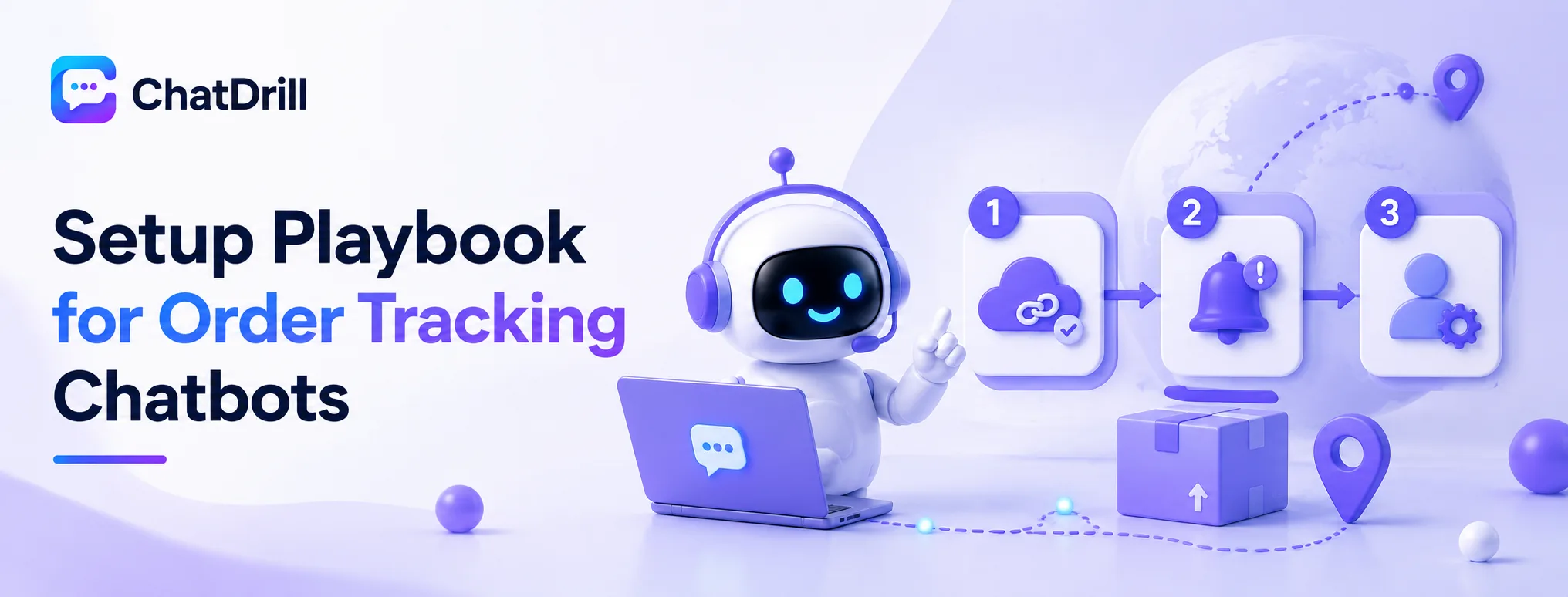
A strong setup connects chat to real order and carrier data as the top priority, builds proactive delay flagging once the basic connection is solid, and creates explicit escalation paths for shipping exceptions.
Step 1: Connect to order and carrier tracking data
Integrating chat with your order management system and the relevant shipping carrier APIs is the single highest-priority setup step, given how much value depends on this connection specifically.
This integration should be tested directly with real, in-transit orders to confirm the data returned is genuinely accurate and current.
Step 2: Add proactive delay flagging
Once basic status-checking is reliable, configuring the system to flag a known delay proactively, rather than only responding to direct questions, extends the value of the same data connection.
This addition can meaningfully reduce inbound complaint volume by getting ahead of the frustration before a customer has to reach out at all.
Step 3: Build exception escalation paths
Configuring chat to recognize language suggesting a lost, damaged, or genuinely stuck shipment, and escalating quickly to a human, ensures this smaller but higher-stakes category gets appropriate attention.
This escalation logic should be tested with realistic exception scenarios to confirm it reliably distinguishes routine questions from genuine problems.
Common Mistakes With Order Tracking Chatbots
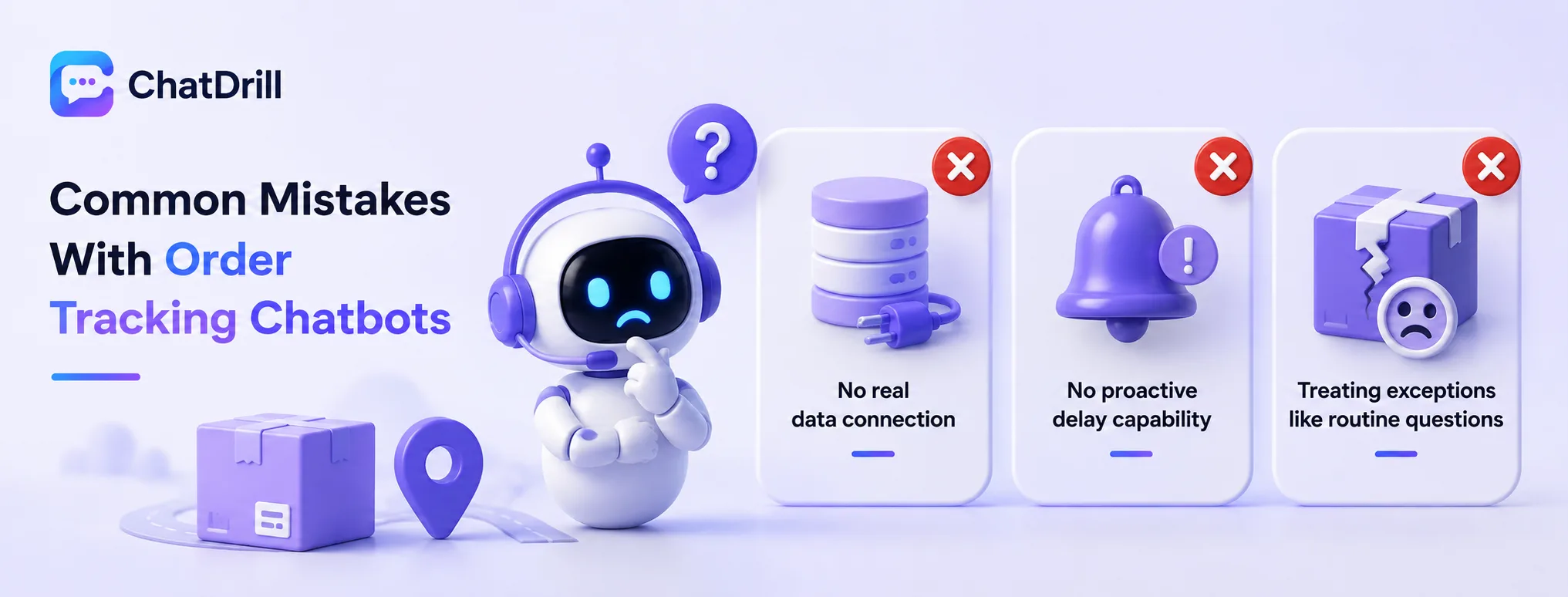
The most common mistakes are running a chatbot with no real order data connection, missing the opportunity for proactive delay notifications, and treating a genuine shipping exception the same as a routine status check.
No real data connection
A chatbot unable to access actual, current order and shipping status ends up giving generic, unhelpful responses to exactly the question customers most want answered specifically.
This gap undermines nearly the entire value proposition of an order-tracking chatbot, worth prioritizing above any other feature.
No proactive delay capability
Only responding to direct questions, rather than proactively flagging a known delay, misses an opportunity to build trust through transparency before frustration sets in.
This is a relatively straightforward addition once the basic data connection exists, worth prioritizing given its outsized impact on customer sentiment.
Treating exceptions like routine questions
Responding to a genuinely lost or damaged package with the same generic tracking response used for a routine status check fails to acknowledge the real problem and can worsen customer frustration.
Building explicit recognition for this category, with appropriately different, more careful handling, respects the real difference in what these customers need.