
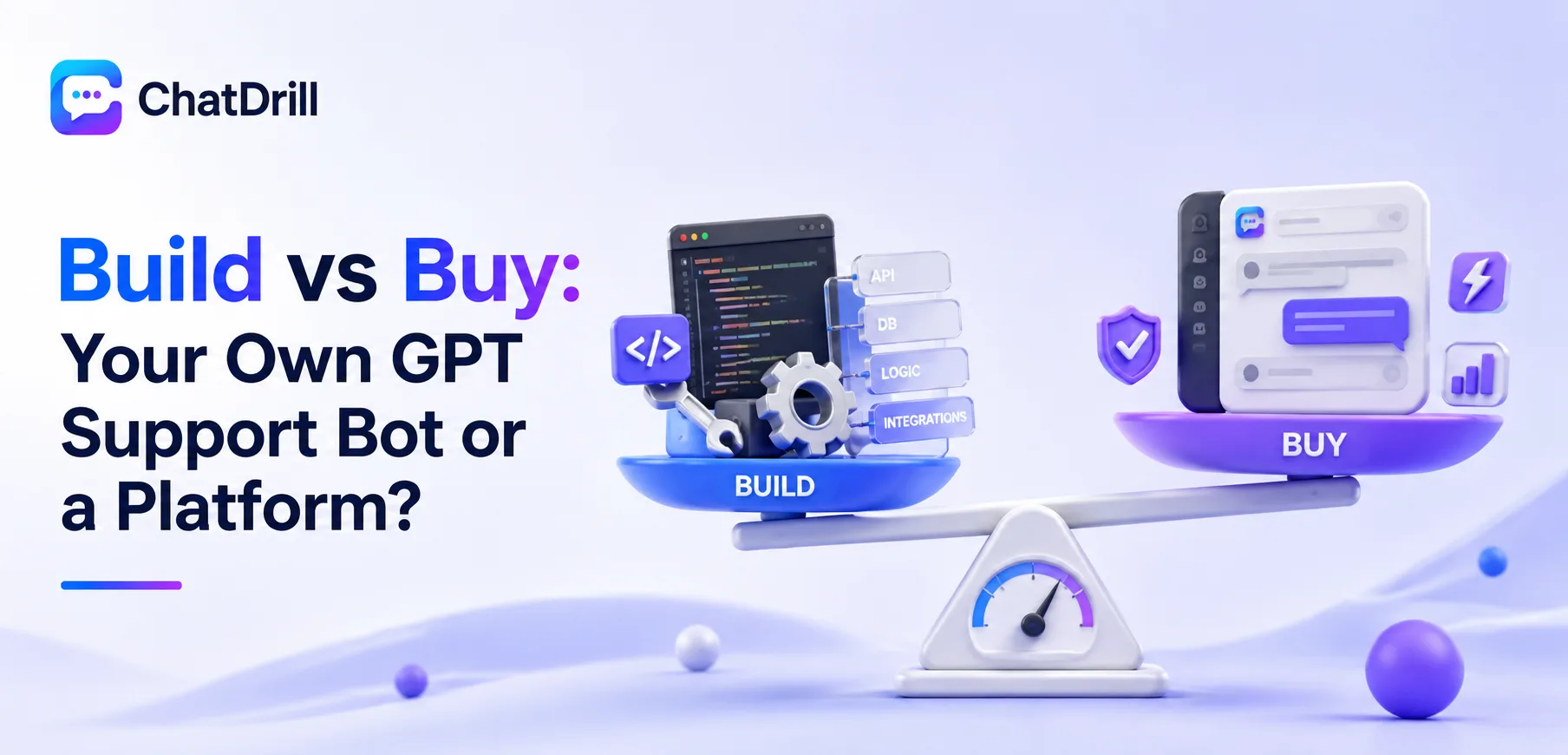
Building a support bot directly on a GPT-style API looks deceptively simple, a working prototype can come together in a day, but the gap between a working prototype and a production-grade support system that handles real customers reliably is where most build projects run into trouble.
Buying a dedicated platform trades some flexibility for speed and reliability, the vendor has already solved conversation state management, escalation logic, and the dozens of integration and edge-case problems that a from-scratch build has to solve independently.
The decision genuinely depends on your specific situation, a company with unusual support needs and real engineering capacity to spare might get more long-term value from building, while most support teams get to genuine value faster by buying.
This guide covers the real cost of each path, when building actually makes sense, a practical decision framework, and mistakes worth avoiding.
Quick answer: For most support teams, buying a dedicated chat platform gets you to genuine value faster and cheaper than building a custom GPT bot, since the platform vendor has already solved conversation management, escalation, and integration; building your own makes sense mainly when your support needs are genuinely unusual or when you have engineering capacity to spare.
The Real Cost of Building Your Own GPT Support Bot
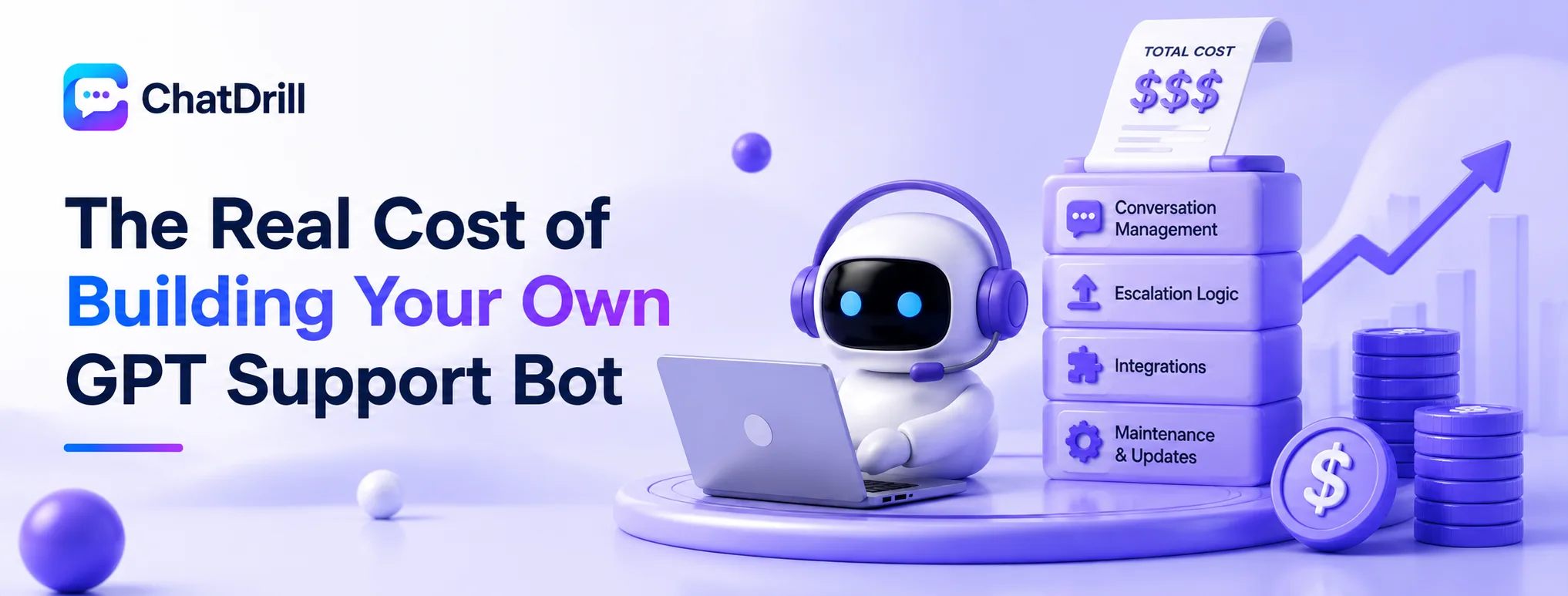
Building your own support bot costs far more than the initial API integration, the ongoing cost of conversation management, escalation logic, and ongoing maintenance is where most of the real investment goes.
The prototype-to-production gap
A basic GPT-powered chatbot prototype can be built quickly, but production-grade needs, handling ambiguous questions gracefully, escalating appropriately, maintaining conversation context, require considerably more engineering investment.
This gap is where many build projects underestimate the real cost, treating the initial working prototype as most of the work rather than a small fraction of it.
Ongoing maintenance costs
A custom-built bot needs ongoing engineering attention as your product changes, as underlying AI models update, and as new edge cases emerge from real customer conversations.
This ongoing cost, often underestimated during initial planning, is a genuine, recurring expense that a purchased platform's subscription fee is specifically designed to cover instead.
When Building Actually Makes Sense
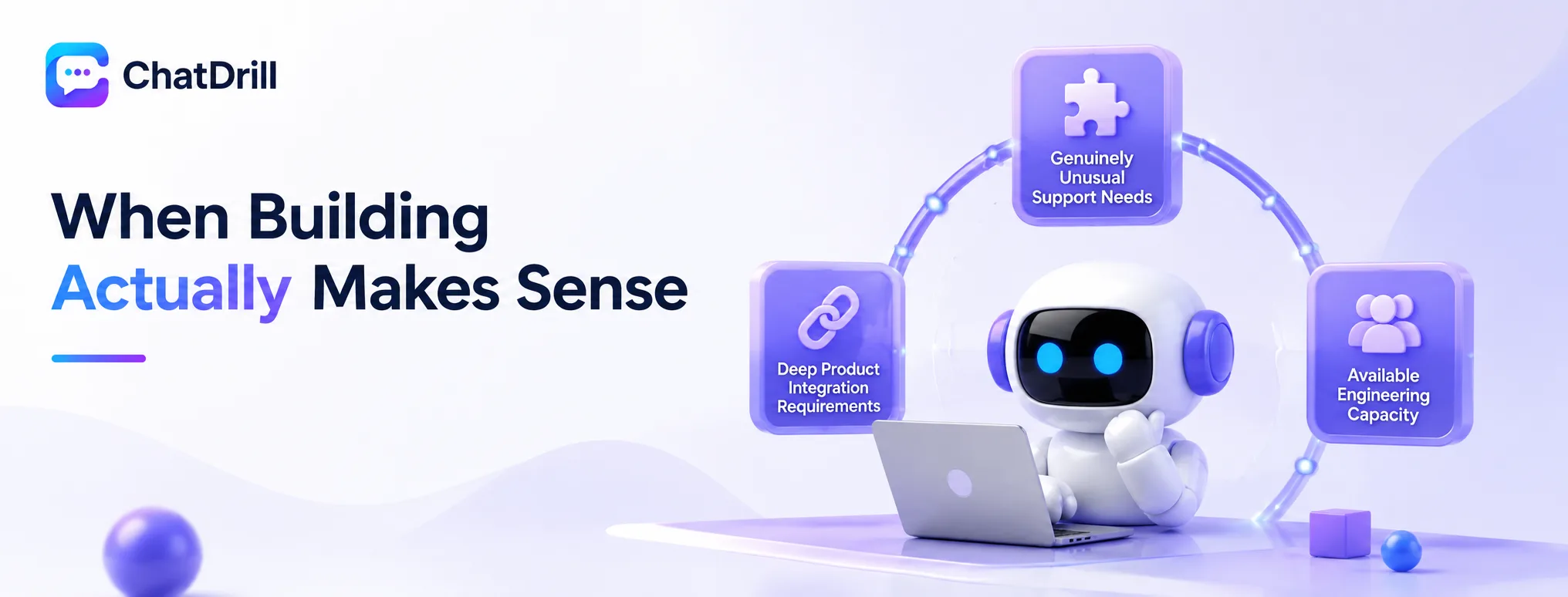
Building makes the most sense when your support needs are genuinely unusual, when deep product integration matters more than speed to launch, and when you have real, dedicated engineering capacity to invest.
Genuinely unusual support needs
A business with support requirements that don't map well to any existing platform's feature set may find building the only way to get a system that actually fits their specific situation.
This is a genuinely narrower case than many teams initially assume, most support needs, even ones that feel unique internally, are well covered by existing platforms.
Deep product integration requirements
If your support bot needs to be deeply woven into a proprietary product experience in ways a general platform's integration options don't support, building may be the more practical path.
This scenario is worth confirming directly against a platform's actual integration capabilities before assuming a custom build is necessary.
Available, dedicated engineering capacity
Having engineers who can be genuinely dedicated to building and maintaining a support bot, not just squeezing it in alongside other priorities, is a real prerequisite for a build path to succeed long-term.
Without this dedicated capacity, a custom build tends to stagnate after initial launch, falling behind the ongoing improvements a purchased platform continues to receive.
A Practical Decision Framework
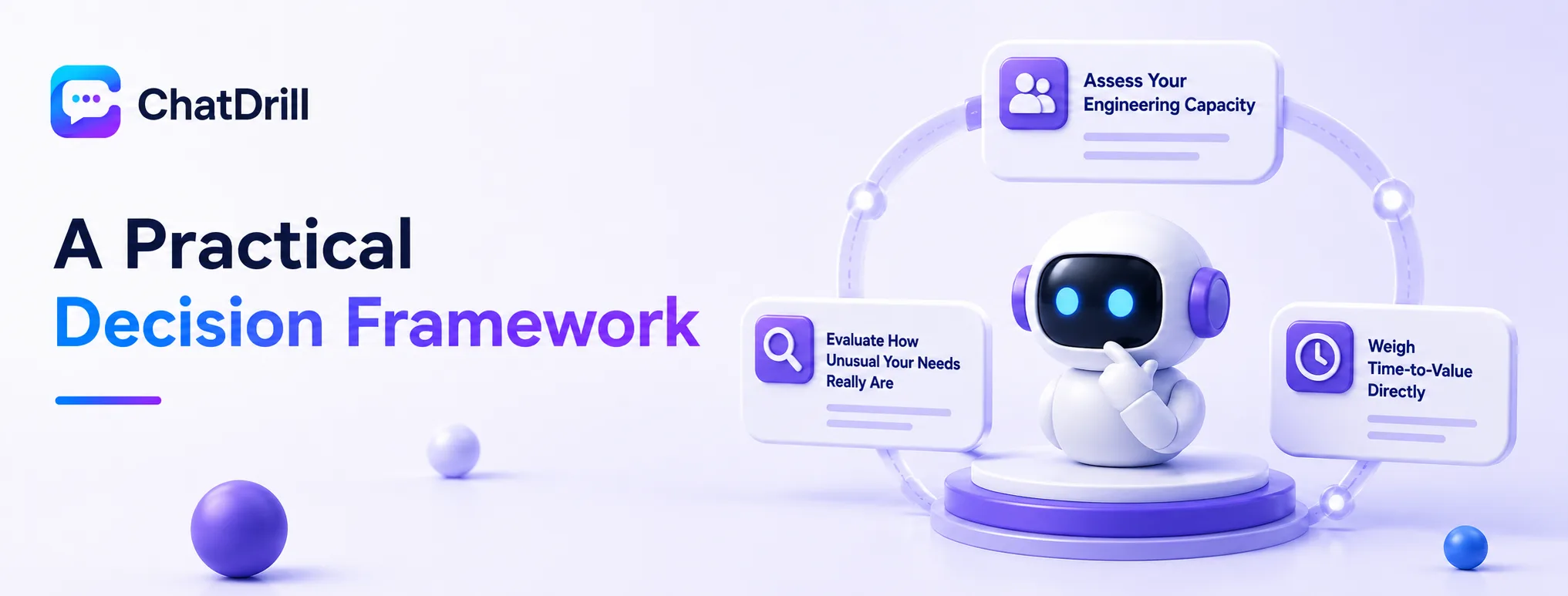
Deciding between build and buy comes down to weighing your team's available engineering capacity, how unusual your actual support needs are, and how quickly you need a working system in front of customers.
Assess your engineering capacity honestly
Being realistic about whether engineers can be genuinely dedicated to this project, rather than optimistically assuming it'll fit around other priorities, is the most important input to this decision.
A build project without dedicated capacity tends to become a perpetually half-finished internal tool rather than a genuinely reliable customer-facing system.
Evaluate how unusual your needs really are
Testing a leading platform directly against your actual support scenarios, rather than assuming your needs are unusual without checking, often reveals more overlap than initially expected.
This evaluation is worth doing concretely, with real test conversations, rather than relying on a feature list comparison alone.
Weigh time-to-value directly
A platform can typically be live and delivering value within days or weeks, while a genuinely production-grade custom build often takes months, a difference worth weighing against how urgently you need results.
This time difference alone is often decisive for a support team under pressure to show improvement quickly.
Common Mistakes in the Build vs Buy Decision
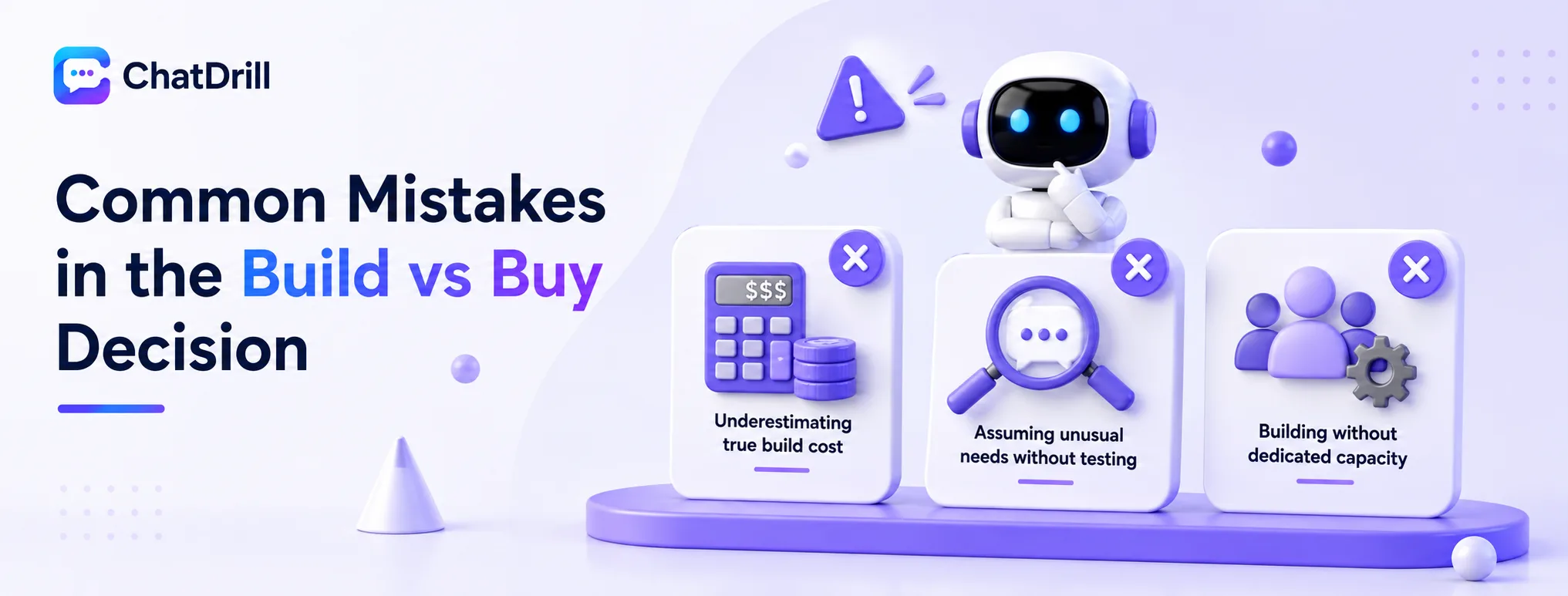
The most common mistakes are underestimating the true cost of building past the initial prototype, assuming unusual needs without testing an actual platform, and choosing to build without genuinely dedicated engineering capacity.
Underestimating true build cost
Treating the initial working prototype as most of the work, rather than a small fraction of what production-grade reliability actually requires, leads to significantly underestimated project timelines and costs.
Building in a realistic estimate of ongoing maintenance, not just initial development, avoids this common miscalculation.
Assuming unusual needs without testing
Deciding to build based on an assumption that your needs are too unusual for any platform, without actually testing a leading option against real scenarios, often turns out to be based on incomplete information.
A direct trial against your actual use cases is worth doing before committing to a build path on this basis.
Building without dedicated capacity
Starting a build project assuming it'll fit around other engineering priorities almost always results in a slower, less reliable outcome than either committing genuine dedicated resources or choosing to buy instead.
Being honest about actual available capacity before committing to this path avoids a half-finished, unreliable outcome.