
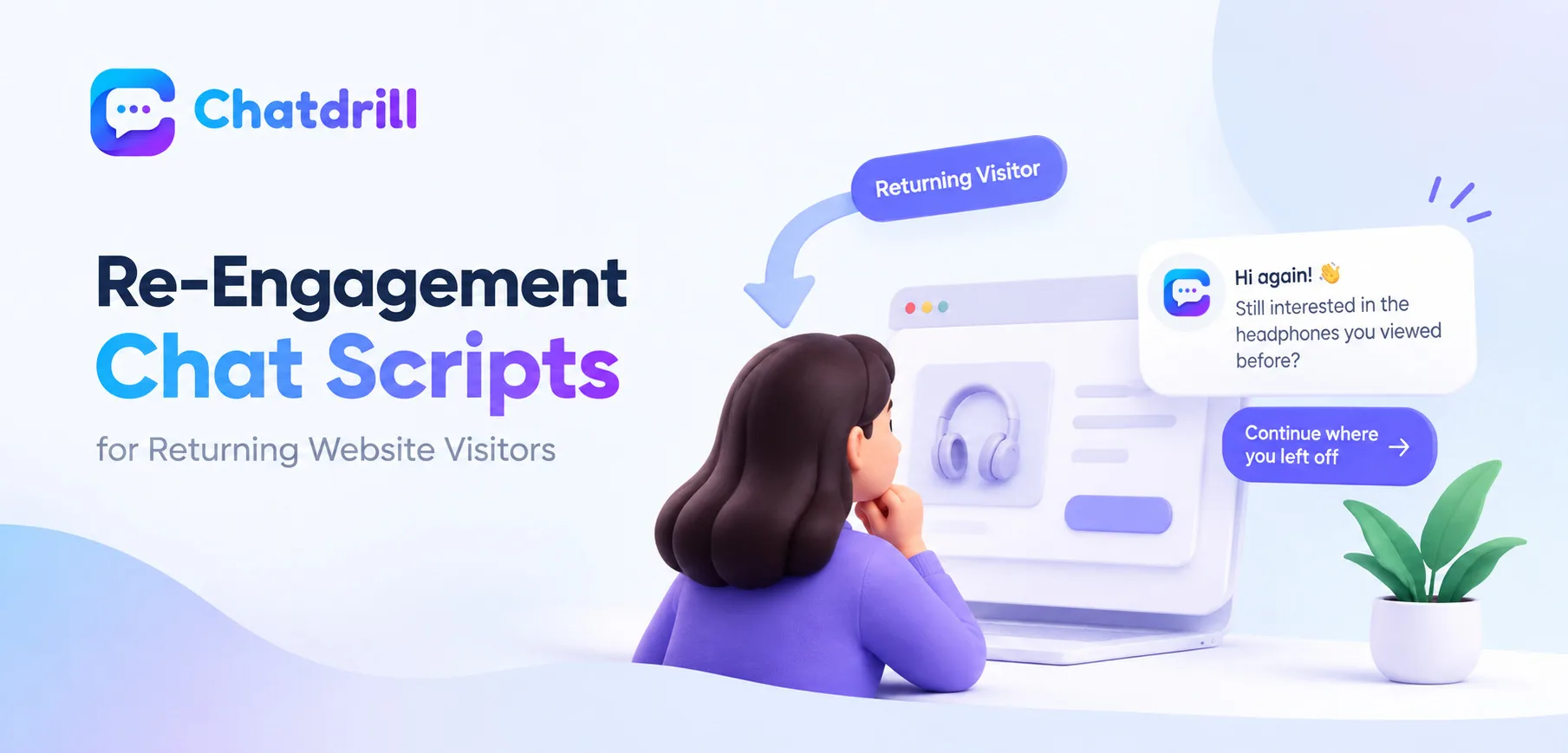
Visitors A returning website visitor represents a genuinely different opportunity than a first-time visitor, they've already shown some level of interest, and a chat script that ignores this history misses a meaningful chance to build on that prior engagement.
Quick answer: Effective re-engagement chat scripts for returning visitors reference their prior visit or previous interest genuinely, like a product they viewed before, then offer a natural, low-pressure reason to continue where they left off, rather than treating a return visit identically to a completely new one.
Effective re-engagement scripts reference the visitor's genuine prior interest or activity, creating a natural, personalized continuation rather than restarting the conversation from a generic, first-visit baseline.
This guide provides adaptable scripts for re-engaging returning visitors naturally, along with the reasoning behind why this personalized continuity tends to produce better engagement than a generic approach.
This guide covers prior-interest reference scripts, offering a natural continuation path, common mistakes, adapting to your own tracking capability, and how ChatDrill supports genuine re-engagement.
Prior-Interest Reference Scripts
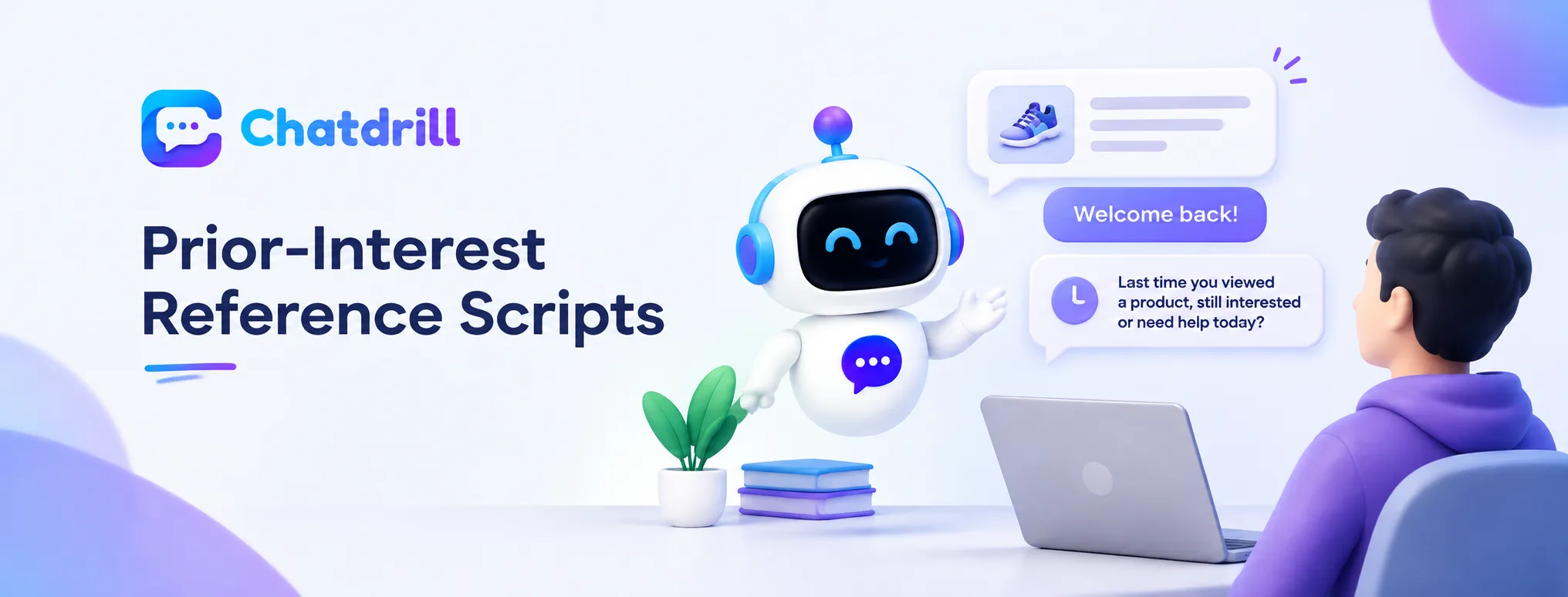
Referencing what a returning visitor previously viewed or showed interest in transforms a generic greeting into a genuinely personalized, relevant re-engagement.
Referencing a previously viewed product or page
"Welcome back! I noticed you were looking at [specific product] last time, still interested, or can I help with something else today?" acknowledges the genuine prior visit specifically, rather than treating the visitor as entirely new.
This specific reference demonstrates genuine attentiveness to the visitor's actual history, considerably more compelling than a generic "welcome back" that doesn't connect to anything specific.
Referencing a previous unanswered question
"Last time you had a question about [specific topic], did that get resolved, or is there more I can help with?" follows up genuinely on unfinished business from a prior visit, showing the business remembers and cares about the outcome.
This kind of genuine follow-up on previously unresolved territory can meaningfully improve a returning visitor's impression, since it demonstrates the business tracks and cares about outcomes, not just individual, disconnected visits.
Offering a Natural Continuation Path
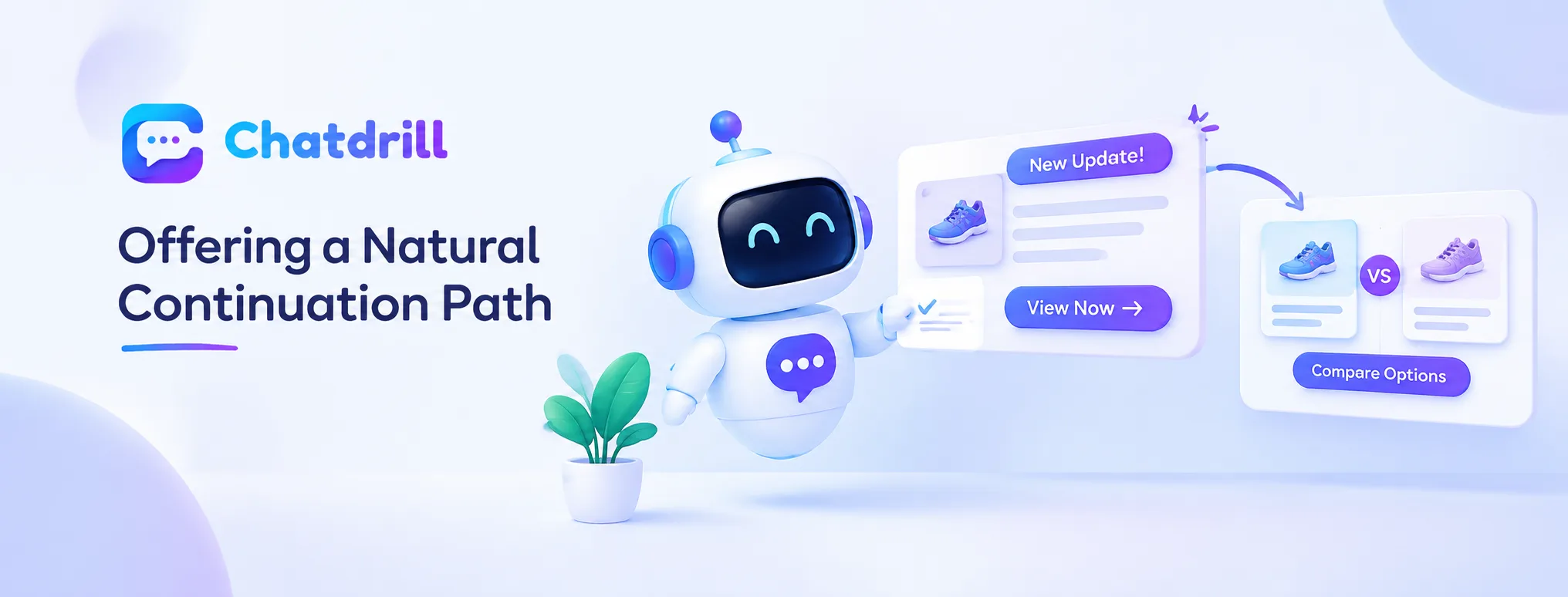
Beyond acknowledgment, offering a specific, natural next step connected to the prior interest helps convert the re-engagement into genuine forward progress.
Offering updated or relevant information
"Since you last looked, we've actually [relevant update, like new stock or a price change], want me to fill you in?" gives the returning visitor a genuine, specific reason to re-engage beyond a simple acknowledgment.
This kind of concrete, relevant update transforms the re-engagement from a passive greeting into an active, valuable reason to continue the conversation.
Proposing the logical next step in their journey
"Would it help to see a side-by-side comparison with the other options you were considering?" proposes a specific, logical next step based directly on the visitor's prior comparison behavior, moving the conversation genuinely forward.
This forward-moving proposal respects that a returning visitor has likely already progressed somewhat in their consideration, and the conversation should meet them at that genuine, advanced stage rather than starting over.
Common Re-Engagement Mistakes
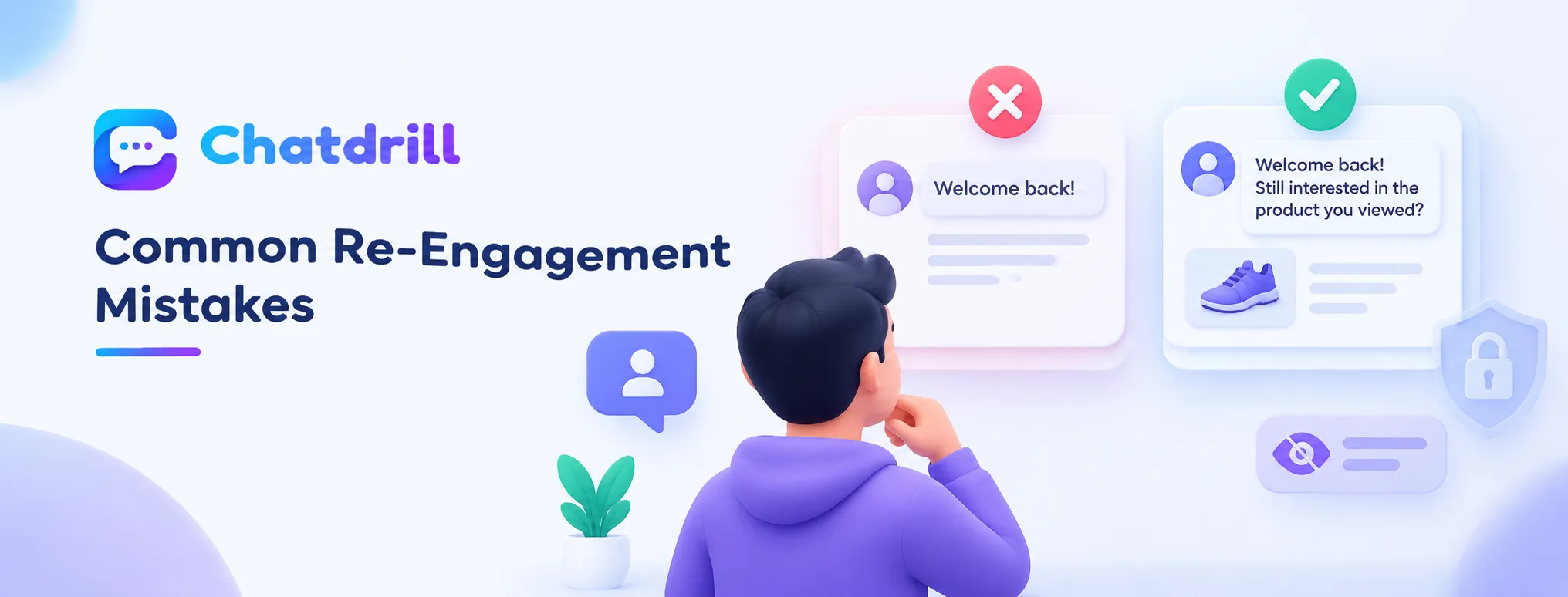
Treating a returning visitor identically to a first-time one, and referencing prior activity in a way that feels invasive rather than helpful, are the most common mistakes.
Treating every visitor as entirely new
Greeting a clearly returning visitor with the same generic opening used for a first-time visitor wastes the genuine opportunity this guide identifies in building on prior, established interest.
Recognizing and referencing this history, as this guide's scripts demonstrate, produces a meaningfully more personalized, effective re-engagement than a generic, one-size-fits-all approach.
Referencing history in a way that feels invasive
Referencing overly granular or sensitive prior behavior, rather than a clearly relevant, appropriate detail like a viewed product, can feel unsettling rather than genuinely helpful to the visitor.
Keeping the referenced history appropriately relevant and not overly detailed respects the line between helpful personalization and an uncomfortably invasive-feeling level of tracking awareness.
Adapting to Your Own Visitor Tracking Capability
The specific level of personalization these scripts can achieve depends on your own website's actual visitor tracking and chat history capability.
Working within your genuine tracking capability
If your current setup can reliably identify a returning visitor and their prior page views, the specific referencing scripts this guide demonstrates are directly achievable, while a more limited setup may need a more general, though still warmer-than-generic, re-engagement approach.
Being honest about your genuine current tracking capability prevents attempting a level of specificity your actual system can't reliably support.
Investing in tracking capability where it delivers genuine value
If re-engagement conversion represents a genuinely significant opportunity for your business, investing in improved visitor tracking and chat history capability may deliver a meaningful return by enabling the more specific, effective scripts this guide describes.
This investment decision should weigh the genuine conversion value of improved re-engagement against the cost of building or adopting better tracking capability.