
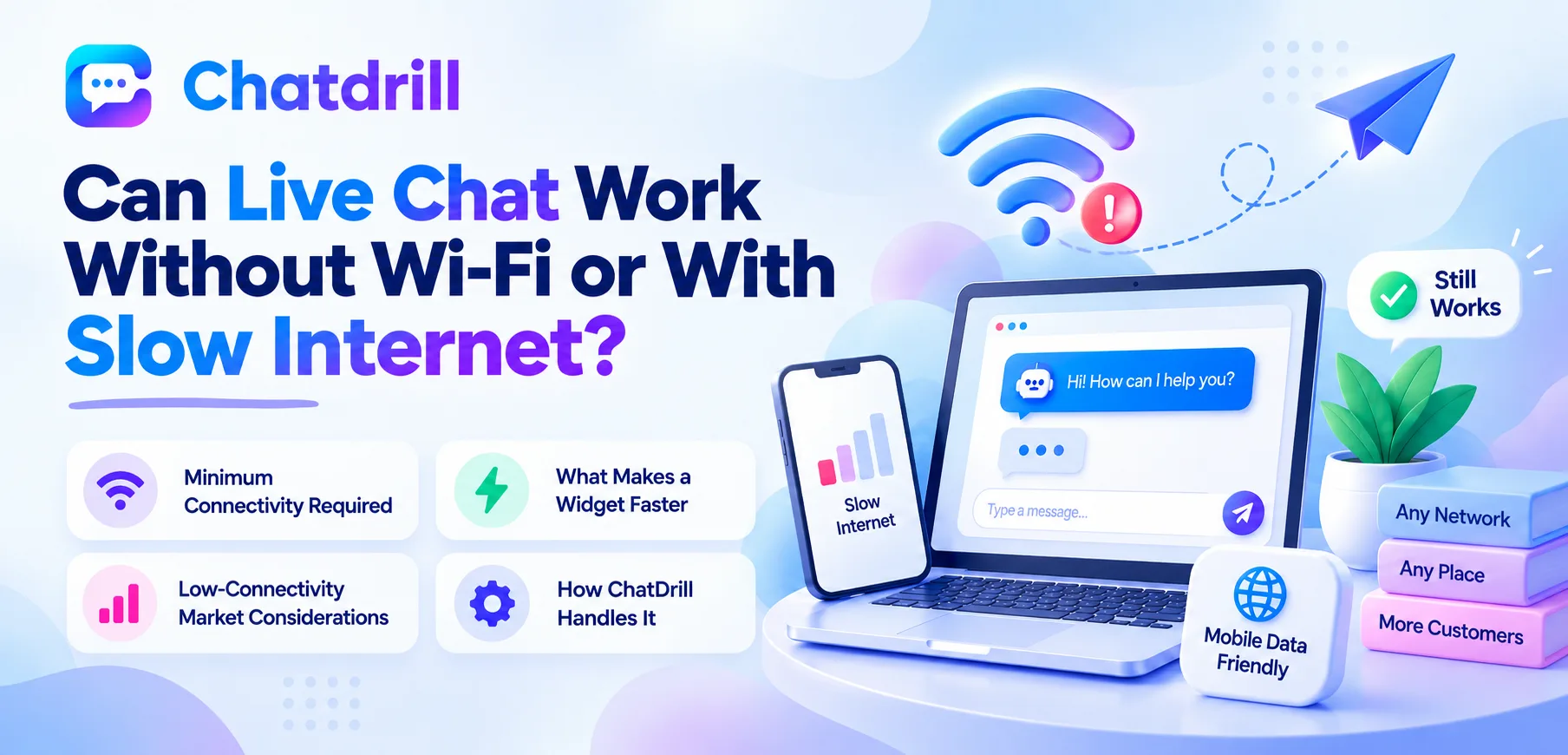
Whether live chat can genuinely work without Wi-Fi or on a slow internet connection matters considerably for a business serving customers in areas with variable or limited connectivity, a genuine practical concern rather than an edge case in many markets.
Quick answer: Live chat requires at least a minimal internet connection to function since it relies on real-time data transfer, but a well-optimized, lightweight chat widget can work reasonably well even on slow mobile data connections, though it cannot function with zero connectivity at all.
The honest answer is that chat requires some internet connection to function at all, but a well-optimized, lightweight implementation can perform reasonably well even under genuinely slow, low-bandwidth conditions.
Understanding the specific technical factors that determine chat performance under poor connectivity helps a business evaluate whether a given platform will genuinely serve its actual customer base well.
This guide covers the minimum connectivity requirement, what makes a widget perform better under poor conditions, practical considerations for serving low-connectivity markets, and how ChatDrill addresses this challenge.
The Minimum Connectivity Requirement
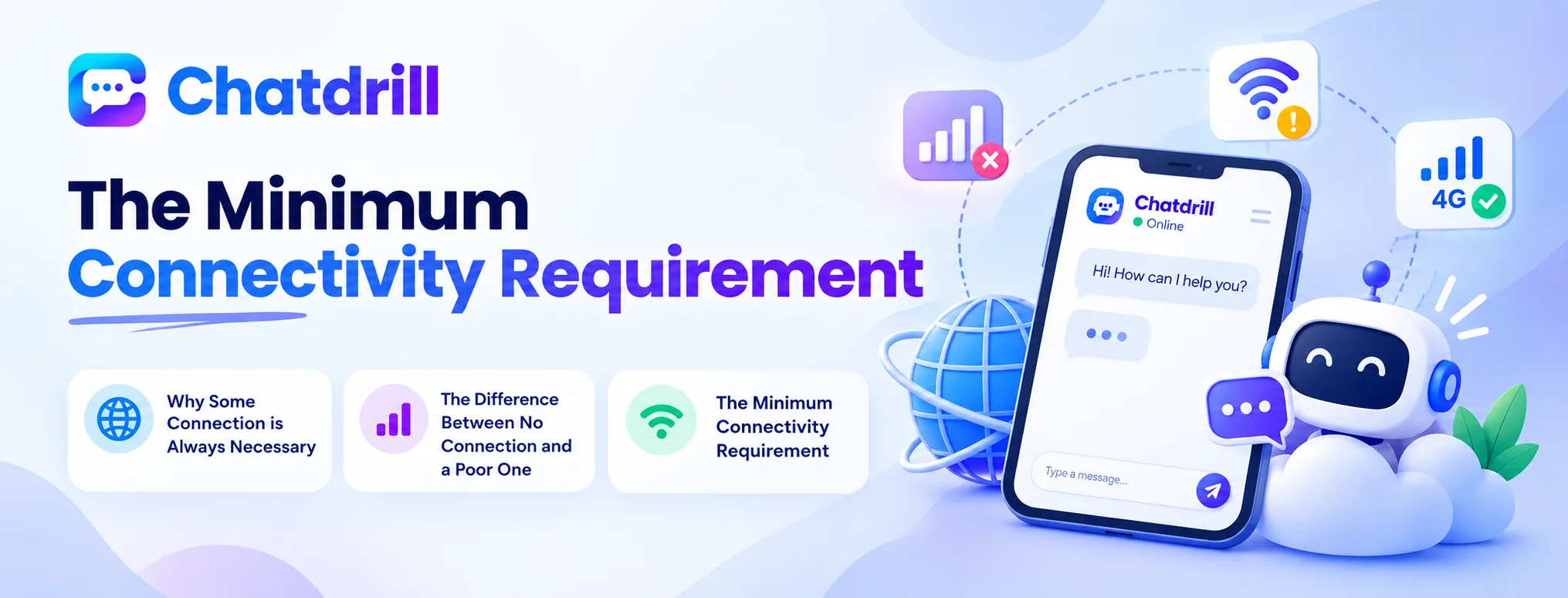
Live chat fundamentally requires some active internet connection to function, since it depends on real-time data transfer between the visitor and the chat platform's servers.
Why some connection is always necessary
Chat's core function, sending and receiving messages in real time, inherently requires an active data connection, meaning it simply cannot function with genuinely zero connectivity, unlike some offline-capable applications.
This fundamental requirement means the realistic question isn't whether chat works with no internet at all, but how well it performs across the range of genuinely slow or intermittent connections common in many real-world situations.
The difference between no connection and a poor one
A genuinely poor or intermittent connection, common on mobile data in areas with limited infrastructure, is meaningfully different from having literally no connection, and a well-designed chat widget can often function reasonably well even under these constrained conditions.
This distinction matters practically, since most real-world connectivity challenges involve degraded rather than completely absent connections.
What Makes a Widget Perform Better Under Poor Conditions
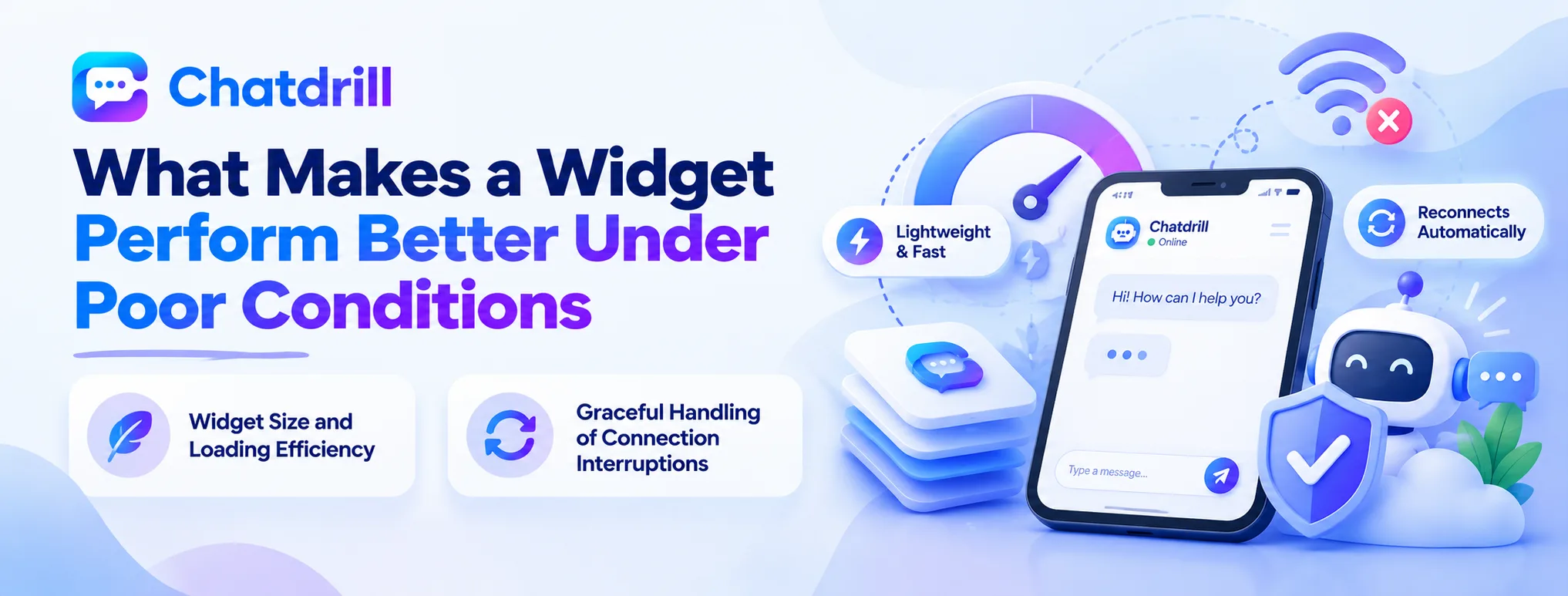
A lightweight, efficiently coded widget with minimal data requirements performs noticeably better on slow connections than a heavier, feature-dense one.
Widget size and loading efficiency
A widget built with minimal file size and efficient loading behavior places less demand on a slow connection, loading and functioning more reliably than a heavier widget carrying substantial unnecessary code or media.
This efficiency consideration is worth evaluating specifically when choosing a platform if serving customers with genuinely variable connectivity is a real, ongoing concern for your business.
Graceful handling of connection interruptions
A well-designed chat system handles a brief connection drop gracefully, reconnecting automatically and preserving the conversation rather than losing the entire interaction the moment connectivity briefly interrupts.
This resilience matters considerably in areas where connection drops are a routine, expected occurrence rather than a rare exception.
Practical Considerations for Low-Connectivity Markets
A business serving customers in genuinely low-connectivity markets should prioritize widget efficiency and consider offering a fallback option for the rare moments chat genuinely can't connect.
Prioritizing efficiency in platform selection
For a business genuinely serving a customer base with common connectivity limitations, evaluating a chat platform specifically for widget efficiency and low-bandwidth performance deserves real weight in the selection decision.
This consideration is worth testing directly, simulating a slow connection during evaluation, rather than assuming every platform performs equally well under constrained conditions.
Offering a fallback for genuine connectivity failures
Providing an alternative contact method, like a phone number or WhatsApp option that might function differently under certain connectivity conditions, ensures a customer with a genuinely failed connection still has a path to reach the business.
This fallback respects that even a well-optimized chat implementation can't guarantee function under every possible connectivity scenario.
How ChatDrill Addresses Connectivity Challenges
ChatDrill's widget is built to be lightweight and resilient, minimizing data demands and handling connection interruptions gracefully for customers on slower or less reliable connections.
A lightweight, efficient widget by design
ChatDrill's widget is built with efficient loading and minimal unnecessary data demands in mind, reflecting the same performance principles this guide identifies as important for serving customers with variable connectivity.
This efficiency-focused design particularly benefits businesses serving markets, like many parts of South Asia, where mobile data speed and reliability can vary considerably.
Resilient reconnection after interruptions
ChatDrill is designed to reconnect gracefully after a brief connection drop, preserving the conversation rather than requiring a customer to start over after a routine, brief interruption.
This resilience reflects the practical reality that connection interruptions are a normal, expected occurrence in many real-world usage contexts, not a rare edge case to ignore.
This same resilience also protects against a partial message loss during a brief drop, ensuring the conversation record stays accurate and complete once the connection resumes.
Testing Your Own Chat Experience Under Real Conditions
Directly testing a candidate chat platform under genuinely slow or throttled conditions, rather than relying only on a fast office connection, reveals how it will actually perform for your real customer base.
Simulating a slow connection during evaluation
Most browsers include a network throttling feature that simulates a slow connection, letting you test how a candidate chat widget genuinely behaves under conditions closer to what a real customer with limited connectivity might experience.
This kind of direct, realistic testing during evaluation reveals genuine performance differences between platforms that a quick test on a fast office connection would never expose.
Gathering feedback from customers in affected regions
If you have existing customers in regions with known connectivity challenges, asking them directly about their actual chat experience provides genuine, real-world validation beyond any simulated test.
This direct feedback loop also helps identify whether connectivity is a genuine, ongoing concern worth continued attention, or whether infrastructure improvements in your specific markets have already reduced its practical relevance.