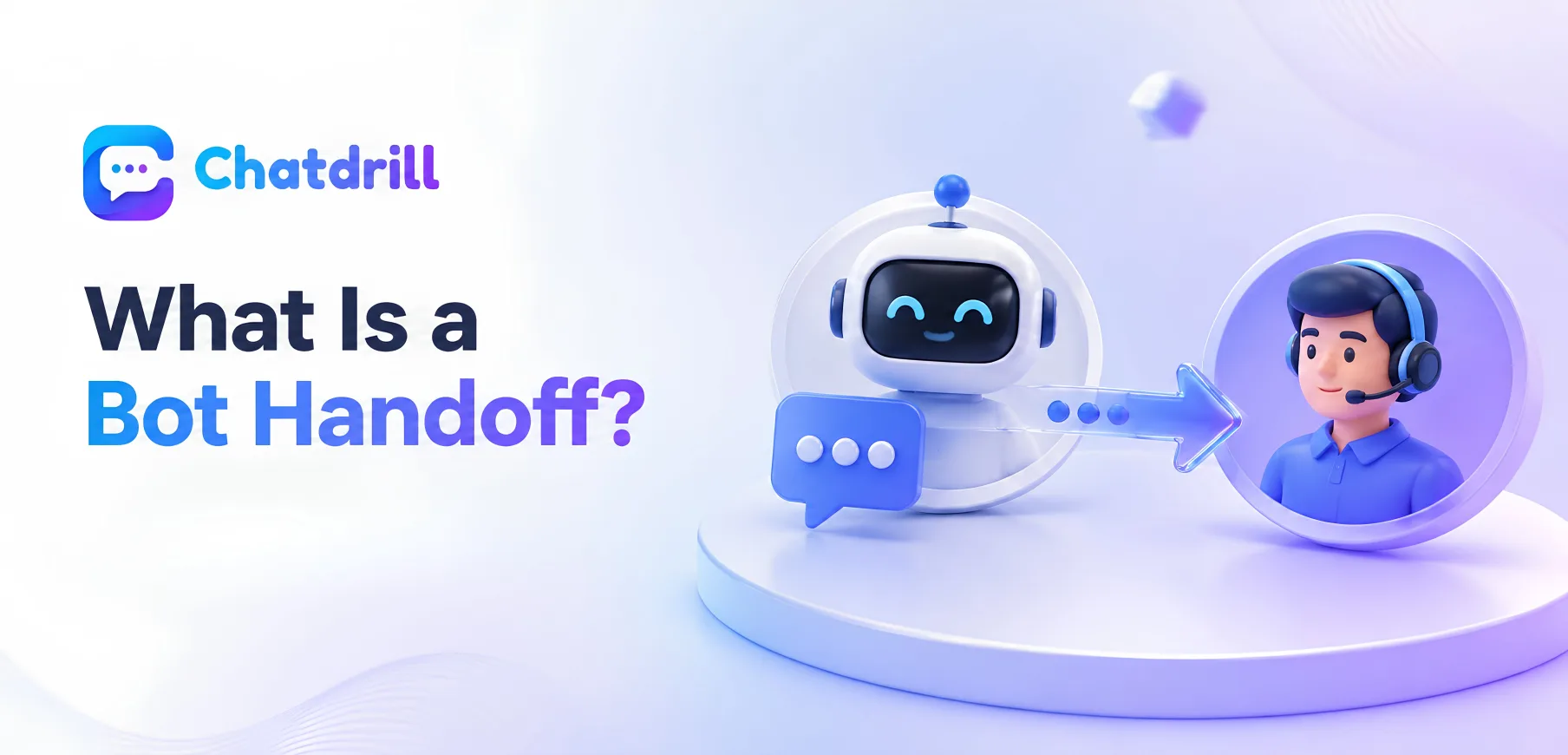
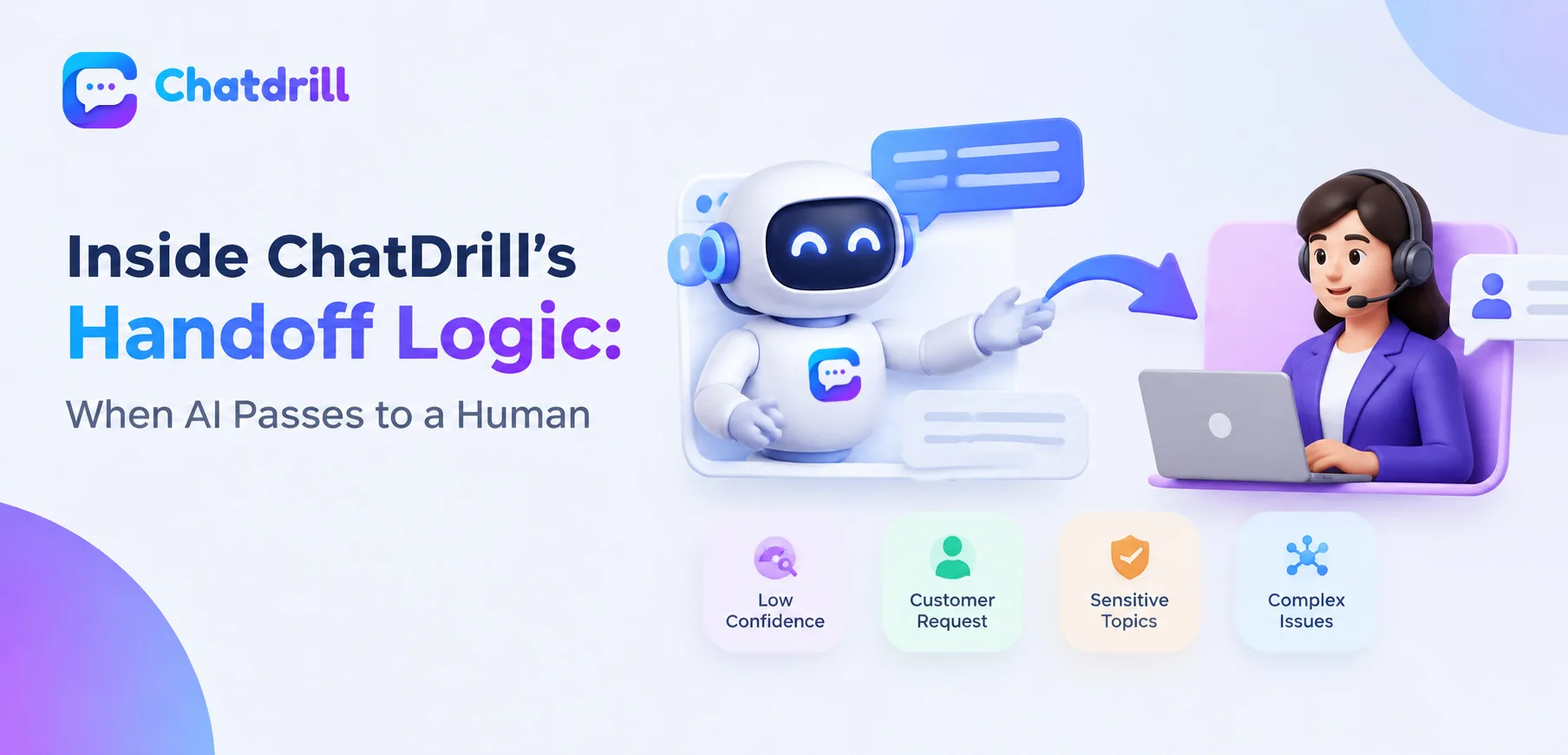
One of the most important design decisions in any AI-assisted chat system is knowing when the AI should stop trying to resolve a conversation itself and hand it to a human agent instead, a decision that directly affects both resolution quality and customer experience.
Quick answerChatdrill's handoff logic recognizes when a conversation genuinely exceeds what AI should handle alone, low confidence in an answer, an explicit customer request for a human, or a detected sensitive or complex topic, then passes the conversation to a human agent along with full context, so the customer never has to repeat what they've already explained.
Understanding how Chatdrill approaches this handoff decision, and why context preservation during the transfer matters so much, helps a business trust the system's judgment and configure it appropriately for their specific needs.
This guide covers what triggers a handoff, why context preservation during transfer matters, common handoff configuration mistakes, and how to fine-tune this logic for your business.
What Triggers a Hdoff to a Human Agent
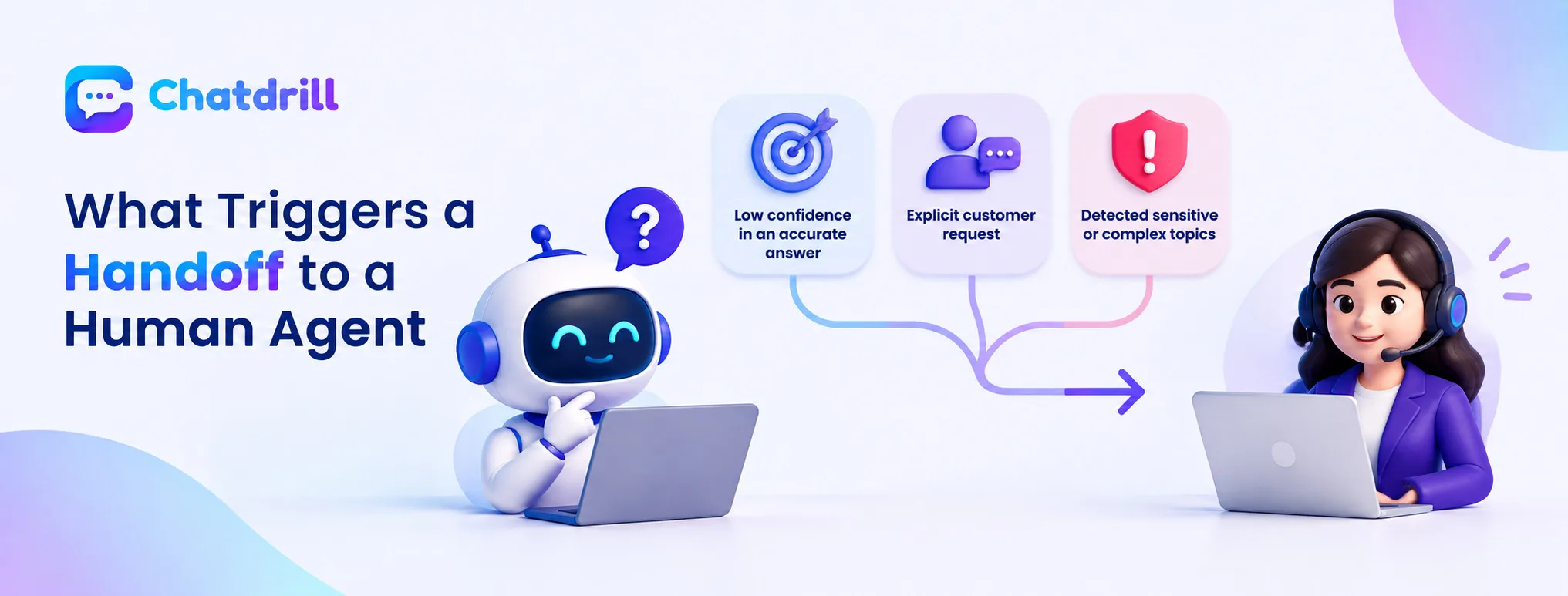
Low confidence in an accurate answer, an explicit customer request, and detected sensitive or complex topics each independently trigger escalation to a human.
Low confidence in providing an accurate answer
When the AI's underlying retrieval process doesn't find a sufficiently confident, relevant match in your source content for a customer's specific question, this genuine uncertainty triggers escalation rather than risking an inaccurate, confidently-stated guess.
This confidence-based triggering reflects a deliberate design priority, an honest "let me get you a human who can help with that" is considerably better than a wrong answer delivered with false confidence.
Explicit customer requests and detected sensitive topics
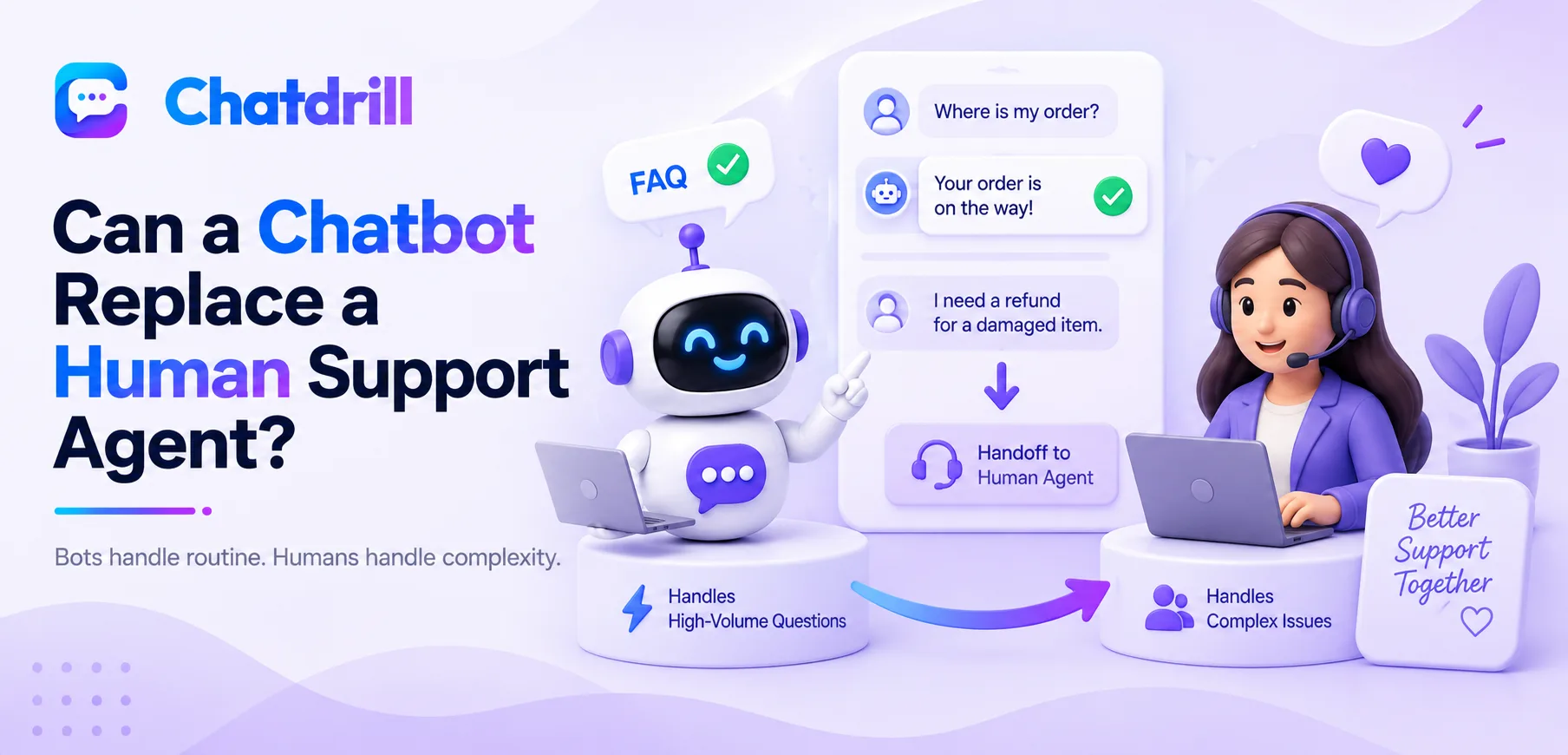
A customer directly asking for a human agent triggers immediate handoff respecting their stated preference, while certain detected topic categories, a formal complaint, a legal or safety-adjacent question, trigger handoff proactively given their genuinely higher stakes.
This combination of respecting explicit requests and proactively recognizing higher-stakes topics reflects a considered approach to when human judgment genuinely adds more value than AI-driven resolution alone.
Why Context Preservation During Transfer Matters
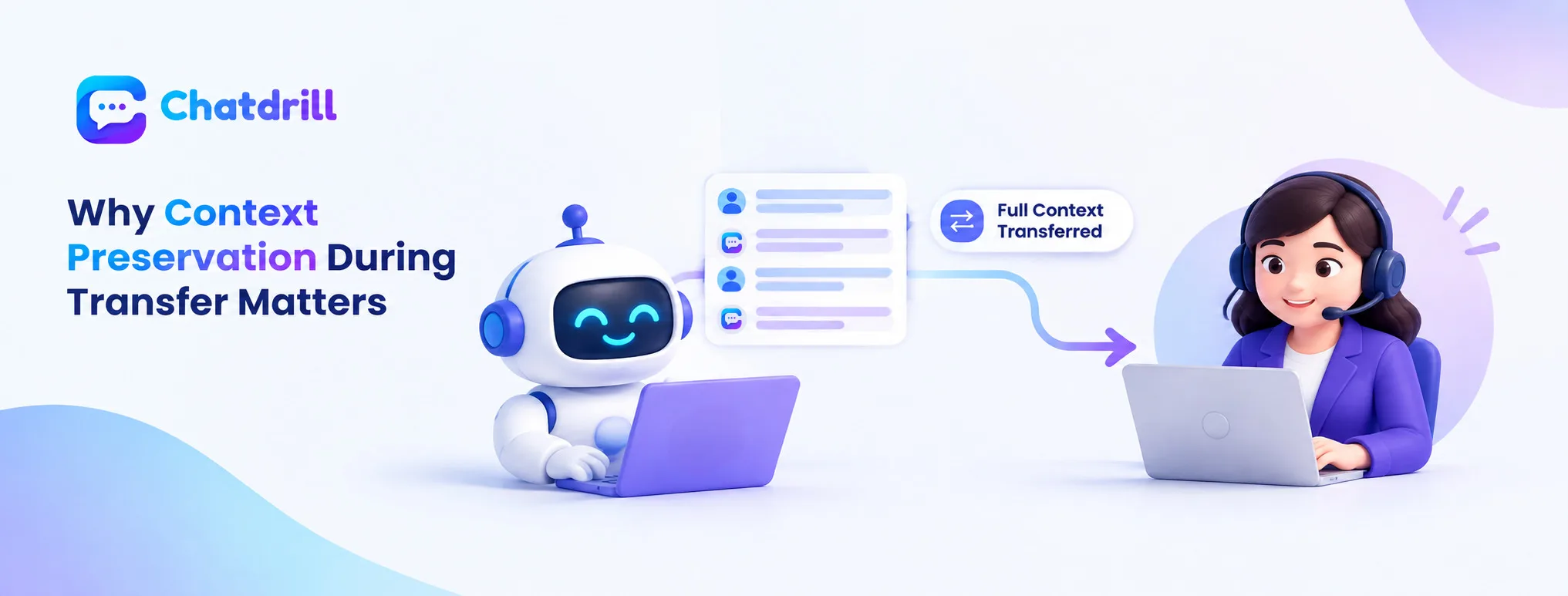
Passing full conversation context to the receiving human agent prevents the frustrating experience of a customer having to repeat information they've already provided.
The frustration of repeating yourself
A customer who has already explained their issue to an AI, only to have a human agent ask them to explain it again from scratch, experiences exactly the kind of frustrating, disjointed handoff that damages trust in the overall support experience.
This specific frustration point is widely recognized as one of the most damaging moments in any multi-touch support interaction, making its prevention a genuinely important design priority.
How full context transfer prevents this
Chatdrill's handoff process passes the complete conversation history and any gathered context to the receiving human agent, letting them pick up naturally from where the AI left off rather than starting over.
This continuity directly protects the customer experience during exactly the moment, a handoff, that other systems most commonly mishandle.
Common Handoff Configuration Mistakes
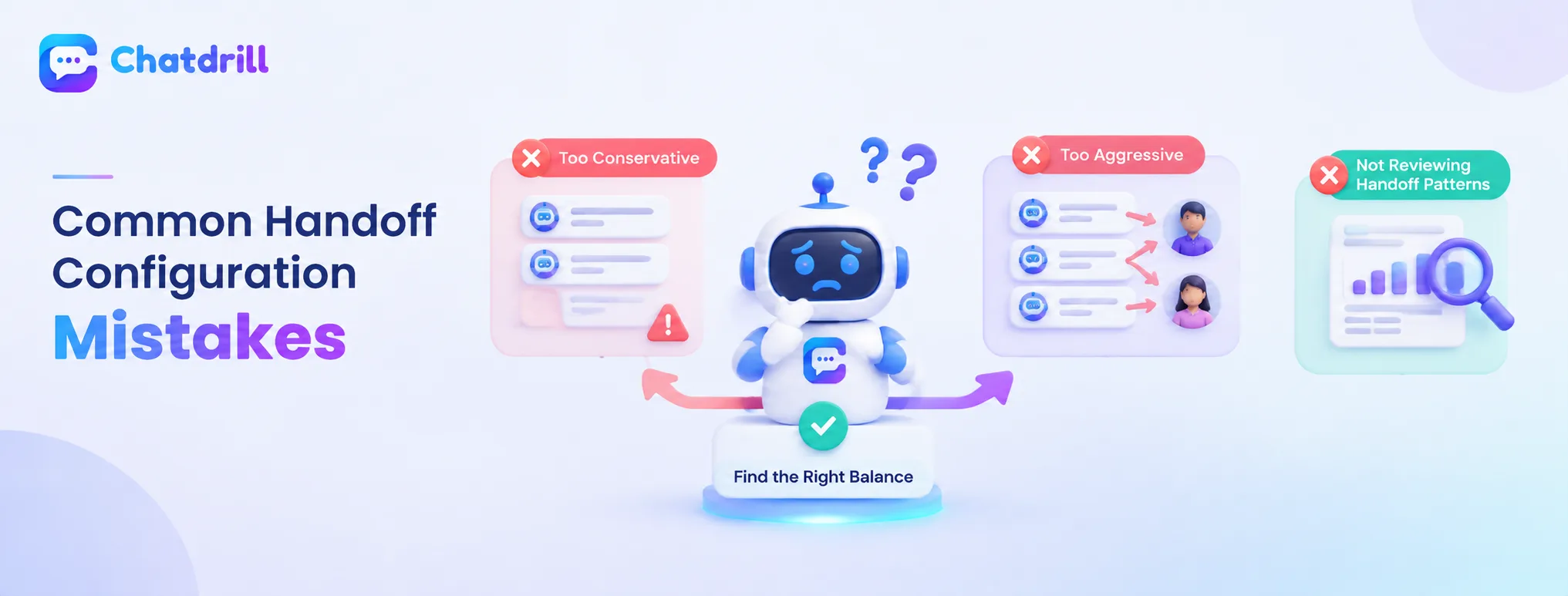
Setting handoff triggers too conservatively or too aggressively, and failing to review actual handoff patterns, are common configuration mistakes.
Handoff triggers set too conservatively or aggressively
Configuring handoff triggers too conservatively means the AI attempts to handle genuinely difficult questions beyond its appropriate scope, while triggers set too aggressively hand off routine questions the AI could have resolved perfectly well alone.
Finding the genuinely appropriate balance, informed by your own business's actual question complexity, produces better overall results than either extreme.
Not reviewing actual handoff patterns
Failing to review which specific questions actually trigger handoff misses the opportunity to identify content gaps worth addressing, since a recurring handoff pattern around a specific topic often signals a genuine gap in AI training rather than a topic that inherently requires human judgment.
This review, connecting back to the broader AI training improvement process, helps refine handoff triggers to become more accurately calibrated over time.
Fine-Tuning Handoff Logic for Your Business
Adjusting trigger sensitivity based on your genuine question complexity and reviewing outcomes after each adjustment produces increasingly well-calibrated handoff behavior.
Adjusting sensitivity based on your genuine complexity
A business with genuinely more complex, individualized typical questions reasonably sets handoff triggers somewhat more readily than a business with simpler, more standardized common questions, reflecting real differences in what AI can appropriately resolve alone.
This complexity-aware calibration, rather than assuming one universal trigger sensitivity fits every business, produces genuinely more appropriate handoff behavior for your specific context.
Reviewing outcomes after each adjustment
Checking whether a trigger adjustment genuinely improved the balance between AI resolution and appropriate escalation, rather than assuming any single change is automatically correct, supports a genuinely evidence-based refinement process.
This iterative approach reflects the same evidence-based improvement principle worth applying across any configurable aspect of an AI-assisted chat system.
Let AI answer the repeat questions from your own content, and hand off to a person when it should.
See how it works