A business serving customers across multiple languages faces a genuine choice, maintain separate support content and processes for each language, a genuinely resource-intensive approach, or find a way to serve multiple languages from one underlying, unified knowledge source.
Quick answerChatdrill's multilingual engine detects a customer's language automatically and responds directly in that language, drawing on the same underlying business knowledge trained in your primary language, so a business can serve customers across multiple languages without maintaining separate, duplicate training content for each one.
Understanding how Chatdrill's multilingual engine approaches this challenge helps a business serving or expanding into multiple language markets configure and trust the system appropriately.
This guide covers how automatic language detection and response works, how one knowledge base serves multiple languages, common multilingual configuration considerations, and how to verify quality across your specific languages.
How Automatic Language Detection and Response Works
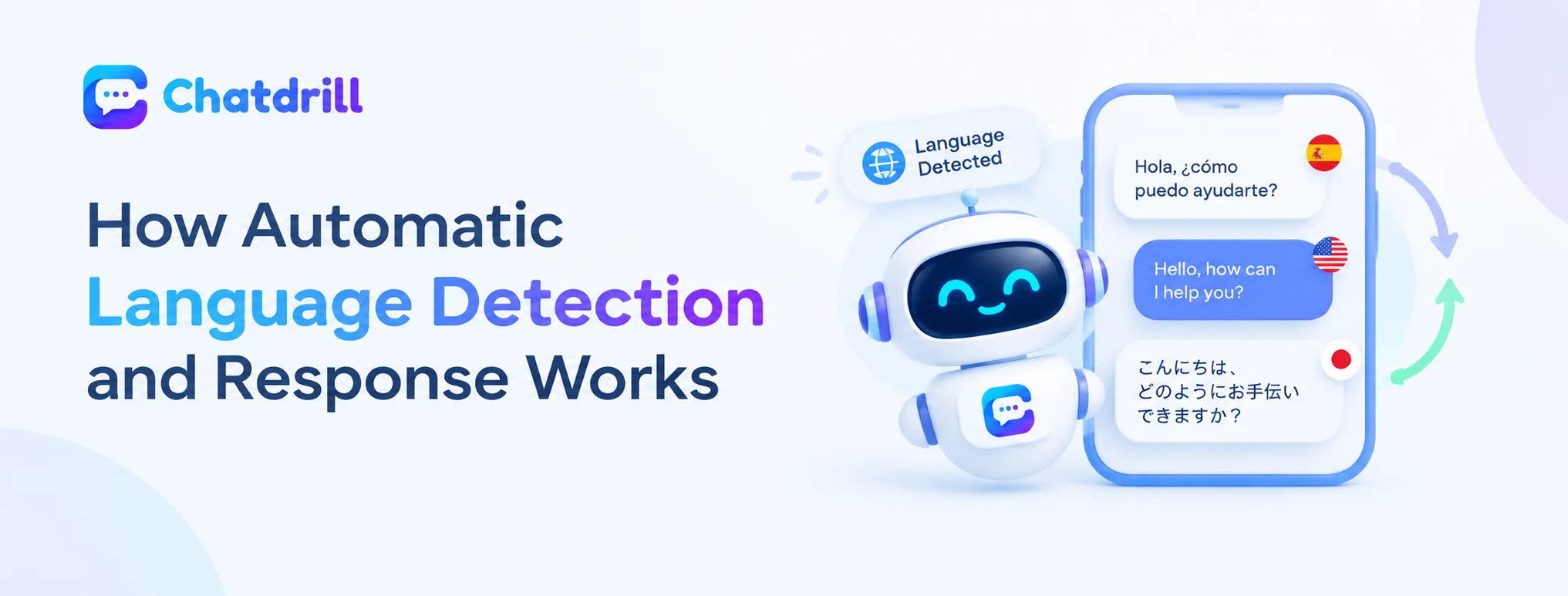
Chatdrill detects a customer's language from their message and responds directly in that same language without requiring the customer to manually select it.
Detecting language from the customer's message
Chatdrill's engine identifies the language a customer is writing in directly from their message content, removing the friction of requiring a manual language selection step before a conversation can even begin.
This automatic detection reflects a genuinely smoother customer experience, letting a customer simply start typing in their own language rather than navigating a separate selection step first.
Responding directly in the detected language
Once language is detected, Chatdrill responds directly in that same language, maintaining a natural, consistent conversation rather than requiring the customer to read a response in a different language than they used.
This consistency throughout the conversation, not just the initial detection, reflects a genuinely complete multilingual experience rather than a partial, awkward implementation.
How One Knowledge Base Serves Multiple Languages
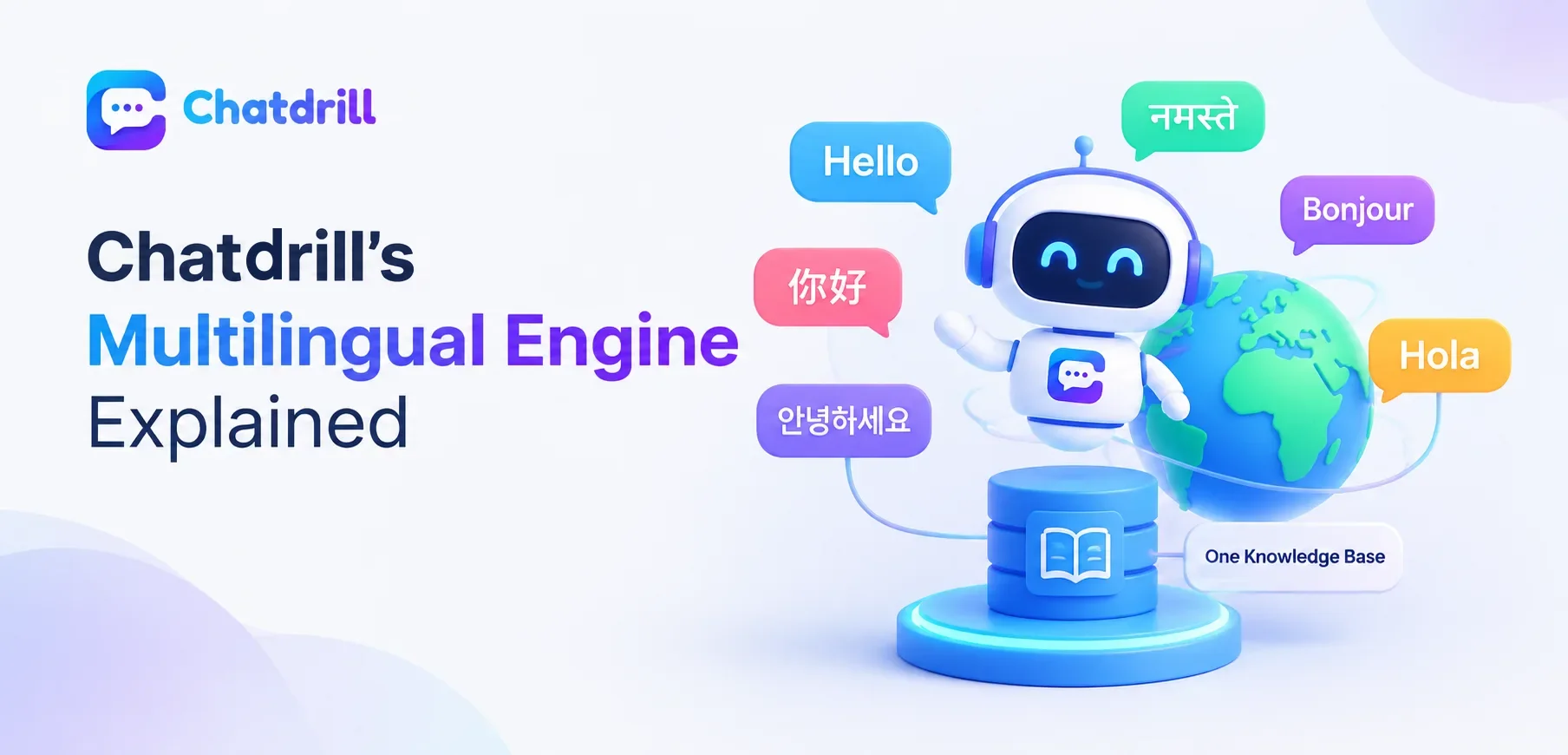
The underlying business knowledge, trained once in your primary language, gets translated dynamically to respond accurately across every supported language.
Training once, responding across languages
Rather than requiring a business to separately train and maintain content in every language it wants to support, Chatdrill's engine draws on the same underlying business knowledge, trained in your primary language, to generate accurate responses across supported languages.
This single-source approach directly addresses the resource-intensiveness this guide identifies as the core challenge multilingual support traditionally presents.
Maintaining accuracy across the translation process
This dynamic, cross-language response generation depends on the underlying source content being genuinely clear and specific, the same content-quality principle relevant to any AI training, since ambiguous source content produces less reliable results across every language, not just the primary one.
This connection reinforces why investing in genuinely clear, specific source content pays off multiple times over for a business serving several languages from one shared knowledge base.
Common Multilingual Configuration Considerations
Verifying quality specifically for each supported language, and accounting for cultural or regional nuance beyond pure translation, deserve deliberate attention.
Verifying quality for each specific language
Testing conversation quality directly in each language your business actually needs to support, rather than assuming uniform quality across every language automatically, confirms the system genuinely serves your specific customer base well.
This verification matters since translation quality can genuinely vary somewhat between different language pairs, deserving direct confirmation rather than blanket assumption.
Accounting for cultural and regional nuance
Beyond pure language translation, certain business content, tone conventions, formal versus informal address, may benefit from genuine cultural awareness beyond a literal translation alone.
Reviewing this dimension specifically for markets where cultural communication norms differ meaningfully from your primary language market produces a more genuinely well-suited customer experience.
Getting Started With Multiple Languages
Identifying your genuinely highest-priority languages first and expanding gradually as you confirm quality produces a more manageable rollout than enabling every language at once.
Prioritizing your highest-need languages first
Reviewing your actual customer base to identify which specific languages represent genuinely meaningful volume helps prioritize where to focus initial quality verification effort, rather than treating every possible language as equally urgent.
This prioritization reflects a practical, evidence-based approach to rolling out multilingual support in a way that delivers value where it matters most first.
Expanding gradually as quality is confirmed
Adding additional languages incrementally, confirming genuine quality at each step before expanding further, produces a more reliable overall rollout than enabling every possible language simultaneously without individual verification.
This gradual approach reflects the same quality-verification principle this guide identifies as important, applied specifically to the pace of a broader multilingual rollout.
Talk to visitors the moment they land, from a widget that installs in minutes.
See how it works