
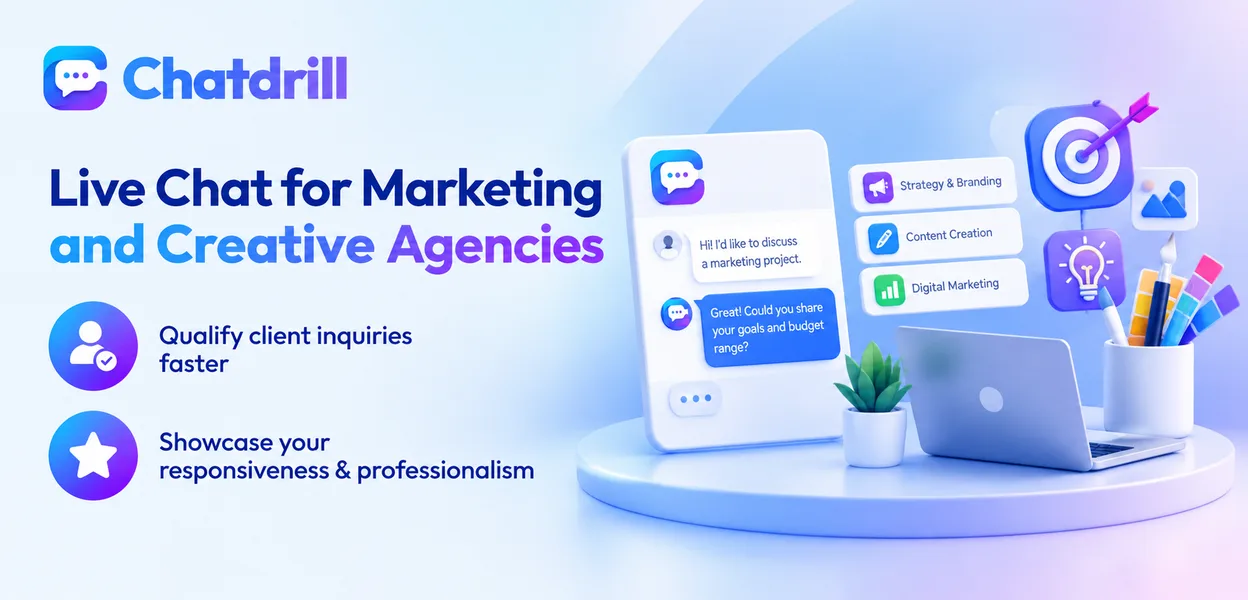
A marketing or creative agency's chat serves a genuinely dual purpose, efficiently qualifying prospective client inquiries before committing senior team time to a full conversation, while also implicitly demonstrating the agency's own responsiveness and professionalism as a preview of the client experience.
Quick answer: Live chat helps marketing and creative agencies qualify prospective client inquiries efficiently, gathering basic project scope and budget signals before committing partner or account-lead time to a full discovery call, while showcasing the agency's own responsiveness and professionalism as an implicit demonstration of the client experience a prospect can expect.
This dual purpose matters particularly for an agency, since prospective clients evaluating creative or marketing partners are often assessing communication quality and responsiveness as a genuine signal of what working together would actually feel like.
Understanding both the qualification efficiency chat offers and this implicit demonstration effect helps an agency use chat as more than just an information-gathering tool.
This guide covers the dual purpose chat serves for agencies, specific qualification tactics, common mistakes, measuring the actual impact, and how ChatDrill supports marketing and creative agencies.
The Dual Purpose Chat Serves for Agencies
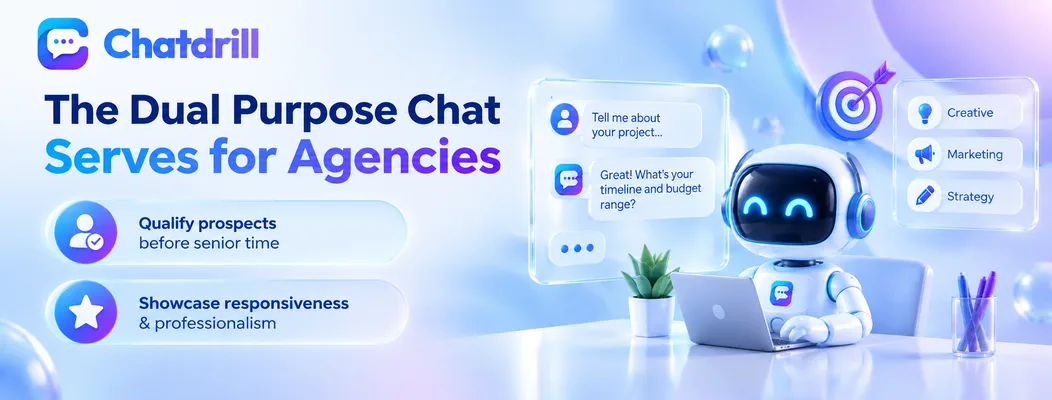
Chat efficiently qualifies prospective client inquiries while implicitly demonstrating the agency's own responsiveness and professionalism.
Efficient qualification before committing senior time
Gathering basic project scope, timeline, and budget signals through chat before committing a partner or senior account lead's time to a full discovery call helps an agency prioritize genuinely well-matched, qualified prospects.
This efficiency respects that senior agency time represents a genuinely valuable, limited resource best directed toward prospects who are a realistic fit for the agency's specific capabilities and pricing.
The implicit demonstration effect
A prospective client's chat experience, how quickly and professionally an agency responds, implicitly signals what the actual working relationship might feel like, making chat itself a subtle but genuine extension of the agency's brand and service quality.
This demonstration effect means chat's tone and responsiveness deserve as much genuine attention as its informational accuracy, since both together shape a prospect's confidence in the agency.
Specific Qualification Tactics for Agencies
Asking natural, specific questions about project scope and budget range, without feeling like a rigid intake form, effectively qualifies genuine agency prospects.
Natural questions about scope and goals
"What are you hoping to accomplish with this project, and do you have a rough timeline in mind?" gathers genuinely useful qualifying information conversationally, respecting that a creative or marketing inquiry often benefits from open-ended, exploratory framing rather than a rigid checklist.
This conversational approach also reflects the agency's own creative, relationship-oriented brand voice, reinforcing the implicit demonstration effect this guide identifies as valuable.
Tactfully gathering budget range signals
"To make sure we're a good fit, do you have a general budget range in mind for this project?"
gathers genuinely useful qualifying information tactfully, helping avoid a mismatched conversation that wastes both the prospect's and the agency's time.
This tactful directness, rather than avoiding the budget question entirely, respects that genuine fit assessment benefits both parties by surfacing a potential mismatch early.
Common Mistakes in Agency Chat
A rigid, form-like qualification process that undermines the creative brand impression, and slow response times that contradict the responsiveness being implicitly demonstrated, are common mistakes.
A rigid, form-like qualification process
An extended series of qualifying questions delivered in a stiff, checklist-like manner undermines the creative, relationship-oriented brand impression many agencies want to convey, even while technically gathering useful information.
Keeping the qualification conversational and natural, as this guide's tactics recommend, preserves the brand-appropriate tone this business type typically wants to project.
Slow response times undermining the demonstration effect
A slow or delayed chat response directly contradicts the responsiveness an agency wants to implicitly demonstrate, potentially damaging a prospective client's confidence before any actual project conversation even begins.
Prioritizing genuine response speed, given how directly it reflects on the agency's core service promise, protects against this particular, brand-damaging mistake.
Measuring the Actual Impact for Your Agency
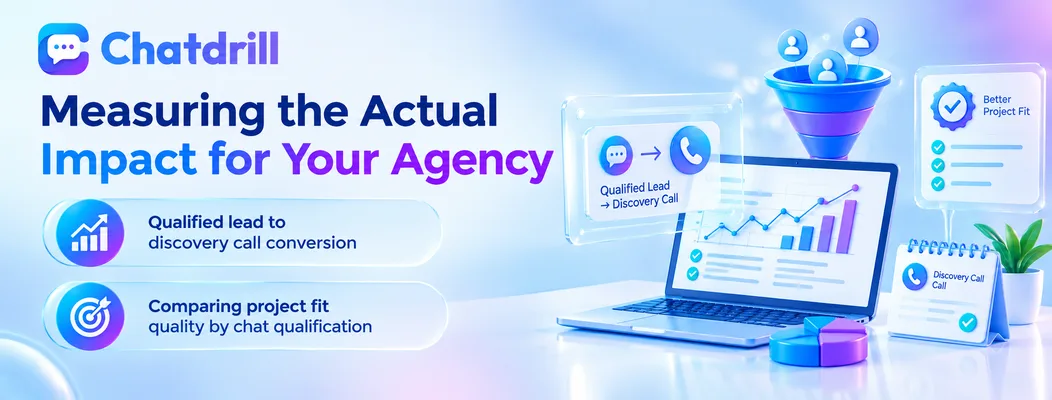
Tracking qualified-lead-to-discovery-call conversion and comparing project fit quality reveals chat's genuine contribution to an agency's new business process.
Qualified lead to discovery call conversion
Tracking what percentage of chat-qualified prospective clients convert into a scheduled discovery call reveals chat's genuine contribution to the agency's new business funnel, distinct from raw inquiry volume alone.
This qualification-focused metric matters more than a generic engagement measure, since genuine fit quality directly affects how productively senior team time gets used.
Comparing project fit quality by chat qualification
Reviewing whether discovery calls originating from chat-qualified leads show better genuine project fit than unqualified inquiries confirms whether the qualification tactics this guide recommends are working as intended.
This fit-quality comparison provides more meaningful evidence of chat's value than a pure volume or speed metric alone.