
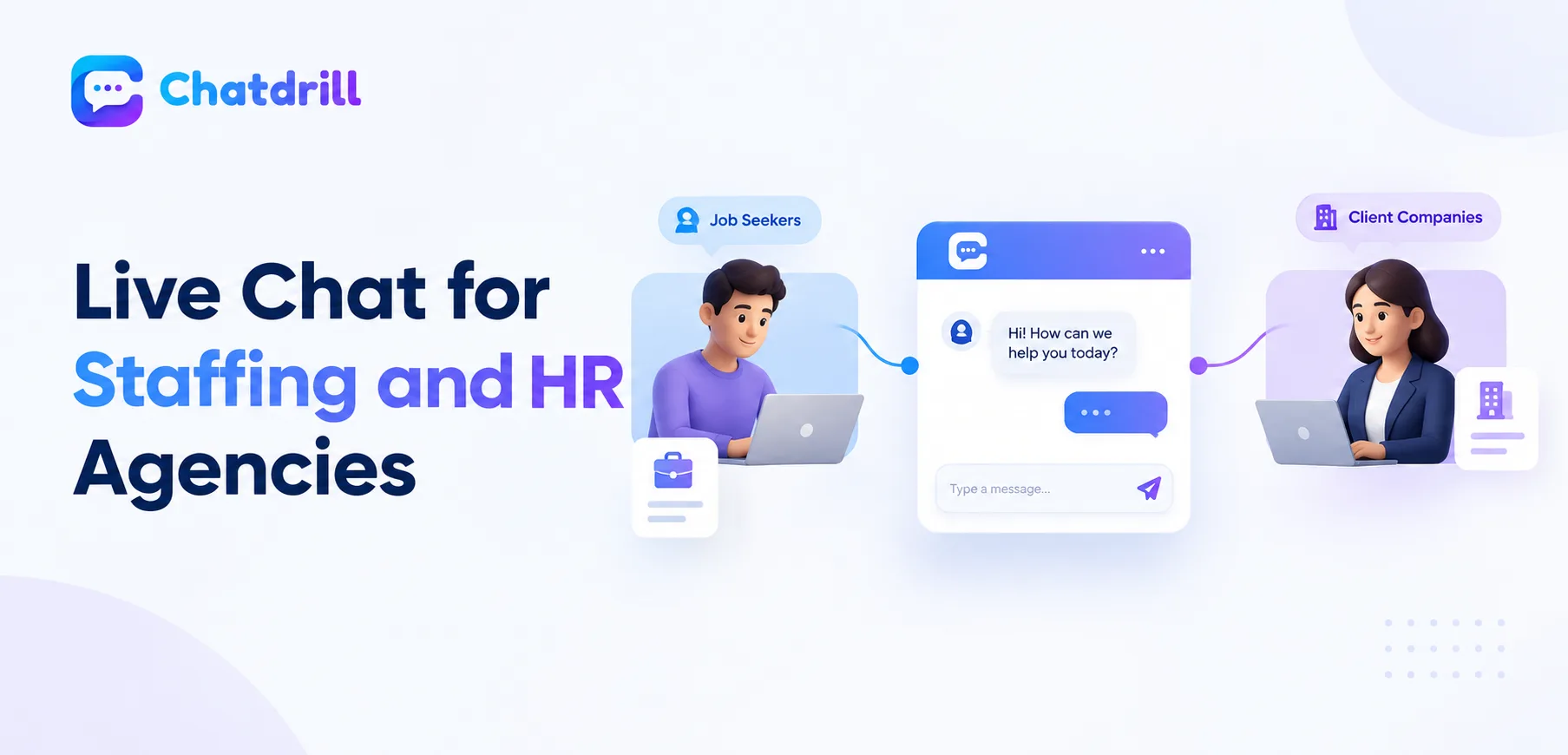
A staffing or HR agency's chat needs span two genuinely distinct audiences, job seekers exploring available positions, and client companies evaluating whether to use the agency's staffing services, each with meaningfully different questions and goals.
Quick answer: Live chat helps staffing and HR agencies quickly qualify both job seekers browsing available positions and client companies inquiring about staffing services, addressing this business model's genuinely dual audience with tailored, real-time engagement rather than a single, generic chat experience serving neither audience particularly well.
Live chat can serve both audiences effectively, provided the underlying approach recognizes and addresses these genuinely different needs rather than applying one generic conversation style regardless of which audience is actually engaging.
Understanding both sides of this dual audience, and the specific tactics that work for each, helps a staffing agency capture value from both its candidate pipeline and its client acquisition efforts through chat.
This guide covers the dual audience challenge, specific tactics for each, common mistakes, measuring the actual impact, and how ChatDrill supports staffing and HR agency chat.
The Dual Audience Challenge for Staffing Agencies
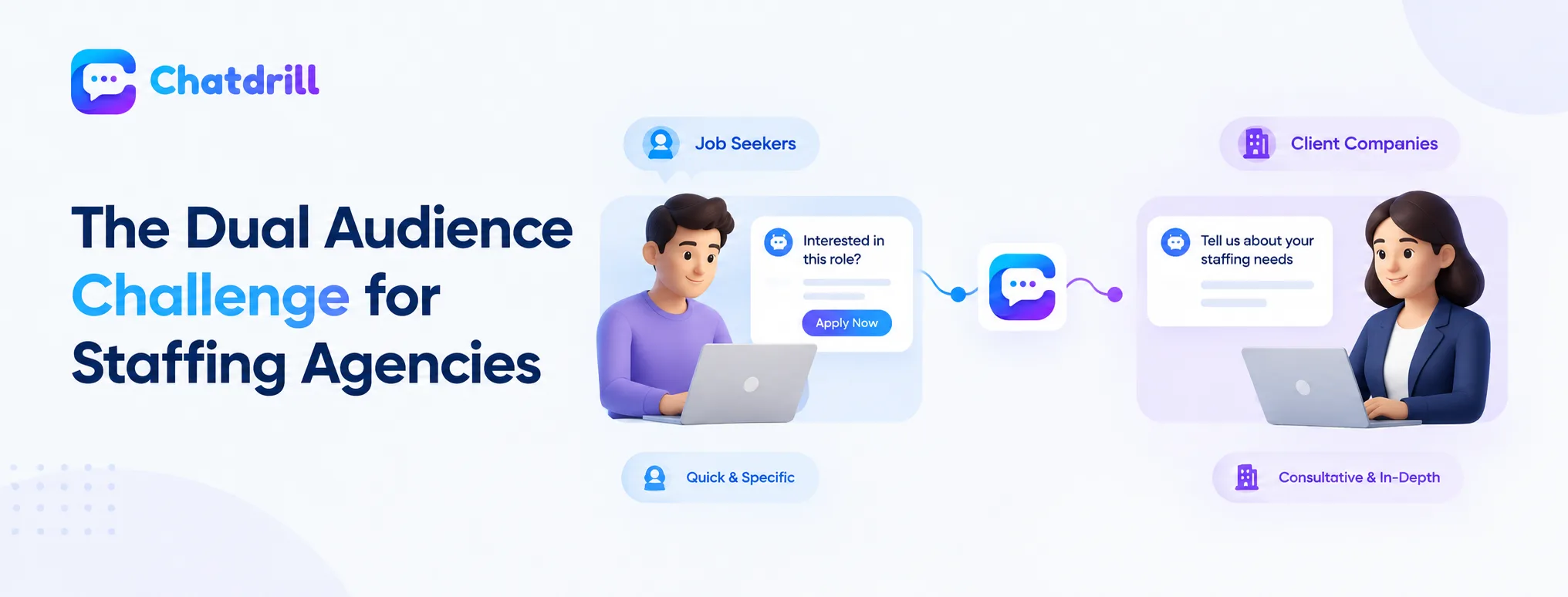
Job seekers and client companies represent genuinely distinct chat audiences with meaningfully different questions and goals this business model must address well.
Job seeker engagement and basic qualification
A job seeker browsing available positions benefits from quick answers about specific roles and a natural, low-friction path to expressing interest, mirroring the pre-qualification approach relevant to recruiting-focused chat more broadly.
This audience typically wants efficient, low-commitment engagement, distinct from the more consultative conversation a client company inquiry usually requires.
Client company service inquiries
A client company representative evaluating staffing services genuinely benefits from a more consultative conversation, understanding the agency's specific process, pricing structure, and track record within their particular industry.
This distinct need, more akin to a B2B service inquiry than a job-seeker interaction, requires meaningfully different conversation depth and tone.
Specific Tactics for Each Audience
Quick, role-specific engagement for job seekers
conversation for client companies both address this business's dual audience effectively.
Quick, role-specific engagement for job seekers "Interested in [specific role]? I can tell you more about it or help you get your application started, whichever's more helpful." respects a job seeker's typically efficient, low-commitment browsing behavior while still offering a clear, easy next step.
This approach mirrors the low-friction, conversational qualification principle relevant to recruiting chat more broadly, applied specifically to the staffing agency context.
Consultative engagement for client companies
"Happy to walk you through how we typically work with companies in [their industry], what specific staffing challenge are you hoping to solve?" opens a genuinely consultative conversation appropriate for a B2B service evaluation.
This more substantive engagement style reflects the deeper, more considered decision process a client company typically goes through before committing to a staffing partnership.
Common Mistakes in Staffing Agency Chat
Using one generic conversation style for both audiences, and failing to route each audience type to the appropriate internal team, are common mistakes.
One generic conversation style for both audiences
Applying the same conversational approach to a job seeker and a client company inquiry, without adjusting for their genuinely different needs and goals, produces a less effective experience for at least one of the two audiences.
Recognizing and tailoring for this distinction, as this guide's tactics recommend, produces meaningfully better engagement for both genuinely different audience types.
Failing to route to the appropriate internal team
A promising client company inquiry that doesn't get routed quickly to the appropriate business development contact, or a strong candidate lead that doesn't reach the right recruiter, wastes the genuine value chat captured in the initial conversation.
Building clear internal routing rules based on which audience type is engaging ensures captured leads translate into genuine follow-up action.
Measuring the Actual Impact for Your Agency
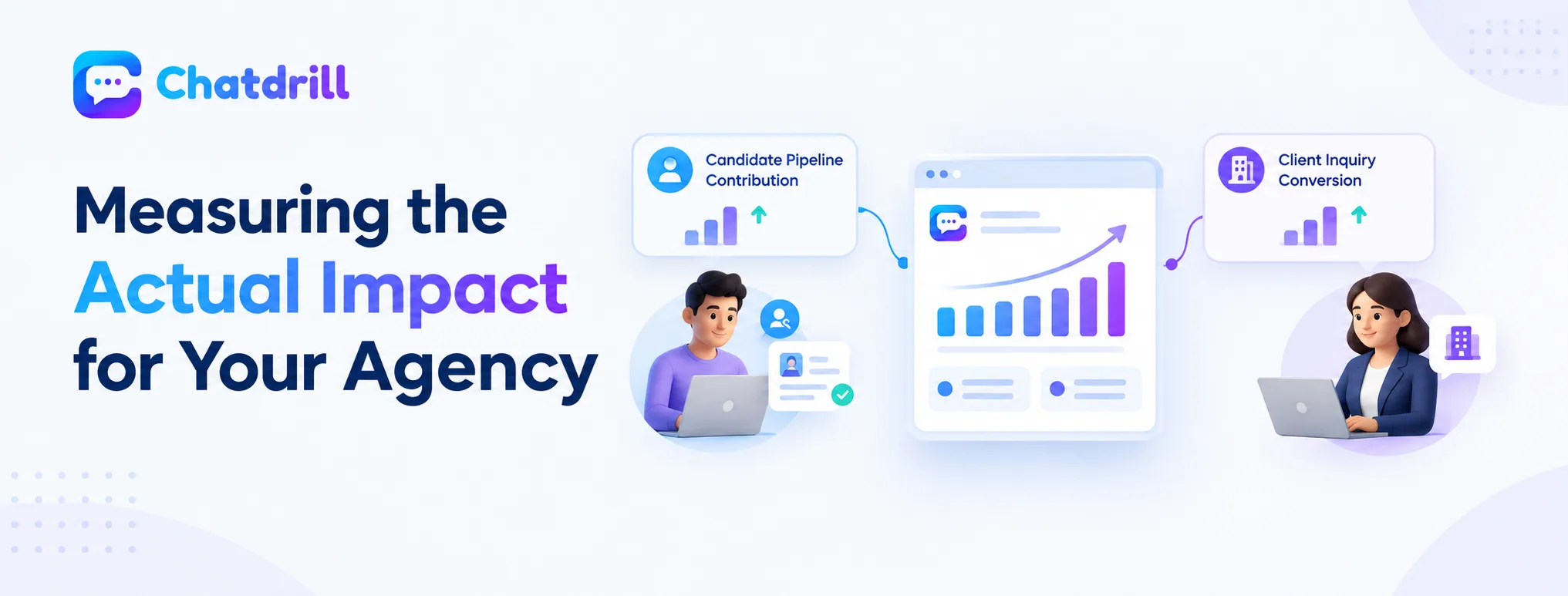
Tracking candidate pipeline contribution and client inquiry conversion separately reveals chat's genuine, dual contribution to your agency's business.
Candidate pipeline contribution from chat
Tracking how many genuine candidate applications or qualified leads originate through chat engagement reveals its contribution to your recruiting pipeline, distinct from other candidate sourcing channels.
This metric helps assess whether chat investment is genuinely strengthening your available talent pool for client placements.
Client inquiry conversion to genuine business
Tracking what percentage of client company chat inquiries convert into an actual service engagement reveals chat's genuine contribution to new business development, distinct from candidate-side metrics.
This separate tracking, alongside candidate pipeline metrics, together confirm whether chat is genuinely delivering value across both sides of this agency's dual audience.