
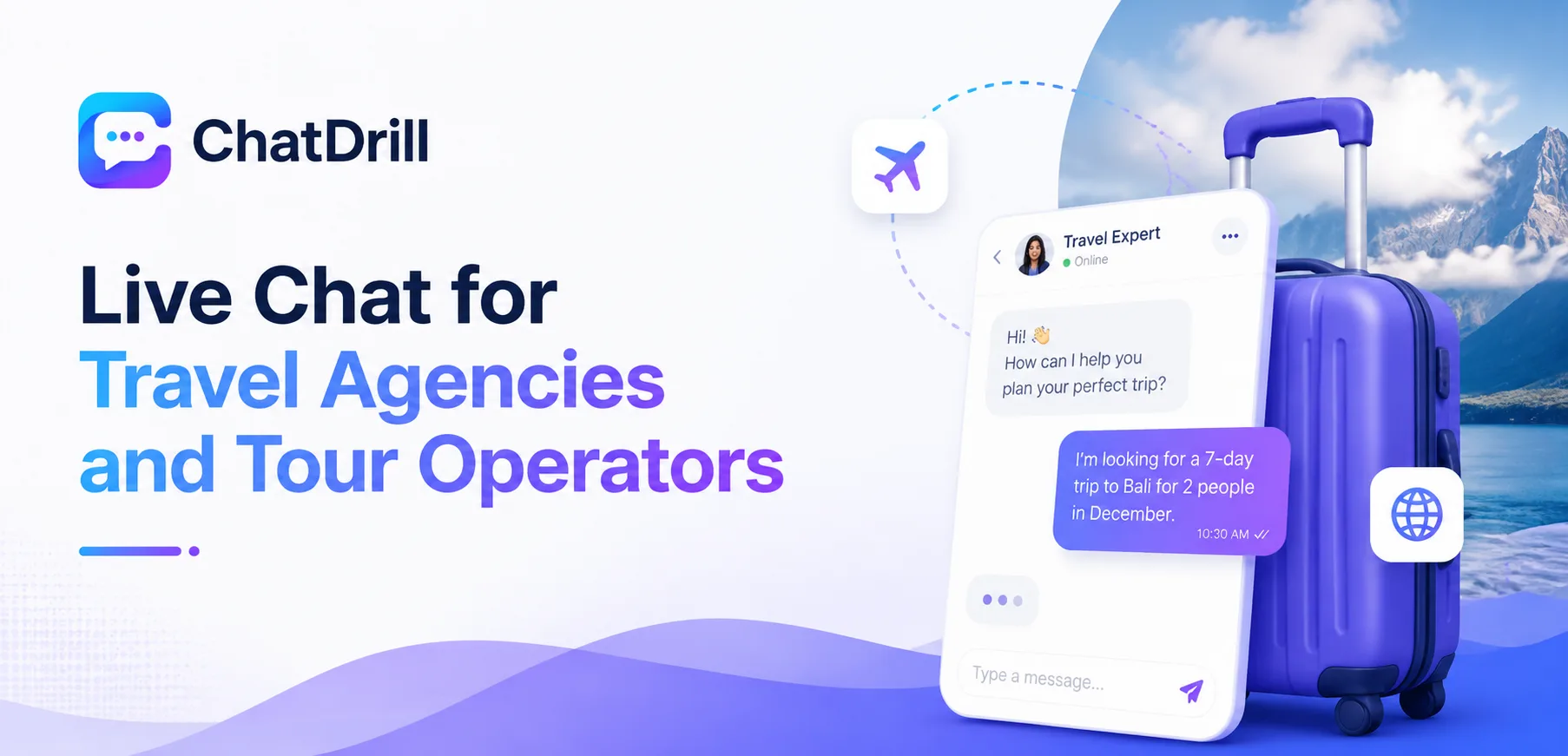
Travel chat conversations tend to involve genuinely complex, multi-variable questions, itinerary options, pricing across dates and group sizes, cancellation policies, that benefit from AI trained with real depth rather than simple, single-fact responses.
The booking decision itself is also often high-consideration and researched carefully, meaning a prospective traveler engaging with chat is frequently comparing several options and wants specific, credible answers rather than generic marketing responses.
Beyond pre-booking questions, travel businesses also field significant post-booking volume, itinerary changes, document requirements, day-of-travel support, that benefits from a different chat approach than the initial sales-focused conversation.
This guide covers why travel chat is uniquely complex, what prospective and existing travelers ask, a practical setup approach, and mistakes worth avoiding.
Why Travel Chat Involves Uniquely Complex Questions
Travel-related questions often involve multiple interacting variables, dates, group size, destination-specific requirements, that require AI trained with genuine depth rather than simple, single-fact answers common in other industries.
The multi-variable nature of travel questions
A question about a specific trip's pricing or availability often depends on travel dates, group size, and specific package inclusions simultaneously, requiring more sophisticated handling than a straightforward, single-variable lookup.
This complexity means travel chat AI needs genuinely rich training content covering these variable combinations, not just a flat list of simple facts.
High-consideration booking decisions
A significant trip purchase is rarely an impulse decision, meaning a prospective traveler engaging with chat has often already researched extensively and wants specific, credible answers rather than generic reassurance.
This researched, high-consideration context rewards chat responses with genuine specificity and detail over vague, marketing-style answers that don't address the traveler's actual, considered questions.
What Prospective and Booked Travelers Ask
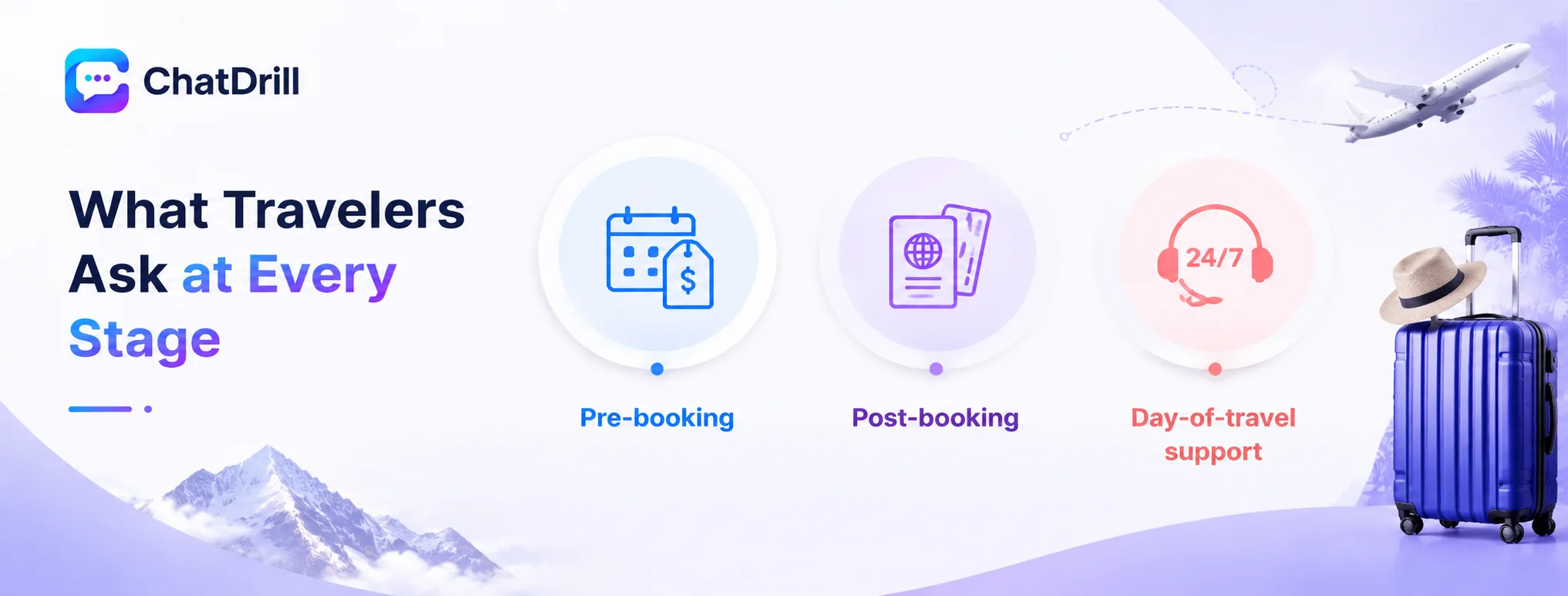
Prospective travelers ask about itinerary details, pricing across different dates and group sizes, and cancellation or change policies, while already-booked travelers more often ask about document requirements, itinerary changes, and day-of-travel logistics.
Pre-booking questions
Itinerary specifics, pricing variations by date or group size, and cancellation policy details dominate pre-booking chat volume, questions that benefit from AI trained on your actual package structure and policies.
This category directly influences the booking decision, making accuracy and depth here particularly valuable given how considered these purchase decisions typically are.
Post-booking questions
Document requirements, visa information, itinerary adjustment requests, and day-of-travel logistics make up significant post-booking volume, a genuinely different category from initial sales-focused questions.
This category benefits from a service-oriented tone distinct from the more sales-focused pre-booking conversation, worth reflecting in how AI and staff approach these interactions.
Urgent, day-of-travel support
Questions arising during active travel, a delayed connection, an emergency itinerary change, carry genuine urgency and often benefit from fast escalation to a human rather than relying purely on AI.
Recognizing this category's distinct urgency, and ensuring a clear, fast path to human support for it specifically, matters given the real stress involved when travel plans go wrong mid-trip.
Setup Playbook for Travel Chat
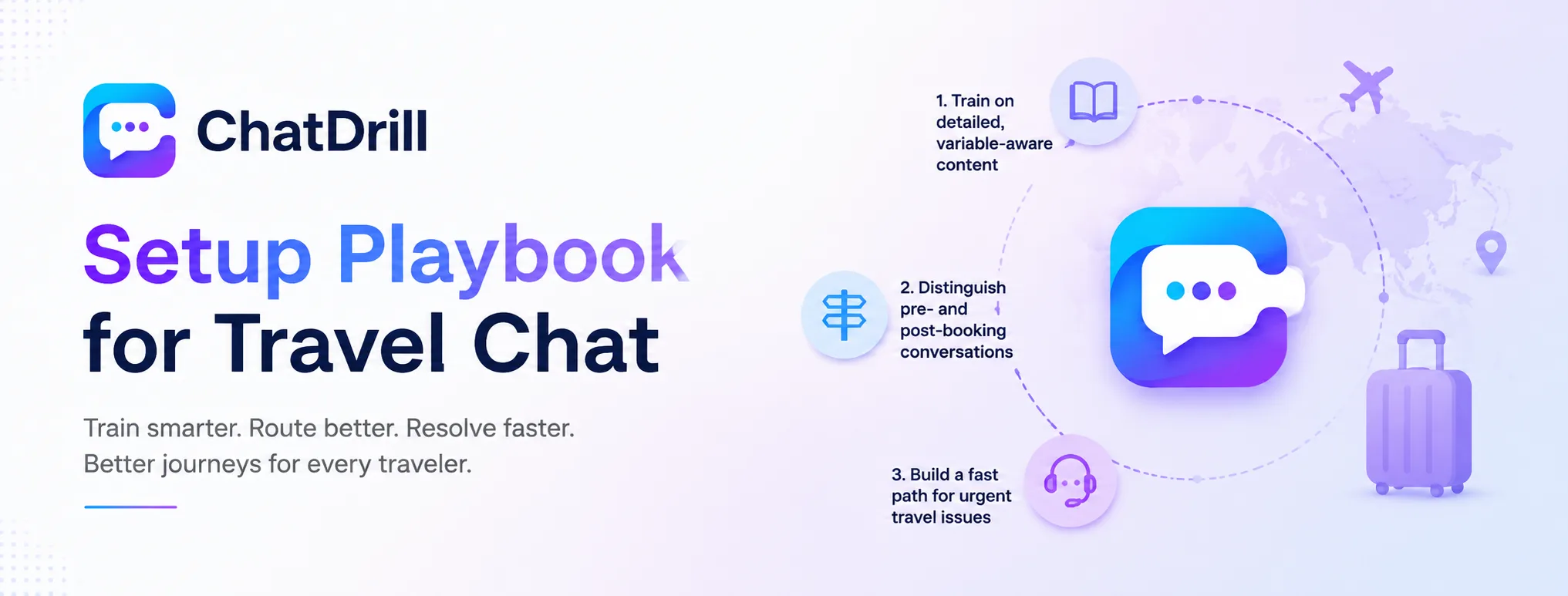
A strong setup trains AI on genuinely detailed package and policy content covering common variable combinations, distinguishes pre-booking from post-booking conversation types, and ensures fast escalation for urgent, day-of-travel issues.
Step 1: Train on detailed, variable-aware content
Feed AI genuinely comprehensive package details covering common date, group-size, and inclusion variations, rather than a simplified summary that can't handle the multi-variable questions travelers actually ask.
This depth investment directly determines whether AI can handle real traveler questions or simply defers most specific inquiries to a human agent.
Step 2: Distinguish pre- and post-booking conversation types
Structuring chat to recognize and appropriately route pre-booking sales inquiries versus post-booking service questions ensures each gets the right tone and appropriate handling.
This distinction also supports better internal routing, directing post-booking service questions to operations staff rather than sales-focused team members.
Step 3: Build a fast path for urgent travel issues
Configuring chat to recognize and immediately escalate genuinely urgent, day-of-travel questions ensures a traveler dealing with a real travel disruption reaches a human quickly rather than working through routine automation first.
This urgency-aware routing respects that a traveler mid-trip with a genuine problem has fundamentally different needs than someone researching a future trip.
Common Mistakes Travel Businesses Make With Chat
The most common mistakes are training AI with oversimplified content that can't handle real multi-variable questions, treating pre- and post-booking conversations identically, and lacking a fast escalation path for genuinely urgent travel issues.
Oversimplified training content
AI trained on a simplified summary rather than genuinely detailed package and policy information ends up unable to answer the specific, multi-variable questions that make up real traveler chat volume.
This gap is worth addressing directly, since travel questions rarely have simple, single-fact answers the way many other industries' questions do.
Treating every conversation identically
Applying the same sales-focused tone to a post-booking service question, or the reverse, misses the genuinely different needs of these two conversation types.
This mismatch can feel jarring to a traveler, worth avoiding through deliberate conversation-type recognition and appropriate tone adjustment.
No fast path for urgent issues
A traveler dealing with a genuine, urgent travel disruption who has to work through routine chat automation before reaching a human experiences real, avoidable frustration during an already stressful situation.
Building explicit urgency recognition into the chat flow, rather than treating every conversation with the same routing logic, addresses this directly.
Measuring Success for Travel Chat
Track chat-to-booking conversion rate for pre-booking conversations, AI deflection on document and policy questions, and escalation speed specifically for flagged urgent, day-of-travel issues.
Chat-to-booking conversion
Tracking what share of pre-booking chat conversations result in an actual completed booking quantifies chat's direct contribution to revenue for this high-consideration purchase category.
This is worth segmenting by trip type or destination where possible, revealing whether certain offerings see stronger chat-driven conversion than others.
Deflection on service questions
Tracking how much document, policy, and general post-booking question volume AI resolves without staff involvement shows the efficiency gain from well-trained service content.
This deflection frees operations staff time for genuinely complex itinerary changes or issues that benefit from human problem-solving.
Urgent-issue escalation speed
Tracking how quickly a flagged urgent travel issue reaches a human agent confirms whether the fast-path routing discussed earlier is genuinely working as intended during real, high-stress situations.
This metric deserves particular attention given the genuine stakes involved when a traveler is dealing with a real disruption during active travel.
Building an Effective Rollout Plan
Launching chat first for pre-booking sales conversations, then extending to post-booking service and urgent-issue handling once the initial flow is proven, keeps the rollout manageable given how different these conversation types are.
Starting with pre-booking conversations
Focusing initial launch on itinerary, pricing, and cancellation-policy questions lets your sales team validate AI's handling of the multi-variable questions covered earlier before service-oriented volume is added.
This phase is the right time to stress-test training content against your actual most common package and date combinations, since gaps here are easiest to spot with a narrower question set.
Reviewing a sample of real pre-booking conversations weekly during this phase helps confirm the tone lands as intended for a considered, researched purchase decision.
Adding post-booking and urgent-issue handling
Once pre-booking chat is stable, extending to document requirements and itinerary-change questions brings a genuinely different, more service-oriented conversation type worth testing separately.
Urgent-issue escalation deserves particular attention during this expansion, run through realistic disruption scenarios directly to confirm the fast-path routing actually triggers as intended.
Operations staff, not just sales, should be involved reviewing this phase, since they're better positioned to judge whether service-oriented AI responses feel appropriately different from the earlier sales-focused ones.