
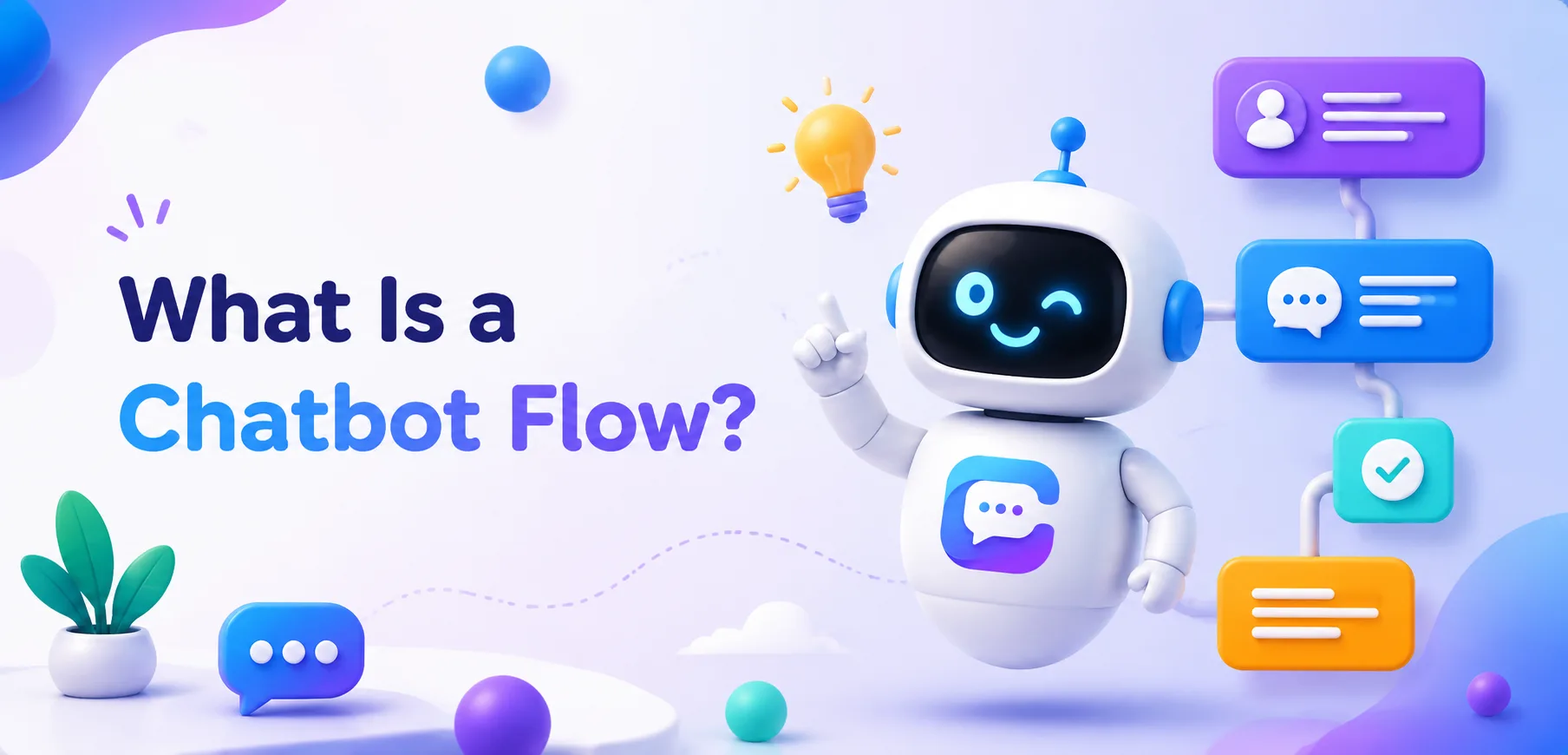
A chatbot flow is essentially the blueprint behind a chatbot's behavior, the planned sequence of what the bot says, what it asks, and how it responds differently depending on what a visitor types or clicks.
Quick answer: A chatbot flow is the structured sequence of steps, questions, and branching decisions a chatbot follows to guide a conversation toward a specific outcome, like answering a question, qualifying a lead, or booking an appointment, defined in advance by whoever designs the bot's behavior.
Even a chatbot that appears to be having a natural, free-flowing conversation is typically operating within some kind of flow structure behind the scenes, whether that's a simple, rigid decision tree or a more flexible, AI-driven set of guidelines.
Understanding what a chatbot flow actually is helps clarify why some bots feel genuinely helpful and natural while others feel frustratingly rigid, since the quality and flexibility of the underlying flow design drives much of that difference.
This guide covers the definition, the main types of chatbot flows, common design mistakes, how flows relate to AI chatbots specifically, and how ChatDrill approaches flow design.
The Full Definition Explained [major informational gain]
[major informational gain]
A chatbot flow is the structured path a conversation follows, defined through a sequence of prompts, decision points, and branches that determine how the bot responds to different inputs.
The basic building blocks
A flow typically starts with a trigger, a visitor opening chat or clicking a specific button, then proceeds through a series of messages and decision points where the bot's next response depends on what the visitor said or selected.
These decision points, often called branches, are what let a bot handle different visitor situations differently rather than following one single, identical script for everyone.
How flows are typically designed
Flows are usually built using a visual builder tool, letting a non-technical person map out the conversation logic as a flowchart, or through more flexible AI training that defines general behavior rather than a strict, fixed sequence.
The specific design approach shapes how rigid or adaptable the resulting bot conversation feels to an actual visitor.
Types of Chatbot Flows
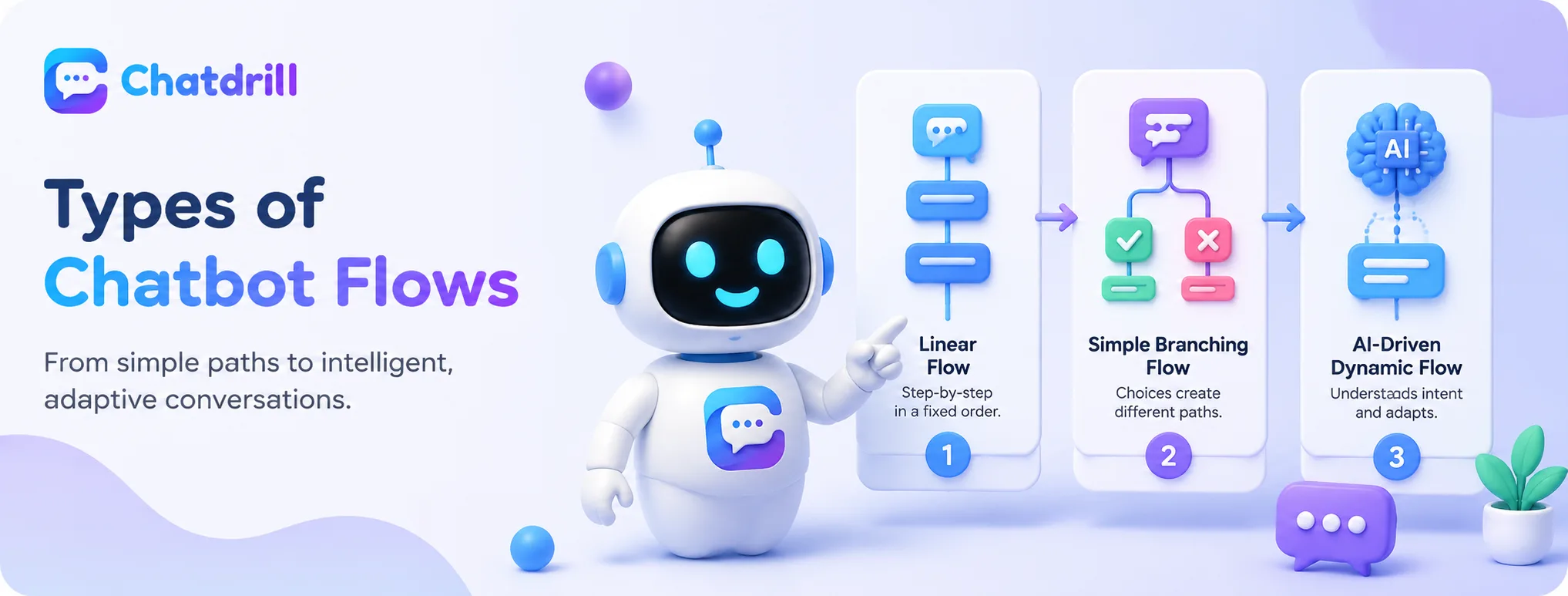
Chatbot flows range from simple linear sequences to complex branching logic to AI-driven flows that adapt dynamically based on genuine understanding of what's being asked.
Linear and simple branching flows
A linear flow asks one question at a time in a fixed order, while a simple branching flow introduces a small number of decision points based on button clicks or keyword matches, common in basic lead-qualification or FAQ bots.
These simpler flow types work well for narrow, predictable use cases but tend to feel rigid or break down when a visitor's actual question doesn't match the anticipated paths.
AI-driven, dynamic flows
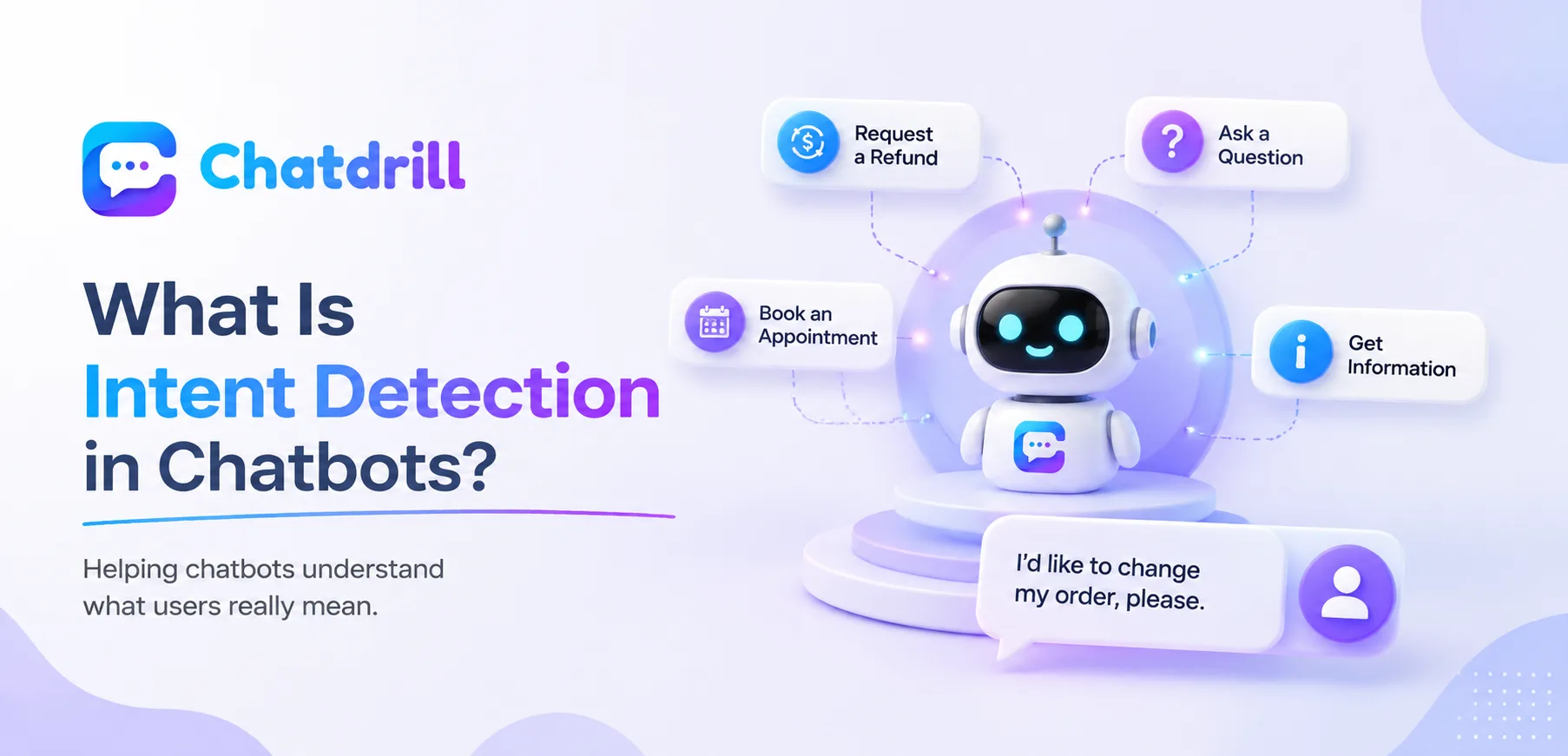
A more advanced flow uses AI to understand the genuine intent behind a visitor's message, dynamically determining the best response or next question rather than following a strictly predefined branch structure.
This approach handles a much wider range of genuine visitor phrasing and unexpected questions than a rigid, keyword-based flow ever could.
Common Chatbot Flow Design Mistakes
The most common mistakes are building overly rigid flows with no fallback, asking too many questions before providing value, and failing to test flows against real, unpredictable visitor phrasing.
No graceful fallback for unexpected input
A flow with no reasonable response for input outside its anticipated branches leaves a visitor stuck in a dead end, unable to proceed or get genuine help.
Building in a sensible fallback, either escalating to a human or acknowledging the bot doesn't understand rather than looping unhelpfully, prevents this common frustration.
Front-loading too many questions
A flow that asks several qualifying questions before providing any genuine value or answer can feel like an interrogation rather than a helpful conversation.
Providing some value early, even a partial answer, before asking follow-up questions respects the visitor's actual reason for engaging in the first place.
How Flows Relate to AI Chatbots Specifically
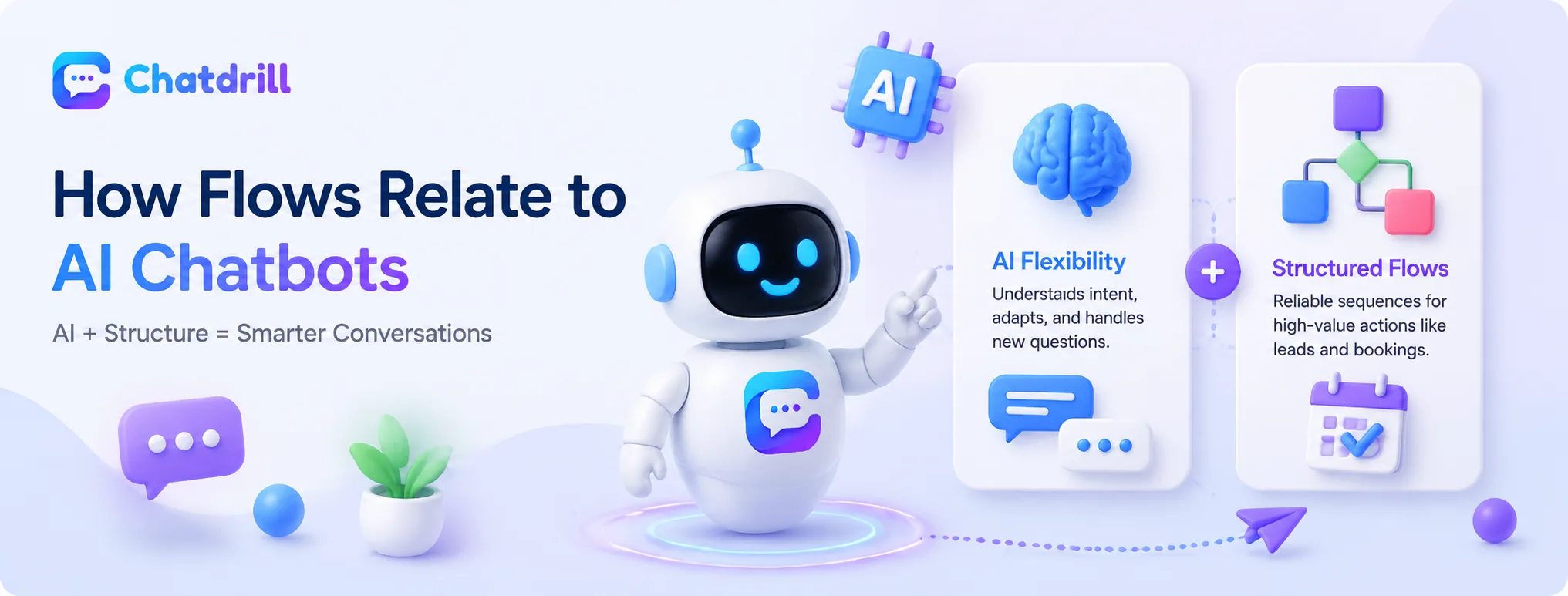
A modern AI chatbot still operates within some form of flow logic, but that logic is typically more flexible, defined through training and guidelines rather than a rigid, hand-built decision tree.
AI training as flow definition
Rather than manually mapping every possible branch, an AI chatbot is trained on representative examples and content, letting it generalize to handle genuinely novel phrasing that a rigid flow builder never anticipated.
This training-based approach represents a fundamentally different way of defining a flow's behavior, even though the end result still guides a conversation toward useful outcomes.
Where structured flows still add value within AI systems
Even a genuinely AI-driven chatbot often benefits from some structured flow logic for specific, high-value use cases, like a clearly defined lead qualification sequence or appointment booking process, layered on top of its more flexible general conversation ability.
This hybrid approach combines the natural flexibility of AI with the reliability of a defined, tested sequence for the interactions that matter most.
How ChatDrill Approaches Flow Design
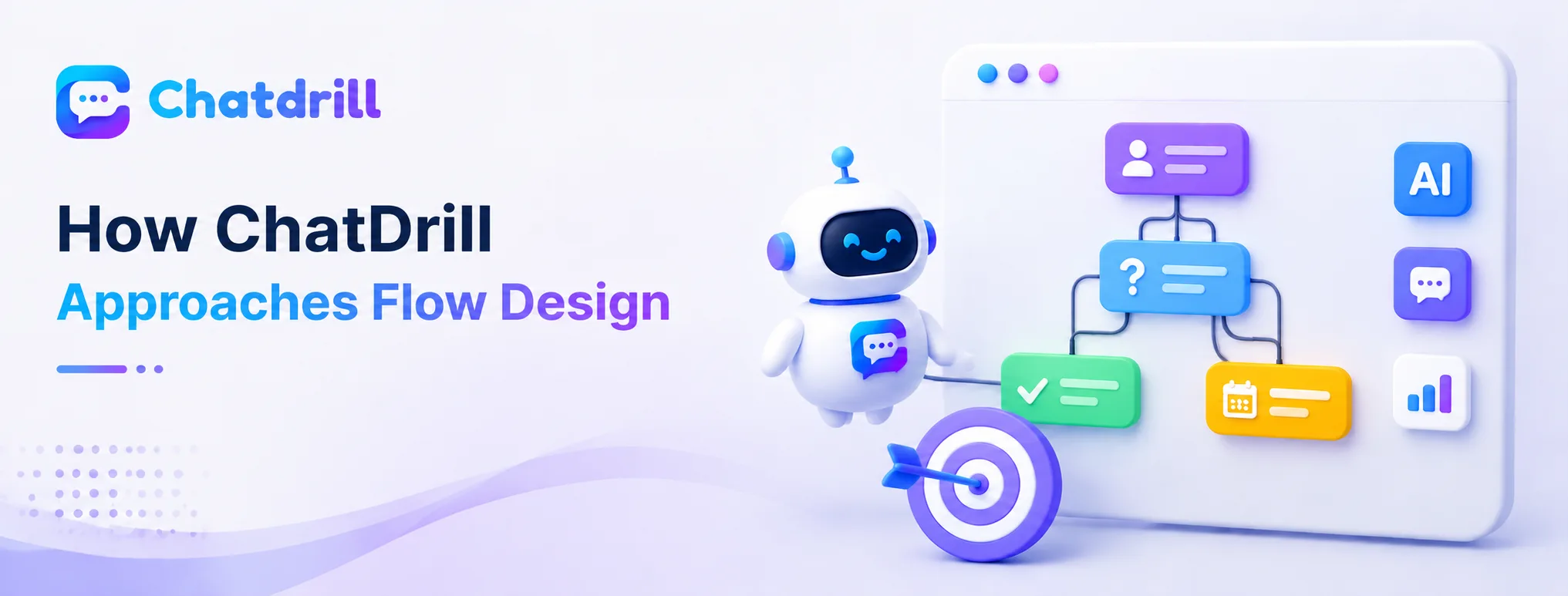
ChatDrill combines flexible AI understanding with configurable structured flows for specific, high-value use cases like lead qualification, avoiding the rigidity of a purely rule-based bot.
AI-first flexibility for general conversation
ChatDrill's AI is trained to understand genuine visitor intent across a wide range of phrasing, rather than requiring a visitor to match a specific expected input to get a useful response.
This flexibility means a visitor rarely hits a dead end simply because their question didn't match an anticipated branch.
Configurable structured flows where they add value
For specific scenarios like lead qualification or appointment booking, ChatDrill lets you configure a more structured flow, ensuring these particular interactions follow a consistent, reliable sequence while the rest of the conversation stays naturally flexible.
This combination avoids forcing every interaction into rigid structure while still providing reliability where a business genuinely needs it.