
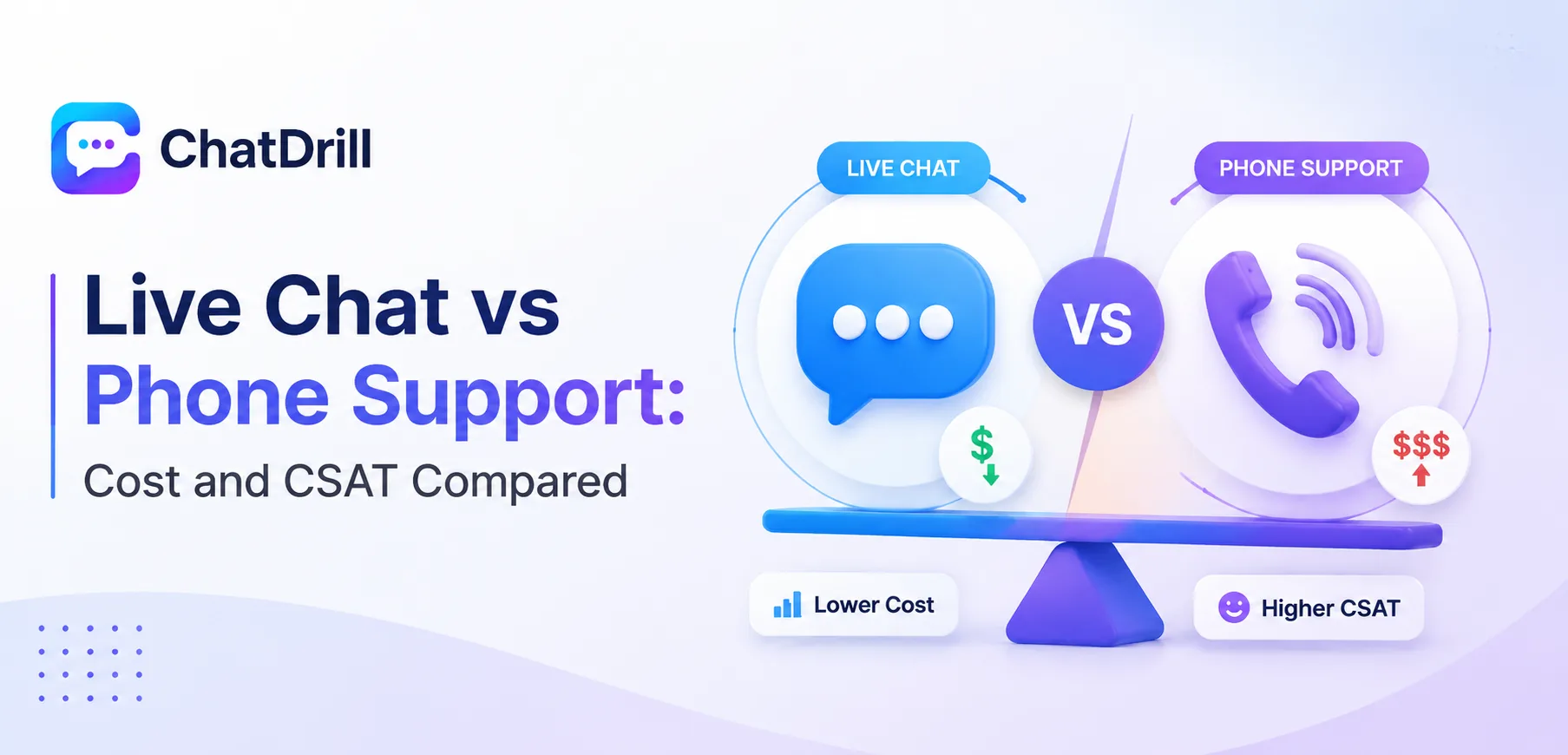
Live chat generally costs less per interaction than phone support, since one agent can handle multiple simultaneous chat conversations while phone support requires one agent fully dedicated to a single call, though phone support often shows an edge on customer satisfaction for genuinely complex or emotionally significant issues.
This cost-versus-satisfaction trade-off is at the center of most channel strategy decisions, and getting it wrong in either direction carries real cost, over-relying on phone support for simple questions wastes money, while pushing every complex issue into chat can genuinely hurt satisfaction.
The comparison isn't as simple as one channel being universally better, each has genuine strengths that make it the right choice for specific situations, and a mature support strategy typically uses both deliberately rather than defaulting to one channel for everything.
Understanding the actual data behind cost and satisfaction differences between these channels helps a business make a more informed decision about resourcing, rather than relying on assumption or industry trend alone.
This guide covers the cost structure of each channel, CSAT differences and why they occur, a direct comparison across common scenarios, when phone support genuinely outperforms chat, and how to build a strategy using both effectively.
The Cost Structure of Live Chat vs Phone Support
Live chat costs less per interaction primarily because one agent can handle several simultaneous conversations, while phone support requires one agent fully occupied per call, a structural difference that compounds significantly at higher support volume.
Why chat allows concurrent handling
An agent can typically manage three to five simultaneous chat conversations, especially with canned responses and AI assistance, while a phone call inherently requires full, undivided attention from one agent.
This concurrency is the single largest driver of chat's cost advantage, effectively multiplying one agent's capacity in a way phone support structurally cannot replicate.
How AI further reduces chat's cost per interaction
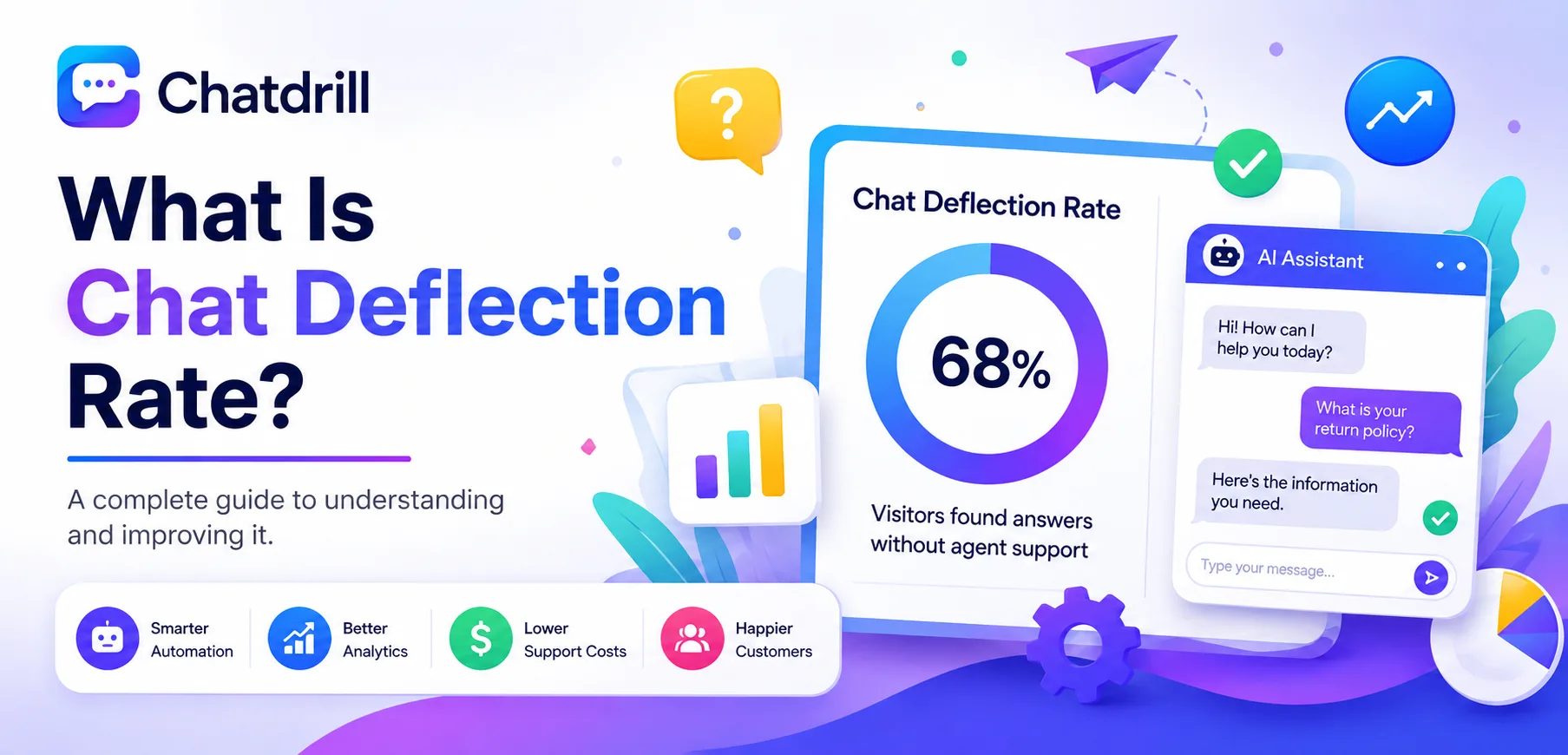
AI chatbot deflection can resolve a meaningful share of chat conversations without any agent involvement at all, further reducing chat's already lower cost structure.
Phone support has historically had less mature AI deflection capability compared to chat, though this gap is narrowing as voice AI technology continues to mature.
Where phone support costs can be justified
Despite the higher per-interaction cost, phone support can be genuinely worth it for situations where its specific strengths, discussed further below, meaningfully improve outcomes that matter more than raw cost efficiency.
The right framing isn't "phone is expensive so avoid it," it's matching each channel's cost profile to situations where its value genuinely justifies that cost.
CSAT Differences and Why They Occur
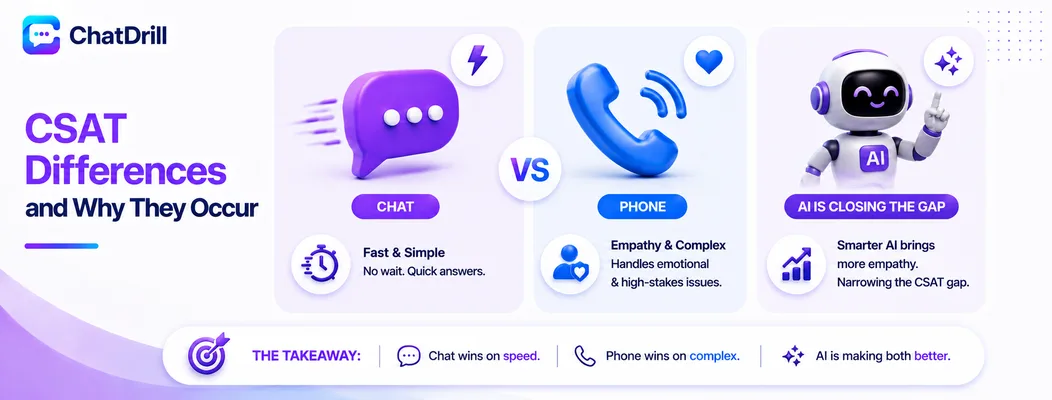
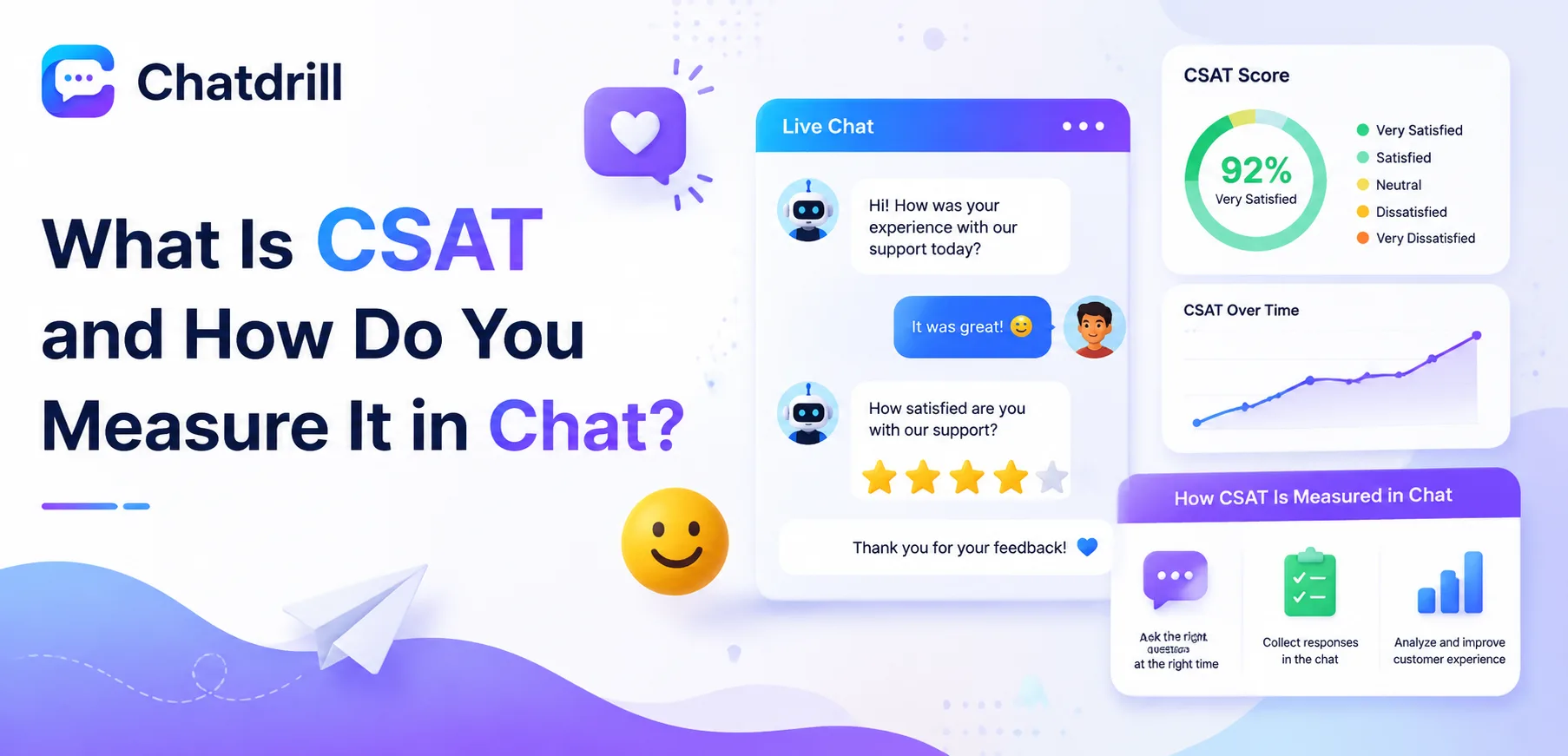
Phone support often shows a CSAT edge for genuinely complex or emotionally significant issues, since voice communication conveys empathy and nuance more naturally than text, while chat frequently matches or exceeds phone CSAT for straightforward, quick questions given its speed advantage.
Why phone can outperform on complex, emotional issues
Voice communication carries tone, pacing, and genuine emotional nuance that text-based chat struggles to fully replicate, an advantage that matters most for a customer experiencing genuine frustration or a complex, high-stakes issue.
This isn't a universal advantage, it's specifically pronounced for situations where the emotional quality of the interaction matters as much as the factual resolution itself.
Why chat can match or exceed phone on speed-sensitive issues
For a quick, straightforward question, chat's speed advantage, no hold time, immediate response, often produces higher satisfaction than phone support's typical wait-then-resolve pattern.
This reversal matters for channel strategy, phone's satisfaction advantage isn't universal, it's specifically strongest for complex, not simple, interactions.
How AI is changing this comparison
As chat AI becomes more sophisticated, it increasingly captures some of the personalization and empathetic tone that used to be more uniquely phone's advantage, narrowing the historical CSAT gap for moderately complex issues.
This trend is worth watching, since the traditional wisdom that phone always wins on complex issues is becoming less absolute as chat AI capability continues to improve.
Live Chat vs Phone: A Direct Comparison
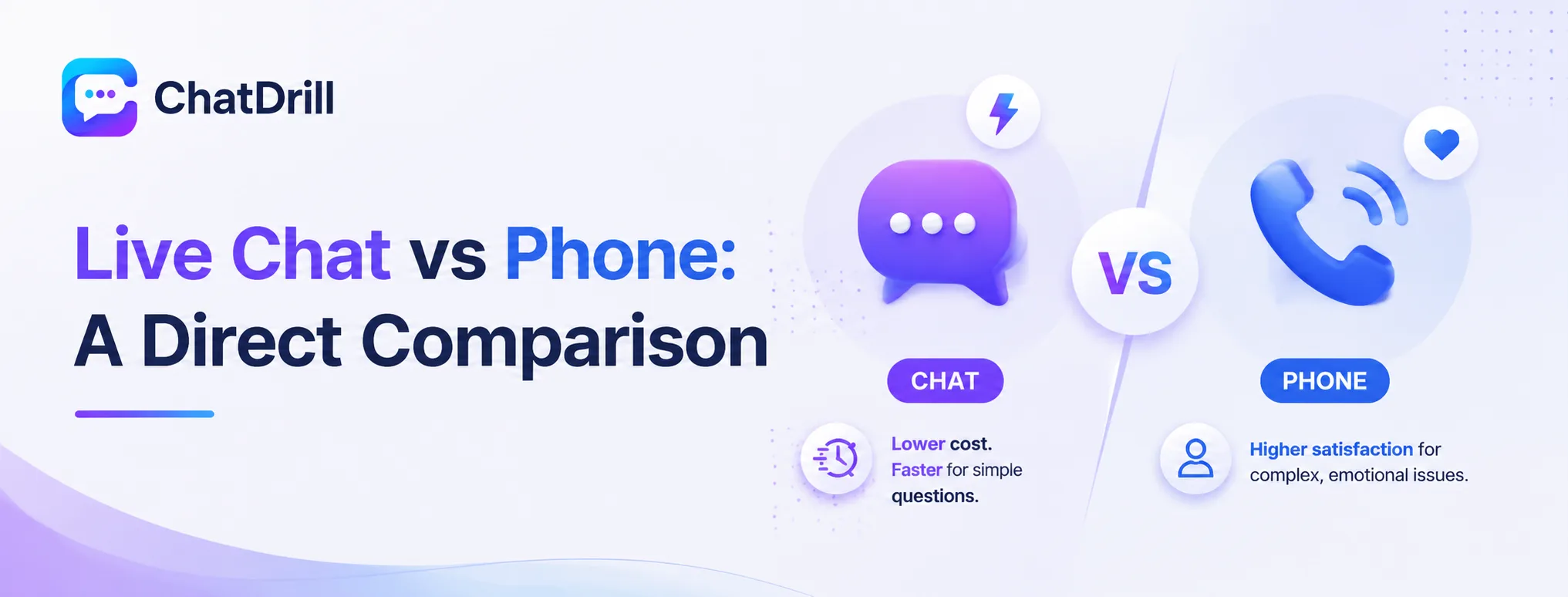
Chat wins clearly on cost per interaction and speed for simple questions, phone wins on emotional nuance for complex, high-stakes issues, and both channels show comparable satisfaction for moderately complex questions depending on execution quality.
Cost per interaction
Chat's concurrent-handling capability and AI deflection give it a clear, structural cost advantage over phone support across nearly every comparison, often by a substantial margin.
This cost gap widens further as AI capability improves, making chat's cost advantage likely to grow rather than shrink over time.
Satisfaction for simple issues
Chat frequently matches or beats phone satisfaction for simple, quick questions, given the elimination of hold time and the immediacy of a text-based response.
This is worth remembering specifically when deciding channel priority for a business's most common, simplest support interactions.
Satisfaction for complex, emotional issues
Phone maintains a meaningful satisfaction edge for genuinely complex, emotionally charged situations, given its ability to convey empathy and nuance more naturally than text alone.
This is where prioritizing phone availability, despite its higher cost, remains genuinely justified for the specific situations where it matters most.
When Phone Support Genuinely Outperforms Chat
Phone support genuinely outperforms chat for high-stakes emotional situations, complex issues benefiting from real-time verbal back-and-forth, and customer segments who simply prefer or are more comfortable with voice communication.
High-stakes emotional situations
A genuinely upset or distressed customer often benefits more from a human voice conveying empathy directly, an advantage text-based chat, even with skilled agents, has more difficulty fully replicating.
Recognizing this and offering a clear path to phone support for these specific situations, even within a chat-first strategy, improves outcomes for the interactions that matter most.
Complex issues benefiting from verbal back-and-forth
Some genuinely complex issues are simply faster and clearer to resolve through real-time verbal conversation than typing back and forth through chat, especially when troubleshooting something requiring live, iterative clarification.
This is worth recognizing as a genuine channel strength, not a sign that chat has somehow failed if a complex issue is better suited to phone from the start.
Customer preference for voice communication
Some customers, for reasons ranging from comfort with technology to personal preference, simply prefer voice communication, and forcing them into chat against that preference can hurt satisfaction regardless of the issue's actual complexity.
Respecting this preference by keeping phone support genuinely available, not just technically offered but adequately staffed, matters for serving this customer segment well.
Building a Strategy That Uses Both Effectively
An effective strategy defaults to chat for cost efficiency and speed on most interactions, keeps phone genuinely available and well-staffed for complex or emotionally significant situations, and allows a smooth escalation path from chat to phone when needed.
Defaulting to chat for cost and speed
Given chat's structural cost advantage and speed benefits for most interactions, positioning it as the default, primary channel makes sense for the majority of support volume.
This default should be a genuine, well-resourced default, not an attempt to push every customer away from phone regardless of their situation's actual fit.
Keeping phone genuinely available for the right situations
Rather than eliminating phone support to cut cost, keeping it adequately staffed for the specific situations where it genuinely outperforms chat preserves quality where it matters most.
This selective investment in phone support, rather than an all-or-nothing approach, tends to produce a better overall cost-to-satisfaction balance than optimizing purely for one channel.
Building a smooth chat-to-phone escalation path
Allowing a chat conversation to escalate to a phone call when genuinely warranted, without losing conversation context, combines chat's initial efficiency with phone's strength for the situations that need it.
This hybrid approach captures much of both channels' respective advantages, rather than forcing a customer to choose one channel exclusively regardless of how their specific situation evolves.