
What Is Omnichannel Customer Support?
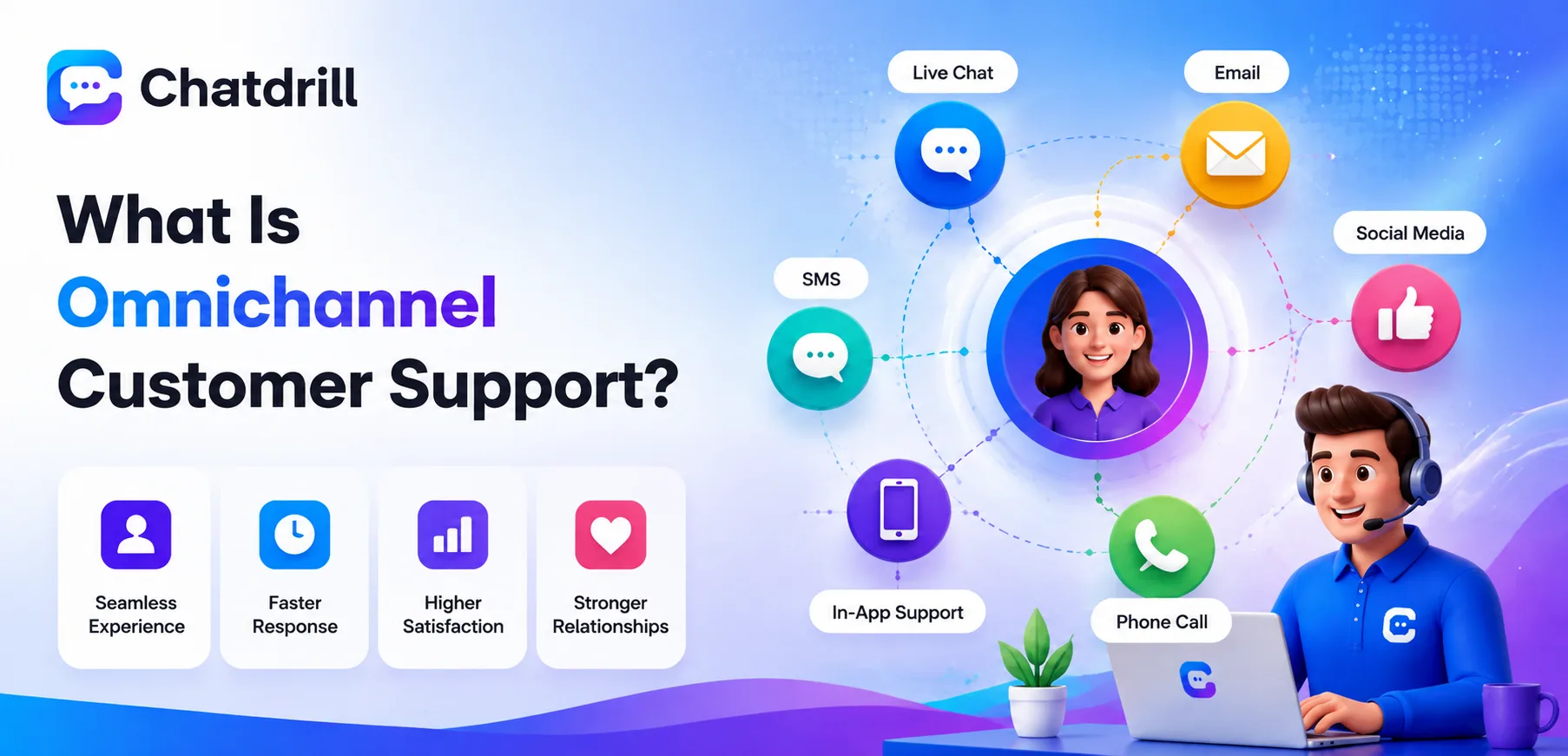
Omnichannel customer support means every channel, chat, email, phone, social messaging, connects into one unified system with shared context, so a customer's conversation history follows them regardless of which channel they use to reach out next.
This is meaningfully different from simply offering multiple channels, a business can have chat, email, and phone all available while each operates as a completely separate silo, which is technically multi-channel but not genuinely omnichannel.
The distinction matters directly to customer experience, a customer forced to re-explain their issue every time they switch channels experiences real friction that a genuinely unified, omnichannel setup eliminates entirely.
Building genuine omnichannel support requires more than just connecting channels technically, it requires designing processes and training a team to actually use that unified context well in practice.
This guide covers what omnichannel support actually means, how it differs from simple multi-channel support, the genuine benefits for both customers and businesses, what's required to build it well, and common mistakes to avoid.
Omnichannel customer support means every channel a business offers connects into one unified system, sharing customer context and conversation history across channels rather than treating each one as an isolated, disconnected experience.
Simple definition
The defining feature of genuine omnichannel support is continuity, a customer who starts a conversation in chat and later follows up by email shouldn't need to re-explain their entire situation from scratch.
This continuity requires the underlying systems to actually share data and context, not just exist as separate tools a business happens to offer simultaneously.
Achieving this typically means a single, unified platform or a set of tightly integrated tools working together, rather than fully separate systems for each channel.
Why the word "omni" matters specifically
"Omni" implies every channel working together as one coherent whole, distinct from simply having several channels available that don't actually share information with each other.
This distinction is why genuinely omnichannel support is harder to build than it might initially sound, technical integration alone isn't sufficient without the process and cultural changes to match.
Omnichannel vs Multi-Channel: The Key Difference
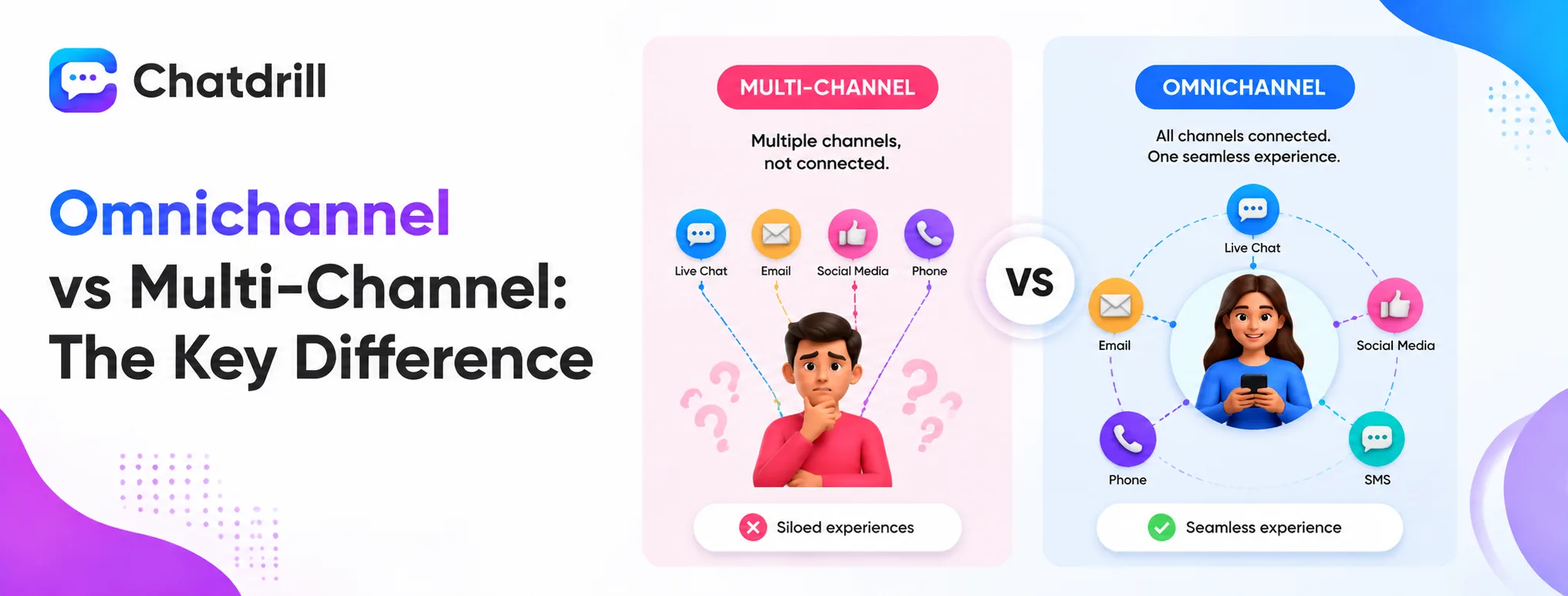
Multi-channel support simply means offering several separate channels, while omnichannel support means those channels are genuinely connected, sharing context so a customer experiences one continuous relationship regardless of which channel they use.
What multi-channel support looks like
A business offering chat, email, and phone support, each operating independently with no shared customer history, is multi-channel but not omnichannel, despite offering meaningful channel choice.
This siloed approach means a customer switching channels effectively starts over, a source of real friction and frustration that undermines an otherwise reasonable channel strategy.
Many businesses unintentionally end up here, adding channels over time without investing in the integration work needed to genuinely connect them.
What genuine omnichannel support adds
Omnichannel support adds the connective layer, shared customer profiles, unified conversation history, consistent context, that makes switching channels feel seamless rather than disruptive.
This connective layer is the genuine differentiator, without it, a business is offering channel variety without the coherence that actually improves customer experience.
Building this layer typically requires deliberate platform choice and process design, rather than happening automatically just by adding more channels.
Benefits of Genuine Omnichannel Support
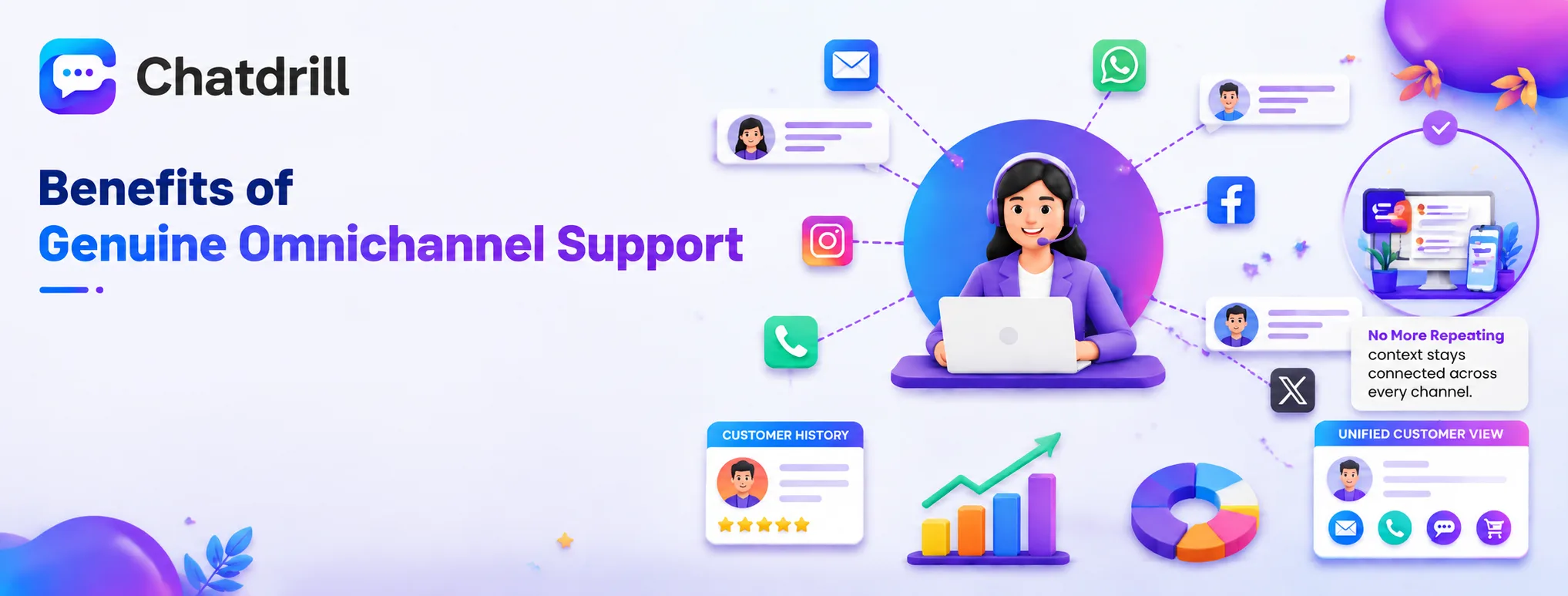
Genuine omnichannel support eliminates the frustration of repeating context across channels, gives agents fuller customer history for better-informed responses, and provides a business with a unified view of the complete customer relationship.
Eliminating repeated context for customers
A customer who doesn't need to re-explain their situation when switching from chat to email, or email to phone, experiences meaningfully less friction than one navigating disconnected channels.
This friction reduction directly affects satisfaction, since repeating context is consistently cited as one of the more frustrating aspects of a poor support experience.
Businesses that achieve this well often see it reflected directly in satisfaction scores, particularly among customers who happen to use multiple channels during a single support journey.
Giving agents fuller context for better responses
An agent seeing a customer's full history across every channel, not just the current conversation, can respond more accurately and empathetically than one working with only partial information.
This fuller context also reduces the awkwardness of an agent unknowingly repeating advice or information already shared through a different channel.
Agents report genuinely valuing this fuller picture, since it lets them provide more personalized, informed help rather than starting from zero each time.
Providing a unified view of the customer relationship
For the business itself, omnichannel data provides a complete picture of a customer's full journey and history, valuable for everything from support quality review to broader relationship management.
This unified view also supports better business decisions, revealing patterns across channels that would stay invisible if each channel's data remained siloed separately.
What's Required to Build Genuine Omnichannel Support
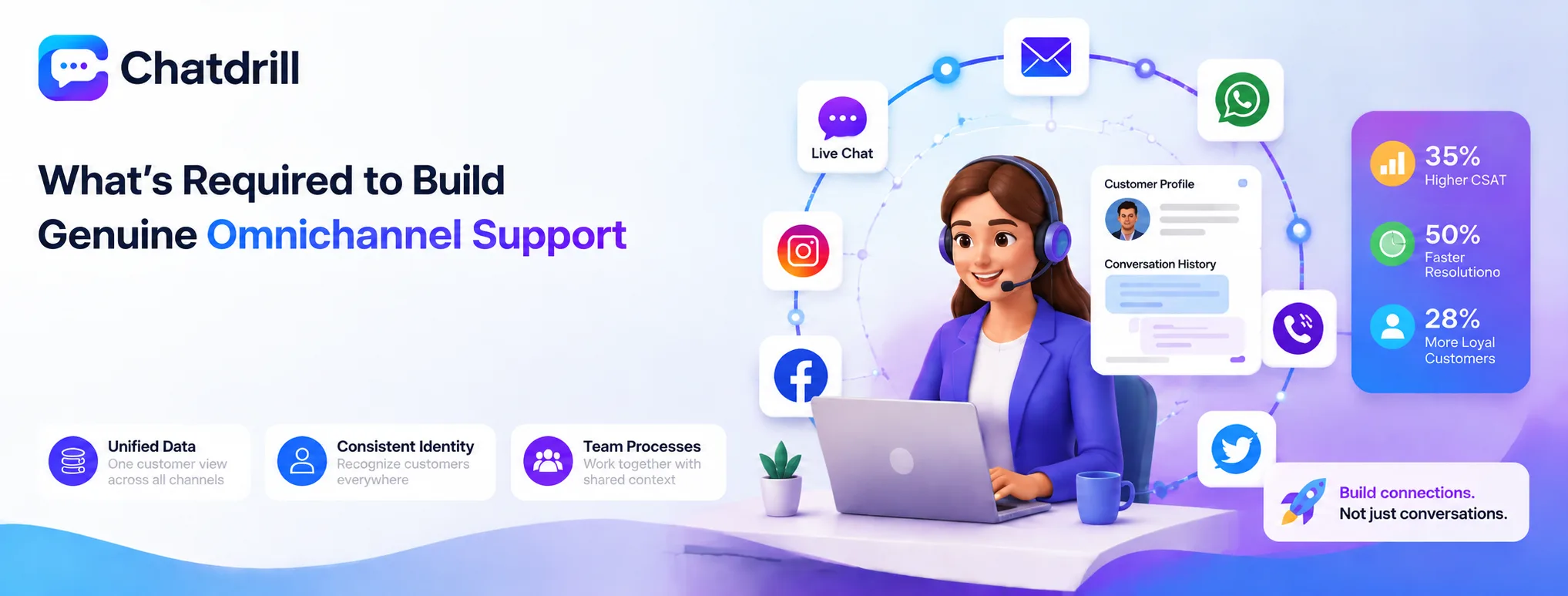
Building genuine omnichannel support requires a platform or integration layer that genuinely shares data across channels, consistent customer identification across those channels, and team processes designed around this shared context.
A platform genuinely connecting channels
The technical foundation requires a platform, or a set of tightly integrated tools, that actually shares customer and conversation data across channels rather than keeping each in its own silo.
This is worth confirming directly during platform evaluation, testing whether a customer's chat history genuinely appears when they later contact through email or another connected channel.
Consistent customer identification
Recognizing that a specific chat conversation, email, and phone call all belong to the same customer requires reliable identification, typically through email address or account matching across channels.
Gaps in this identification, a customer using a different email for chat versus their account, can undermine the omnichannel experience even with otherwise well-connected systems.
Team processes built around shared context
Even with the right technical foundation, a team needs to actually reference and use available cross-channel context, rather than defaulting to treating each new conversation as if it were the first interaction.
This requires training and a cultural shift, not just technology, agents need to genuinely check available history before assuming they're starting fresh with every new conversation.
Common Mistakes When Building Omnichannel Support
The most common mistakes are assuming multiple channels automatically means omnichannel, failing to properly connect customer identity across channels, and not training the team to actually use available cross-channel context.
Assuming channel variety equals omnichannel
Simply offering several channels doesn't create genuine omnichannel support without the underlying data integration connecting them, a common and understandable but costly misconception.
Businesses making this assumption often discover the gap only when a customer complains about repeating themselves across channels, well after the mistake has already affected real customer experience.
Poor customer identity matching across channels
If a system can't reliably recognize the same customer across different channels, the omnichannel experience breaks down regardless of how well-integrated the underlying platforms otherwise are.
This is worth testing directly and thoroughly during platform setup, rather than assuming identity matching works correctly without verification.
Insufficient team training on using shared context
Even perfect technical integration fails to deliver value if agents don't actually check and reference available cross-channel history before responding to a customer.
Building this habit into training and ongoing coaching, rather than assuming it happens naturally, is what actually realizes the value the technical investment was meant to deliver.