
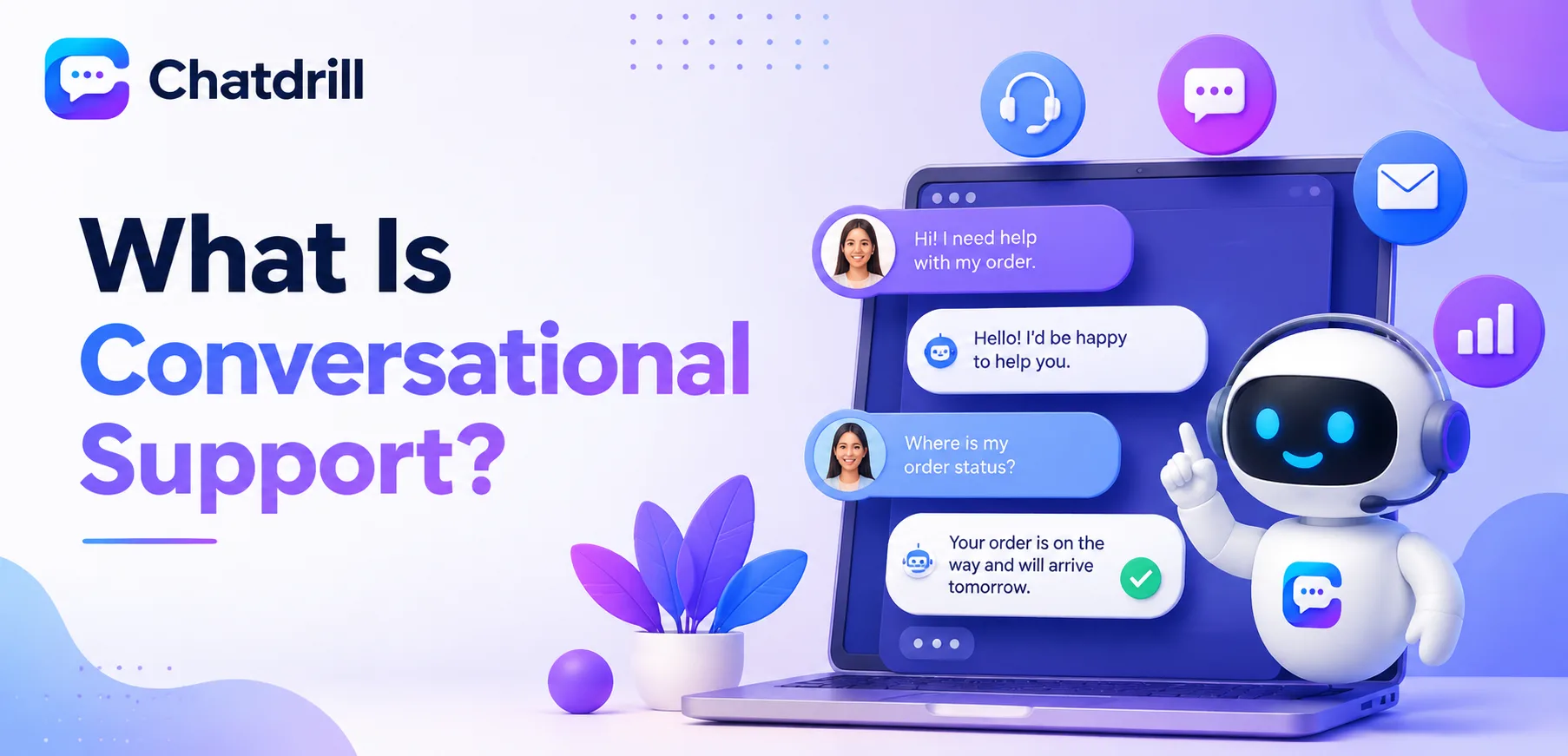
What Is Conversational Support?
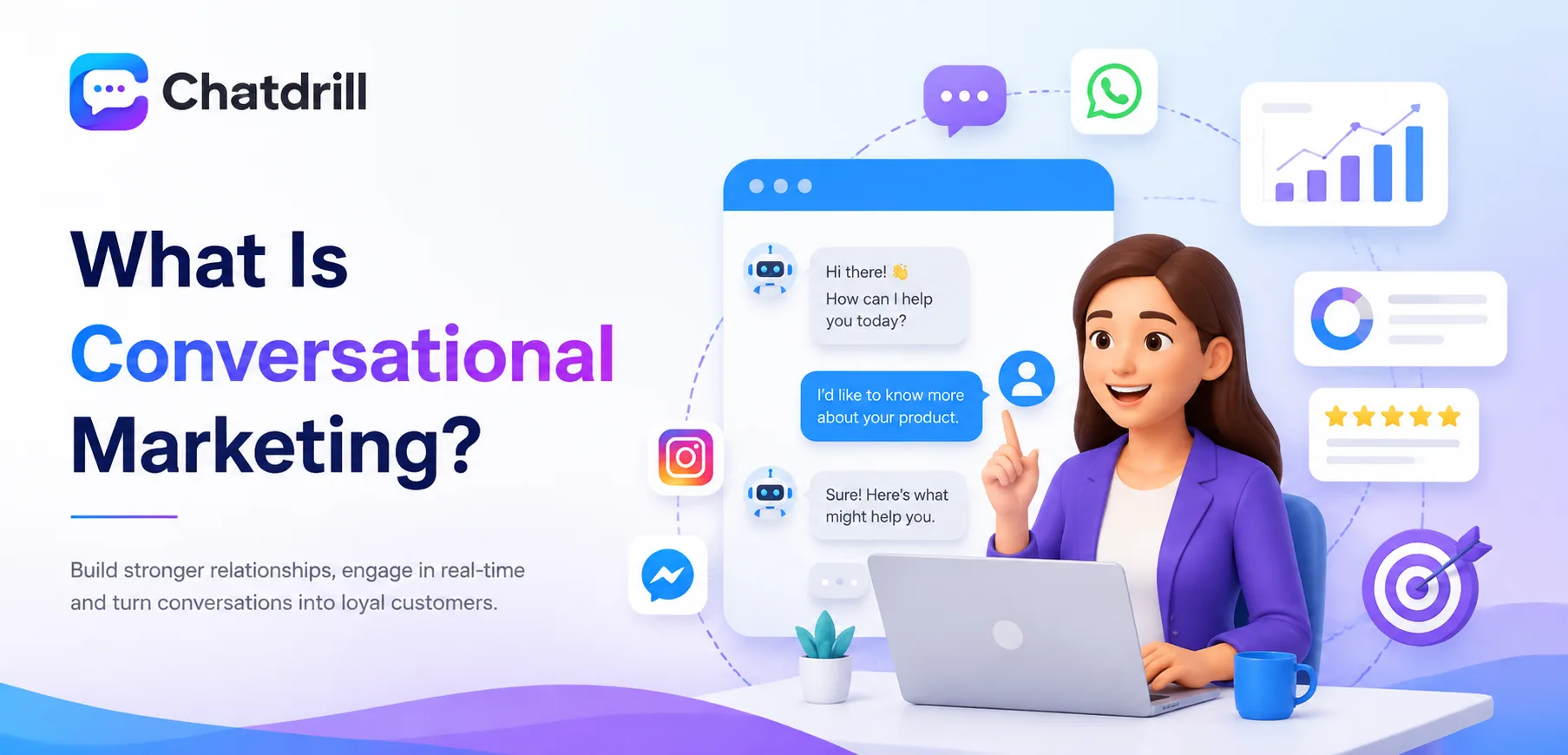
Conversational support means resolving customer support issues through natural, back-and-forth dialogue, typically via chat, rather than a rigid, form-based ticket submission process that requires a customer to fully describe their issue upfront before any interaction happens.
This approach treats support as an ongoing conversation that can adapt and clarify as it goes, closer to how a customer would naturally explain a problem to a person, rather than forcing them into a structured, one-shot ticket format.
The shift toward conversational support reflects a broader change in customer expectations, people increasingly expect the same natural, responsive interaction from a business that they get from messaging a friend or colleague.
This doesn't mean abandoning structure entirely, conversational support still benefits from organization and tracking, it simply prioritizes natural dialogue as the primary interface rather than a rigid form.
This guide covers what conversational support actually means, how it differs from traditional ticket-based support, its core components, genuine benefits, and how AI is changing what's possible within this approach.
Conversational support is a customer service approach centered on natural, real-time dialogue rather than a structured ticket submission process, letting a customer explain their issue conversationally and have it clarified through back-and-forth exchange.
Simple definition
Rather than requiring a customer to categorize their issue and fill out a structured form before any human or AI engagement happens, conversational support starts the dialogue immediately and clarifies details as the conversation unfolds.
This mirrors how people naturally communicate, explaining a problem in their own words and having the other party ask clarifying questions, rather than forcing an unnatural, pre-structured format.
Live chat is the most common channel for this approach, though conversational support principles can extend to any real-time or near-real-time communication method.
Why this approach has grown in popularity
As messaging apps have become the default way people communicate personally, expectations for business support have shifted correspondingly toward that same natural, conversational format.
This shift is also enabled by improving AI capability, which increasingly allows a conversational interface to handle nuance and clarification that used to require a structured form to capture reliably.
Conversational Support vs Ticket-Based Support
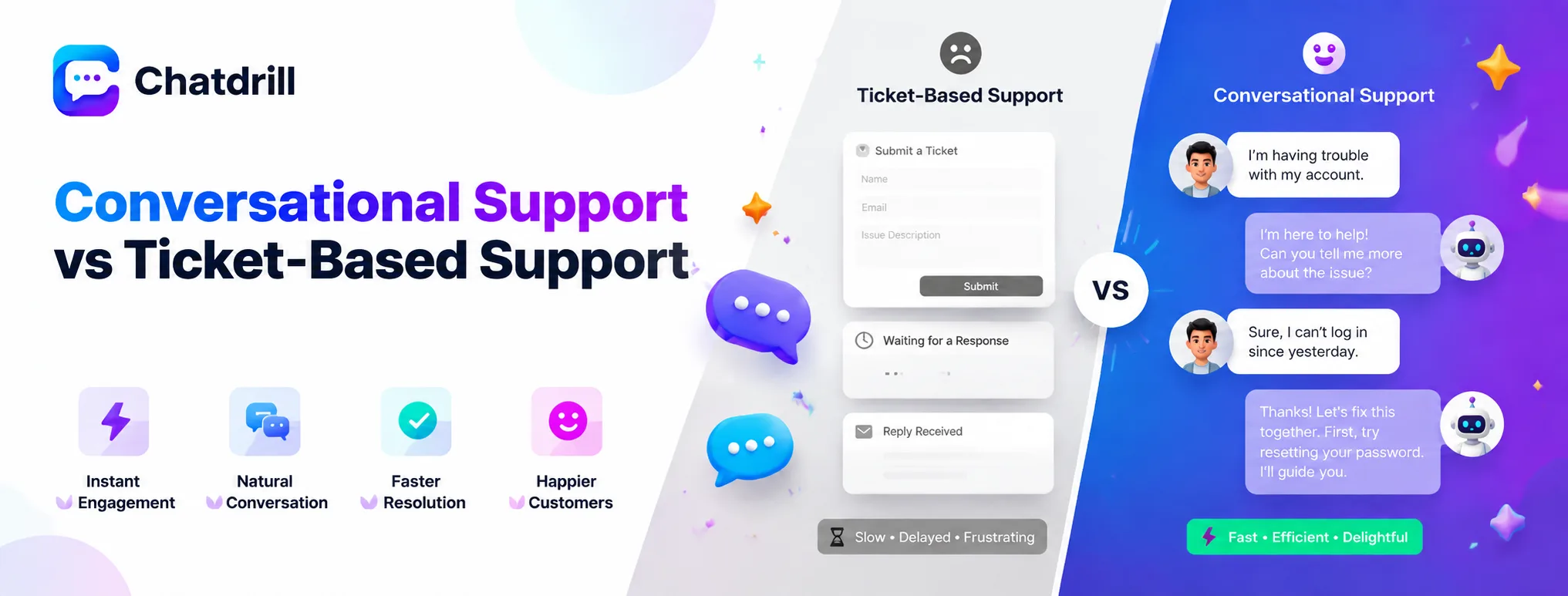
Ticket-based support requires a customer to fully describe their issue in a structured submission before any response, while conversational support engages immediately, clarifying and resolving through natural back-and-forth dialogue.
How traditional ticket-based support works
A customer fills out a form, categorizing their issue and providing details upfront, then waits for a response addressing what they submitted, with any follow-up requiring another separate exchange.
This structure works well for tracking and prioritization but can feel rigid and slow compared to a natural conversation, especially for an issue that's hard to fully articulate in a single, structured submission.
The upfront categorization requirement can also be genuinely difficult for a customer who isn't sure exactly what type of issue they're experiencing.
How conversational support changes this dynamic
A customer can start explaining their issue in their own words immediately, with the support agent or AI asking natural clarifying questions as needed, rather than requiring full detail upfront.
This adaptability handles genuinely ambiguous or hard-to-categorize issues more gracefully than a rigid ticket form, since clarification happens naturally through the conversation itself.
The real-time nature also means resolution often happens faster, without the delay inherent to a ticket-and-response cycle spread across multiple separate exchanges.
Core Components of Conversational Support
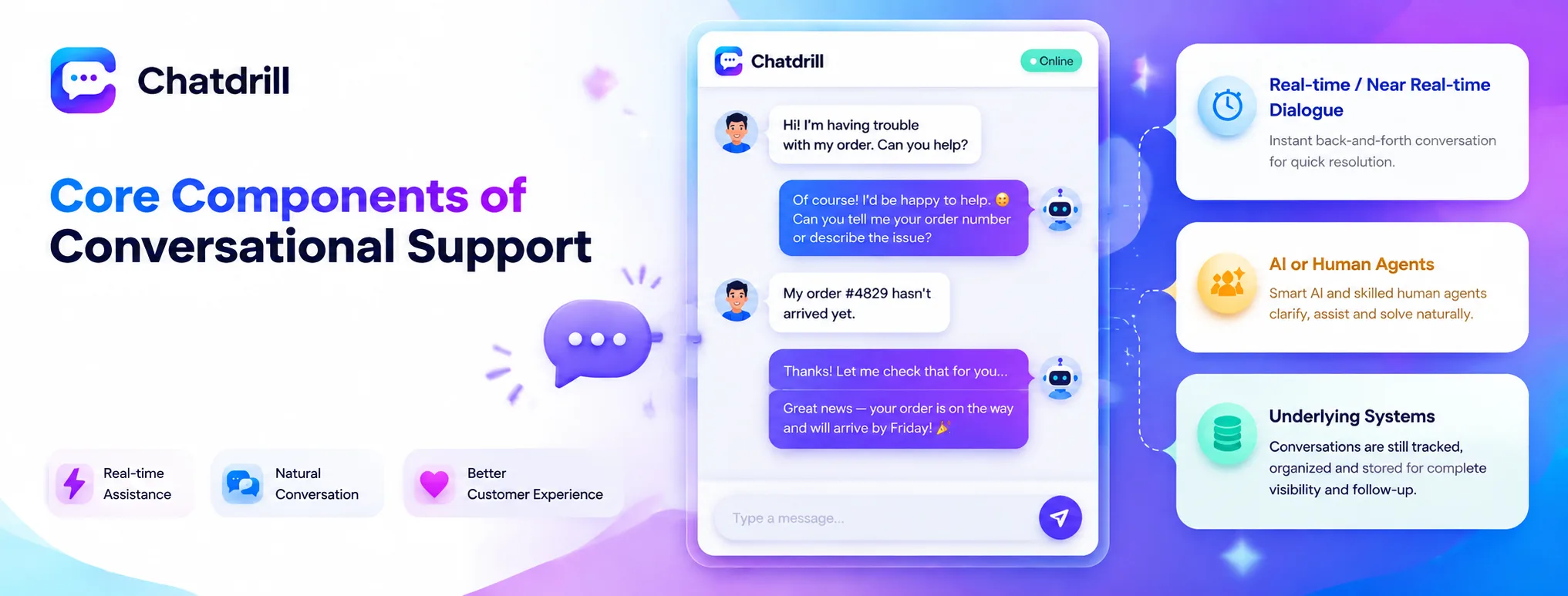
Conversational support relies on real-time or near-real-time dialogue, AI or human agents capable of natural clarification, and underlying systems that still track and organize conversations even though the customer-facing interface feels informal.
Real-time, natural dialogue
The customer-facing experience should feel like a genuine conversation, not a disguised form, with questions and clarifications flowing naturally based on what the customer has actually said.
This natural quality is what customers specifically respond well to, feeling heard and understood rather than processed through a rigid, impersonal system.
Capable clarification, whether AI or human
Whoever, or whatever, is on the other side of the conversation needs genuine capability to ask relevant follow-up questions and adapt based on the customer's actual responses.
This is where AI quality genuinely matters for conversational support specifically, a chatbot that can't ask a sensible clarifying question undermines the entire conversational premise.
Underlying structure that stays invisible to the customer
Behind the natural-feeling conversation, a well-built system still tracks category, priority, and status for internal reporting and follow-up, just without exposing that structure to the customer directly.
This balance, informal on the surface with real structure underneath, is what makes conversational support both pleasant for customers and genuinely manageable for a business.
Benefits of Conversational Support
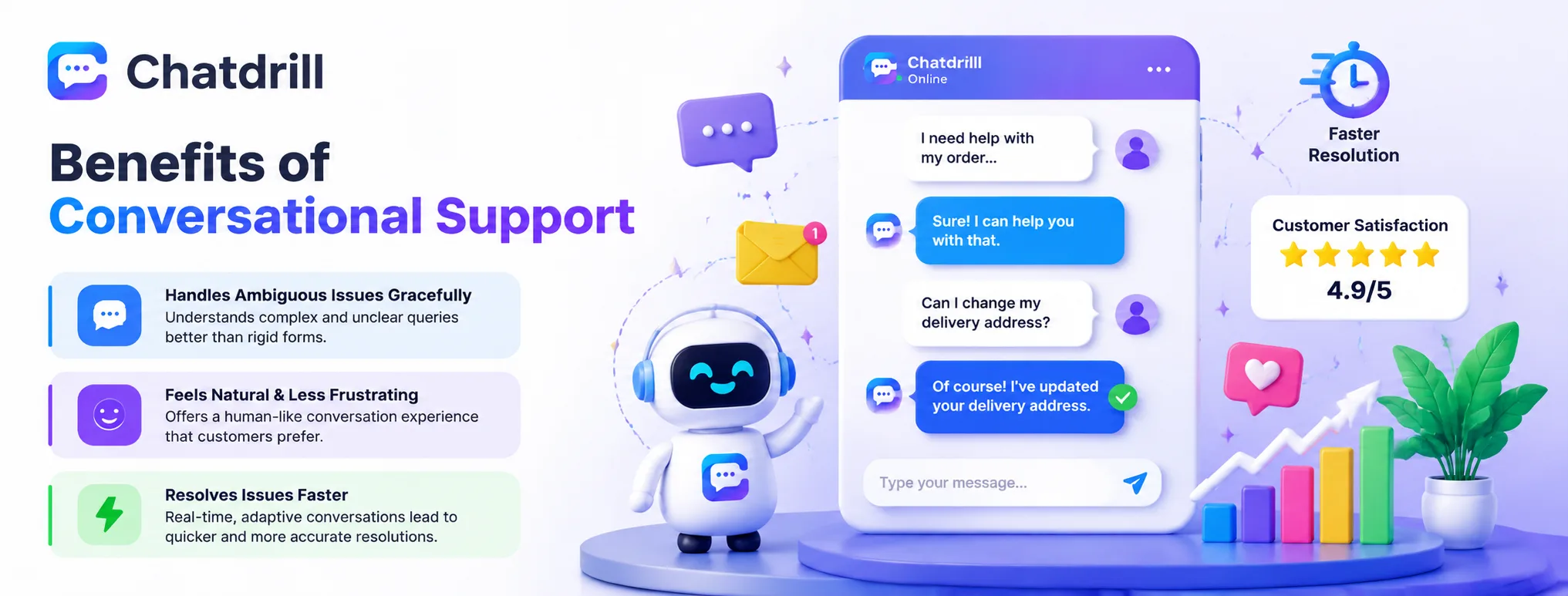
Conversational support handles ambiguous issues more gracefully than a rigid form, feels more natural and less frustrating to customers, and often resolves issues faster given its real-time, adaptive nature.
Handling ambiguity gracefully
A customer unsure exactly how to categorize their issue can simply describe it naturally, with clarification happening through conversation rather than requiring them to guess at the right form category upfront.
This flexibility genuinely reduces frustration for the meaningful share of support issues that don't fit neatly into a predefined category.
Feeling more natural and less frustrating
Customers consistently report preferring a natural conversation over a rigid form when given the choice, reflecting how this format better matches how people naturally communicate.
This preference translates into measurably higher satisfaction for businesses that successfully implement genuine conversational support well.
Often resolving issues faster
The real-time, back-and-forth nature of conversational support frequently resolves an issue within a single continuous interaction, rather than the multiple separate exchanges a ticket-based process often requires.
This speed advantage compounds with AI assistance specifically, which can handle much of the clarification and resolution work without waiting for human availability.
How AI Is Changing Conversational Support
AI increasingly handles the natural clarification and resolution work that used to require a human agent, extending genuine conversational support capability around the clock without proportional headcount growth.
AI capable of genuine clarification
Modern AI can ask relevant, natural follow-up questions based on what a customer has actually said, extending conversational support's core adaptability beyond what was previously only possible with a human agent.
This capability is what makes AI-driven conversational support genuinely comparable to human-handled conversation, rather than a lesser, more rigid substitute.
Extending conversational support around the clock
AI-driven conversational support can operate continuously, providing the same natural, adaptive experience outside business hours that a human team simply couldn't staff around the clock.
This extended coverage is a genuine practical benefit, particularly for a business with a geographically distributed customer base spanning multiple time zones.
Where human involvement still matters
Genuinely complex or emotionally significant issues still benefit from human judgment, with a well-built conversational support system recognizing when to escalate rather than attempting AI resolution indefinitely.
This combination of AI handling routine conversational support and humans handling genuine complexity produces the strongest overall outcome for most businesses.