
Content An AI agent in customer support is a system that can independently understand a customer's question, reason about the best response, take action if needed, and resolve the conversation, going meaningfully beyond a chatbot that just answers FAQs or a script that follows a fixed decision tree.
The term has become genuinely overused in marketing, with many platforms labeling basic automation as an "AI agent" when the underlying capability is closer to a scripted chatbot, making it worth understanding what actually distinguishes a genuine AI agent from the broader category of chat automation.
The meaningful difference isn't just about generating more natural-sounding text, it's about whether the system can reason through a multi-step problem, decide when to take an action like checking an order status, and know when a situation genuinely requires human escalation.
For a business evaluating chat platforms, understanding this distinction matters directly, since paying for "AI agent" capability that's actually closer to a basic chatbot means expecting a level of autonomy the system genuinely can't deliver.
This guide covers what an AI agent actually is, how it differs from a chatbot or rule-based bot, how AI agents actually work under the hood, what they can and can't reliably do today, the genuine benefits of deploying one, and common misconceptions worth clearing up.
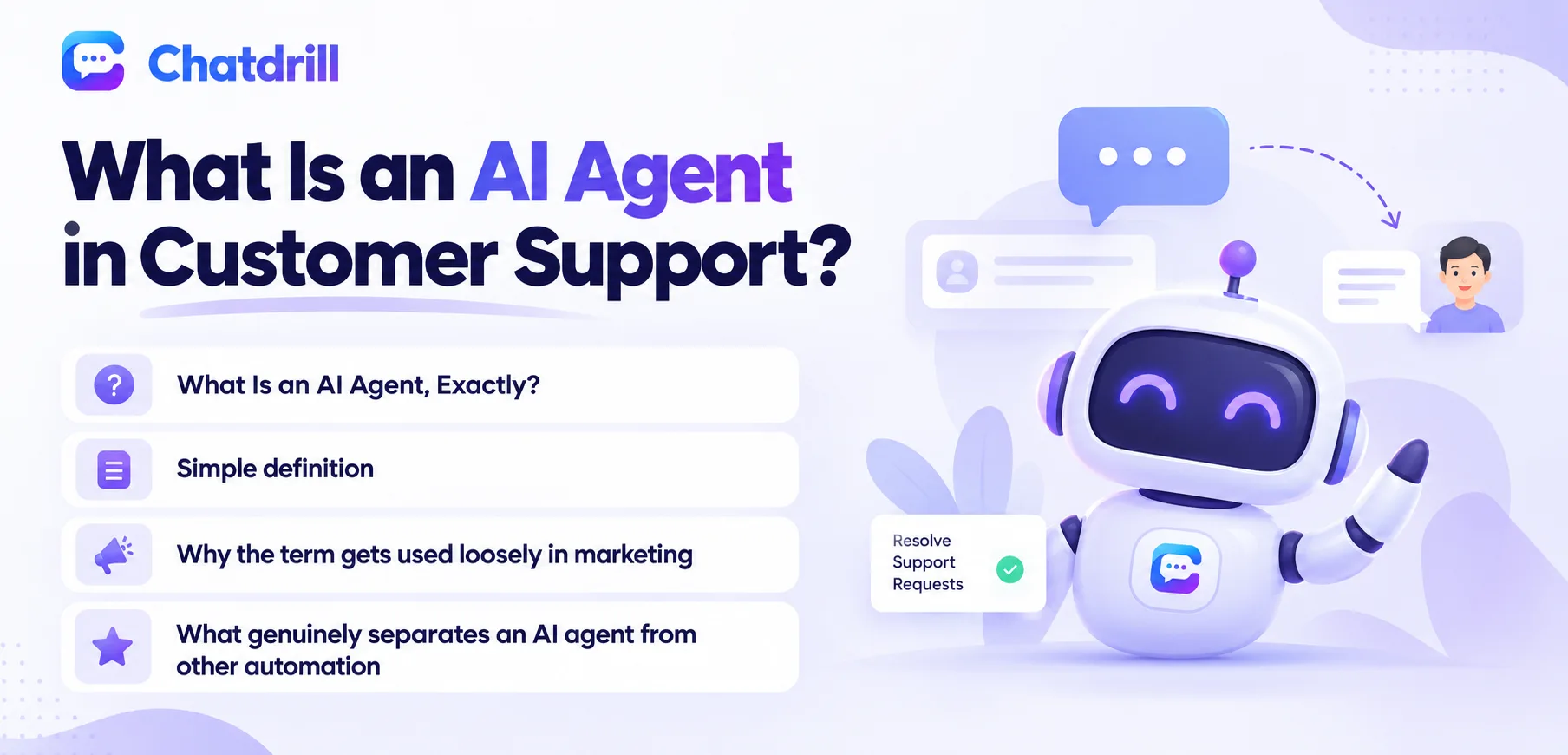
What Is an AI Agent, Exactly?
An AI agent is a system that can independently interpret a customer's intent, reason through what's needed to resolve it, take real actions like looking up an order or updating a record, and decide on its own when a conversation needs human escalation.
Simple definition
The defining feature of a genuine AI agent is autonomy, it doesn't just generate a plausible-sounding reply, it can determine what information or action is needed and pursue that independently within its given boundaries.
This distinguishes it from a chatbot that simply matches a question to a pre-written answer, since an AI agent is reasoning about the specific situation rather than pattern-matching to a fixed response.
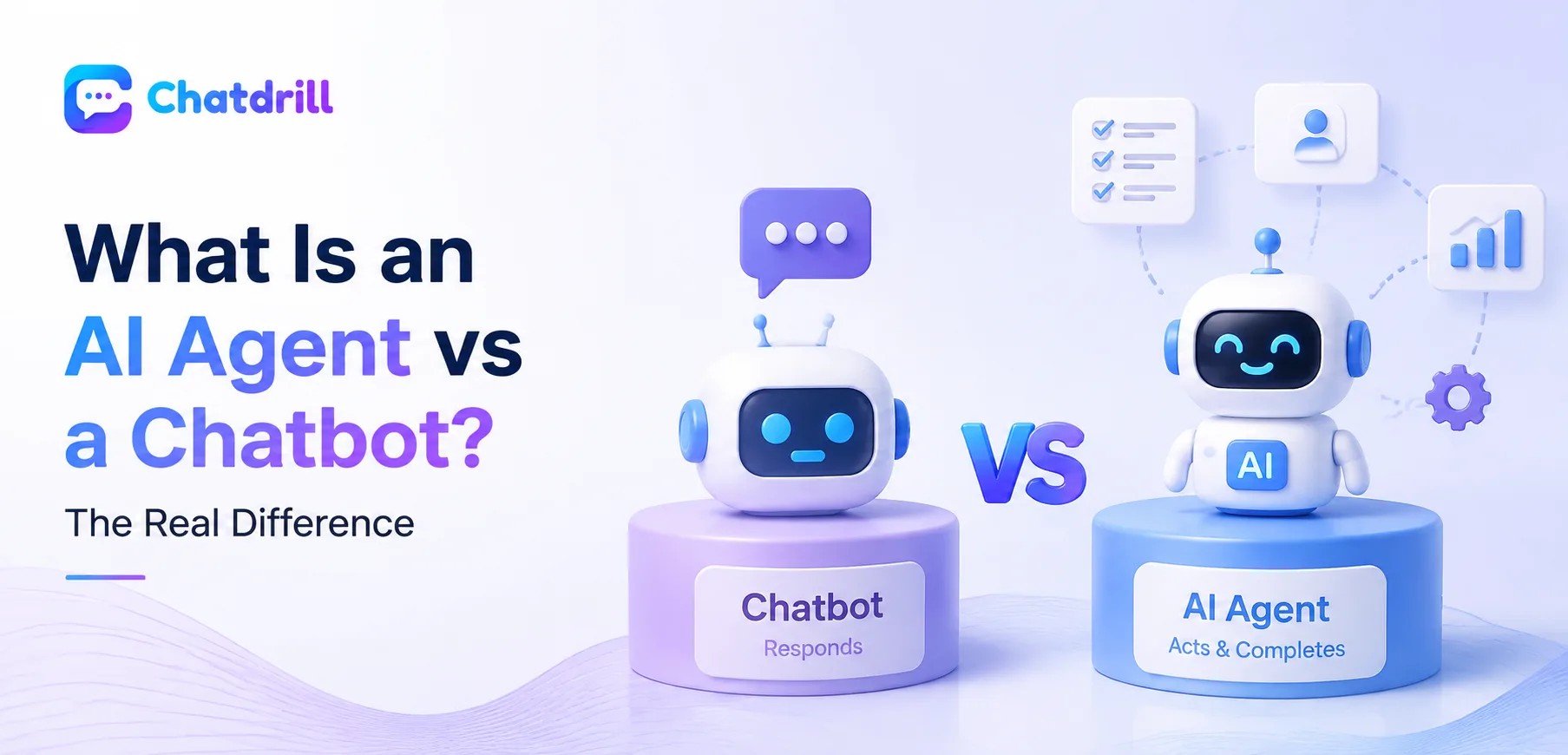
The word "agent" specifically signals this capacity to act, not just converse, which is the core distinction worth holding onto amid marketing language that uses the term loosely.
Why the term gets used loosely in marketing
Many platforms label any AI-powered chat feature as an "AI agent" for marketing appeal, even when the underlying system is closer to a chatbot that generates natural-sounding text without genuine reasoning or action-taking capability.
This loose usage makes it genuinely important to test a platform's actual capability directly, rather than trusting the "AI agent" label alone to indicate a specific level of sophistication.
What genuinely separates an AI agent from other automation
The clearest test is whether the system can take a multi-step action, checking an order status, then deciding based on that result whether to offer a refund or escalate, rather than simply generating text in response to a message.
A system limited to generating replies, however fluent, without the ability to act on external systems or reason through a multi-step process, doesn't meet the bar of a genuine AI agent by this definition.
AI Agent vs Chatbot vs Rule-Based Bot
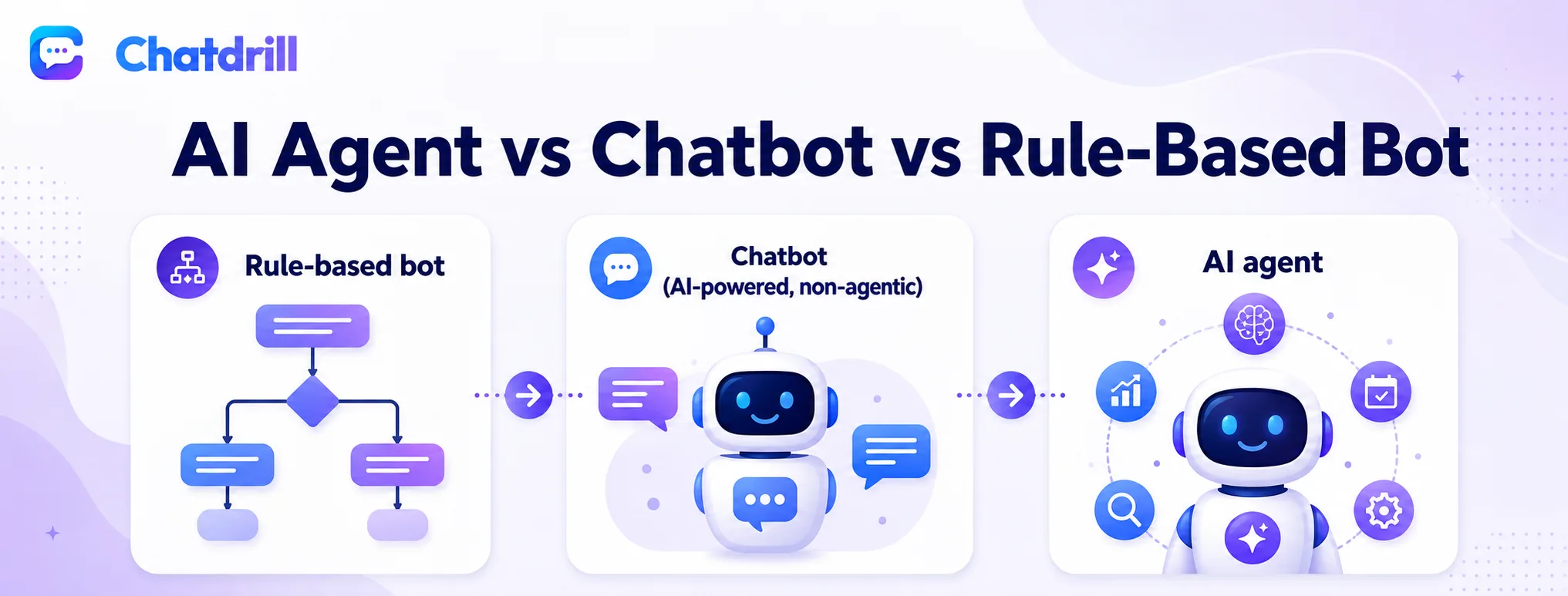
A rule-based bot follows a fixed decision tree, a chatbot generates natural-sounding replies based on training but doesn't independently take action, and an AI agent reasons through a problem and can act on external systems to actually resolve it.
Rule-based bot
A rule-based bot matches a visitor's input against a predefined set of paths, offering only the responses explicitly programmed into its decision tree, with no ability to handle anything outside those paths.
This is the simplest and most predictable category, well suited to narrow, high-volume, repetitive questions but unable to handle genuine variation or complexity.
Chatbot (AI-powered, non-agentic)
A modern AI-powered chatbot uses natural language understanding to interpret varied phrasing and generate a relevant, natural-sounding reply, a meaningful step up from a rule-based bot's rigid matching.
However, without genuine agentic capability, it's still fundamentally generating text in response to a message, not independently deciding to take an action or reasoning through a multi-step resolution.
AI agent
An AI agent adds the capacity for independent reasoning and action, deciding what information it needs, retrieving it from a connected system, and determining the appropriate next step, including knowing when to escalate.
This is the category genuinely capable of resolving a conversation end to end, rather than just providing a helpful-sounding response that still requires a human to actually complete the resolution.
How AI Agents Actually Work
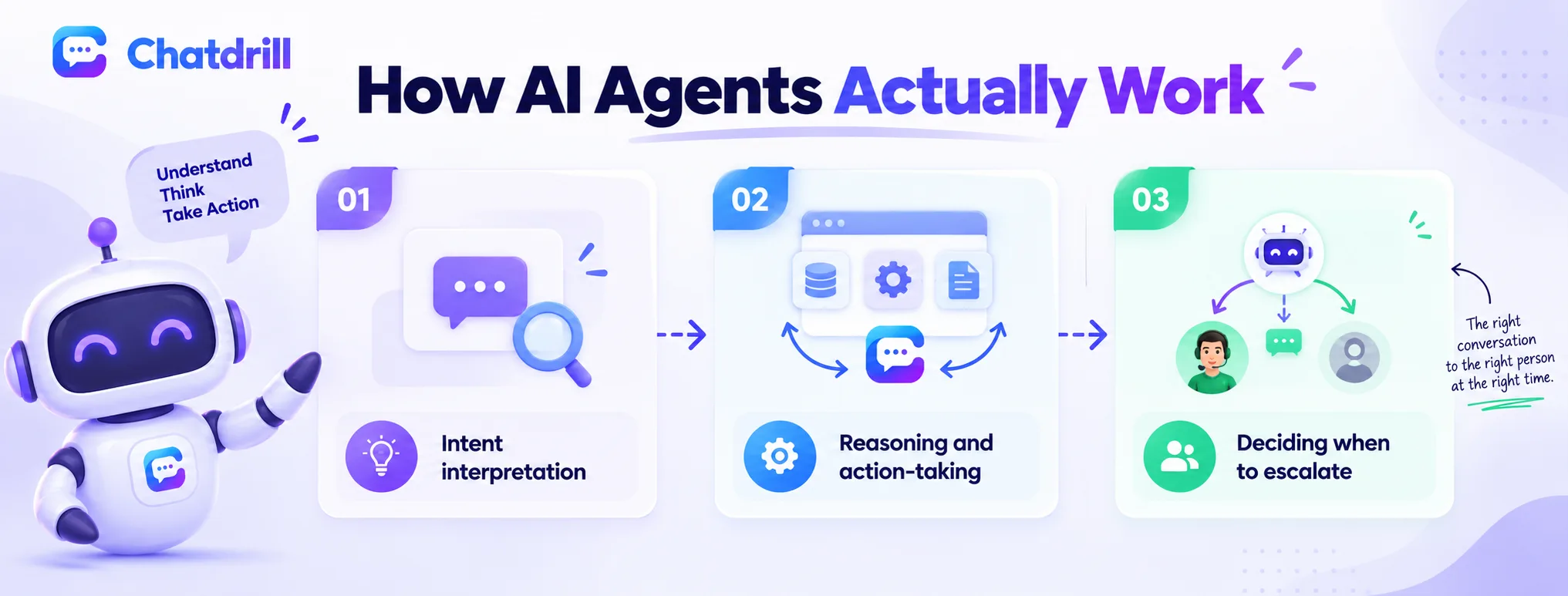
An AI agent works by interpreting a customer's intent, determining what information or action is needed to address it, executing that step, often by querying a connected system, and then deciding whether to continue, ask a follow-up, or escalate to a human.
Intent interpretation
The agent first interprets what the customer is actually asking, drawing on the same underlying language understanding as a modern AI chatbot, but using this interpretation to plan a course of action rather than just generate a reply.
This step is where the agent distinguishes a straightforward factual question from one requiring a lookup, an action, or escalation.
Reasoning and action-taking
Based on that interpretation, the agent determines what's needed, checking an order status through a connected system, updating a record, or retrieving specific account information relevant to the question.
This is the genuinely agentic step, the system is deciding on and executing an action, not just generating text describing what a human should do next.
Deciding when to escalate
A well-built AI agent recognizes the boundaries of its own competence, escalating to a human for a situation involving genuine ambiguity, a policy exception, or an emotionally sensitive scenario it isn't equipped to handle well.
This escalation judgment is itself a meaningful part of what makes an agent trustworthy in production, since an agent that never escalates appropriately creates real risk.
What AI Agents Can and Can't Do Today
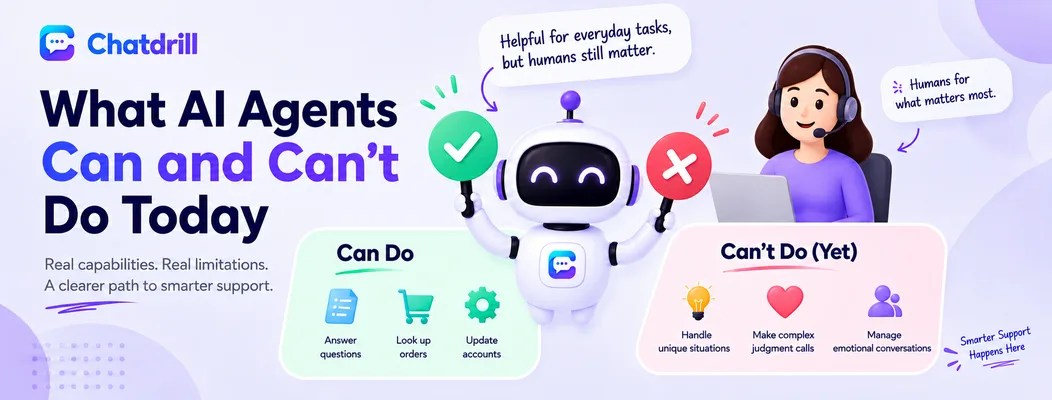
Today's AI agents handle well-defined, multi-step tasks like order lookups and account updates reliably, but still struggle with genuinely novel situations, complex policy judgment calls, and scenarios requiring real emotional nuance.
What AI agents handle reliably
Well-scoped, multi-step tasks with clear inputs and outputs, checking an order status and issuing a standard refund, updating a known account field, tend to be handled reliably by a mature AI agent.
These tasks share a common trait, the correct action is largely determinable from clear rules and available data, rather than requiring genuinely novel judgment.
Where AI agents still struggle
Situations requiring genuine judgment on an ambiguous policy exception, or a conversation carrying significant emotional weight, remain areas where a human's nuance still outperforms current AI agent capability.
This isn't a permanent limitation, it's simply where the technology's current maturity sits, worth factoring into how much autonomy a business grants an AI agent today.
Setting realistic expectations for deployment
A business deploying an AI agent should start with well-scoped, lower-risk tasks, expanding scope gradually as confidence in the agent's reliability grows through real-world monitoring.
This gradual, monitored expansion tends to produce better outcomes than granting an AI agent broad autonomy immediately based purely on marketing claims about its capability.
Benefits of Deploying an AI Agent
A genuine AI agent can resolve full conversations without human involvement for well-scoped tasks, operate around the clock without staffing constraints, and free human agents to focus on the conversations that genuinely need their judgment.
Full resolution without human involvement
For well-scoped tasks, a genuine AI agent doesn't just draft a reply for a human to review, it completes the resolution end to end, a meaningfully larger efficiency gain than assisted, human-reviewed automation.
This is where the ROI case for AI agents becomes most concrete, measurable reduction in the volume of conversations requiring any human touch at all.
Consistent, always-available coverage
An AI agent doesn't need scheduling, breaks, or shift coverage, providing consistent response quality and speed regardless of time of day or day of week.
This matters especially for a business with a global customer base spanning multiple time zones, where staffing around-the-clock human coverage would otherwise be costly.
Freeing human agents for higher-value work
As an AI agent absorbs well-scoped, repetitive tasks, human agents get more time to focus on the complex, judgment-requiring conversations where their skills add the most value.
This reallocation tends to improve both efficiency and job satisfaction for human agents, who spend less time on repetitive tasks and more on the work that genuinely benefits from their expertise.
Common Misconceptions About AI Agents
The most common misconceptions are that any AI-powered chatbot qualifies as an AI agent, that AI agents require no human oversight once deployed, and that deploying one is a simple, one-time setup rather than an ongoing process.
"Any AI chatbot is an AI agent"
As covered earlier, genuine agentic capability, independent reasoning and action-taking, meaningfully distinguishes an AI agent from a chatbot that just generates fluent text.
Businesses evaluating platforms should test this distinction directly rather than trusting marketing terminology alone, since the gap in actual capability can be significant.
"AI agents need no ongoing oversight"
Even a well-performing AI agent benefits from regular review of its actual conversations and decisions, catching drift or emerging edge cases before they become a pattern affecting many customers.
Treating deployment as a one-time setup, rather than an ongoing process requiring monitoring, is one of the more common and costly mistakes businesses make.
"AI agent deployment is simple and instant"
Getting an AI agent to reliably handle even well-scoped tasks requires genuine setup, connecting it to relevant systems, defining clear escalation boundaries, and testing thoroughly before granting broader autonomy.
Underestimating this setup effort, and the ongoing tuning that follows, tends to produce a disappointing initial deployment that undersells what the technology can genuinely deliver when implemented carefully.