
A new chat agent thrown into live conversations too quickly, without a structured ramp, tends to develop inconsistent habits and takes considerably longer to reach genuine proficiency than one following a deliberate, staged onboarding plan.
A well-structured 30-day plan balances getting a new agent handling real conversations reasonably quickly against ensuring they've built genuine competence and confidence before being left fully unsupervised.
The specific pacing matters less than the underlying structure, progressive exposure to real complexity, consistent feedback, and a clear path to full independence by a defined point.
This guide provides a week-by-week 30-day onboarding structure, what to cover at each stage, and mistakes worth avoiding.
Quick answer: A 30-day chat agent onboarding plan typically moves from shadowing and product training in week one, to supervised live conversations in week two, to independent handling of routine conversations in week three, and full autonomy with ongoing coaching by week four.
Week One: Foundation and Shadowing
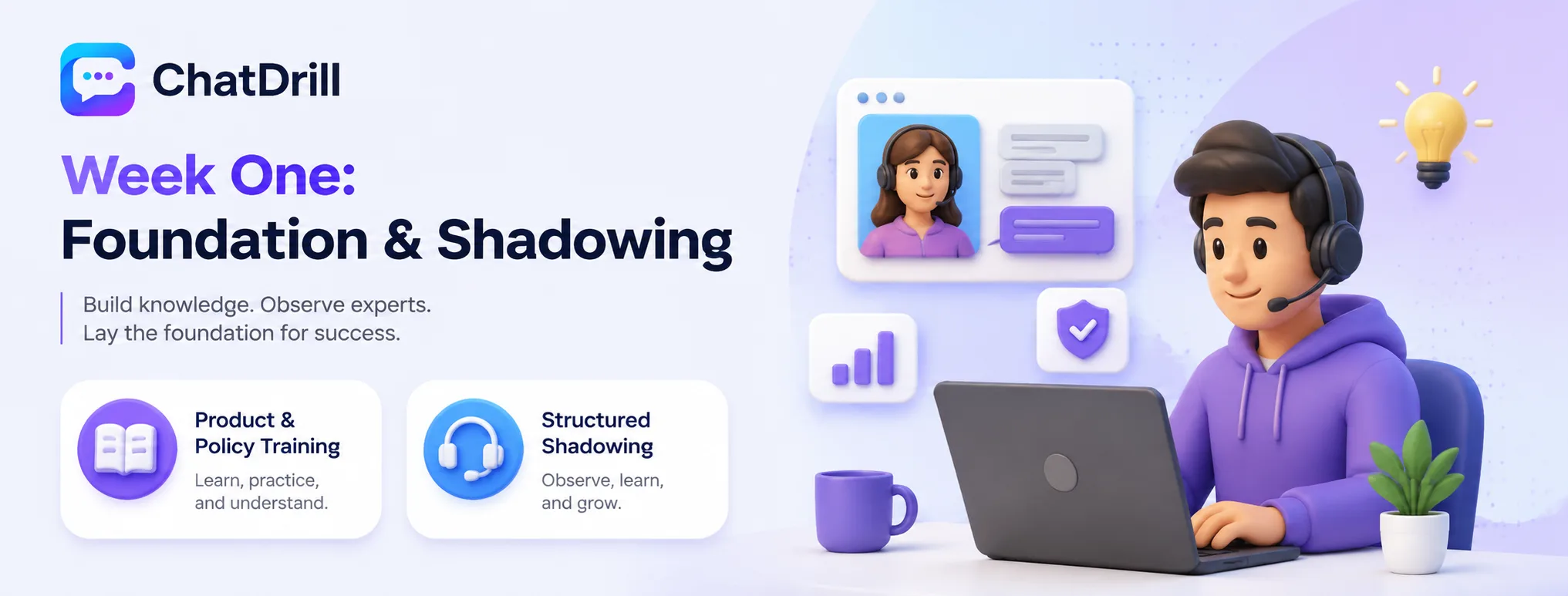
The first week focuses on product knowledge, company policies, and observing experienced agents handle real conversations, building foundational understanding before any live customer interaction.
Product and policy training
Covering your actual product details, common customer scenarios, and key policies, refunds, escalations, data handling, gives a new agent the foundational knowledge everything else builds on.
This training works best paired with real examples and common questions, rather than abstract policy documents alone, helping the material feel concrete and applicable.
Testing genuine understanding through a brief quiz or practical scenario, rather than assuming attendance equals comprehension, confirms the foundation is solid before moving forward.
Structured shadowing of experienced agents
Having the new agent observe several experienced agents handling real, live conversations exposes them to genuine conversational patterns and tone before they're expected to produce these themselves.
Debriefing after each shadowing session, discussing what the new agent noticed and any questions it raised, turns passive observation into active learning.
Varying which agents and conversation types are shadowed exposes the new hire to a genuinely representative range of situations rather than a narrow slice.
Week Two: Supervised Live Conversations
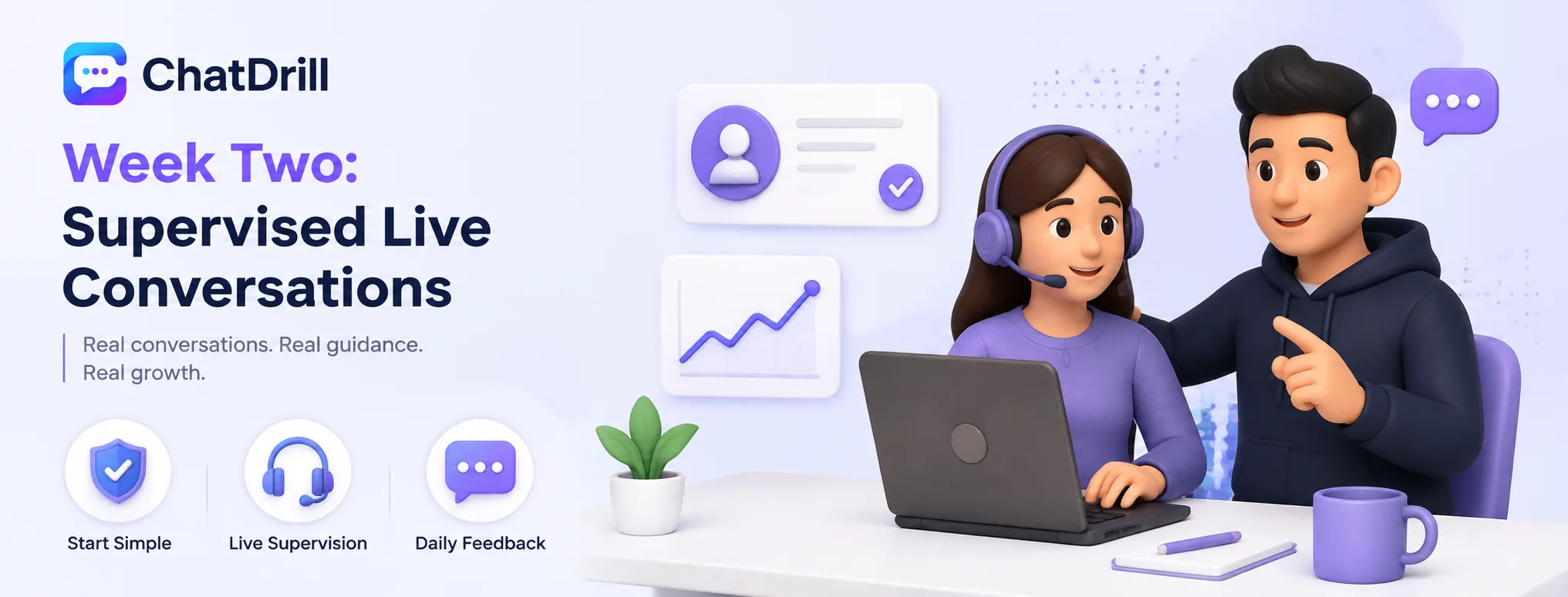
The second week introduces real customer conversations under direct supervision, starting with the simplest, most routine question types before adding complexity.
Starting with routine, low-stakes conversations
Beginning live practice with the simplest, most common question types, ones with low risk if something goes slightly wrong, builds confidence before introducing genuinely complex situations.
This graduated approach respects that live customer interaction, even simple, carries more real pressure than any amount of prior training and shadowing.
Direct, real-time supervision and feedback
Having an experienced mentor available to review responses before they're sent, or immediately after, catches mistakes while they're still easy to correct and turn into a learning moment.
This close supervision should feel supportive rather than punitive, building the new agent's confidence alongside their actual skill.
Daily feedback debriefs
A brief daily conversation reviewing what went well and what to focus on next reinforces learning consistently, rather than saving all feedback for a single end-of-week review.
This frequent, small-feedback-loop approach tends to accelerate genuine skill development compared to sparse, less frequent feedback sessions.
Week Three: Independent Handling With Backup
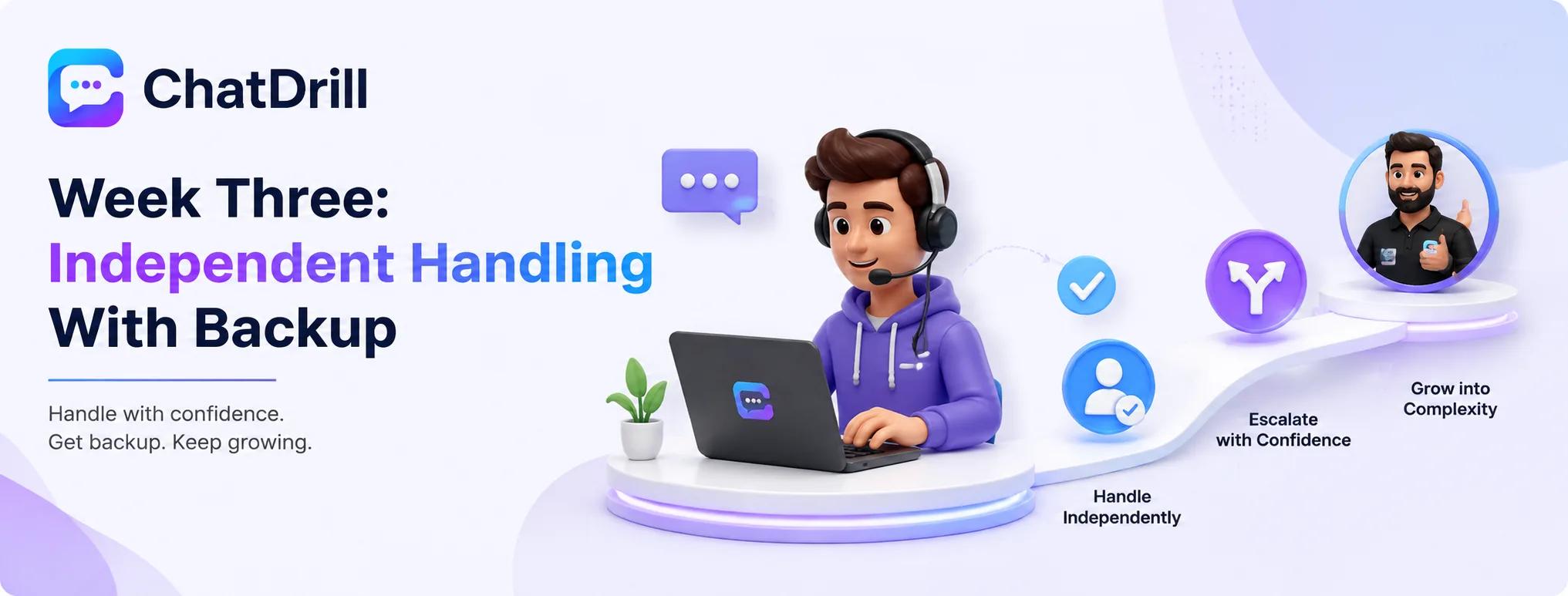
The third week shifts to independent conversation handling for routine questions, with a clear, easy escalation path to a mentor for anything genuinely uncertain.
Independent handling of routine conversations
Letting the new agent handle standard, well-understood question types fully independently, without real-time review, builds genuine confidence and ownership.
This independence should be scoped clearly to conversation types they've already demonstrated competence with during week two, not a blanket, unrestricted expansion.
A clear escalation path for uncertainty
Ensuring the new agent knows exactly how and when to reach a mentor for something genuinely uncertain, without hesitation or embarrassment about asking, prevents mistakes from compounding.
Normalizing this escalation as a sign of good judgment, rather than a failure, encourages the new agent to actually use this safety net when needed.
Gradually introducing more complex conversation types
As the week progresses, introducing slightly more complex conversation types, still with easy backup available, extends the agent's competence range in a controlled, manageable way.
This gradual complexity increase avoids overwhelming the new agent while still meaningfully expanding their capability before full independence.
Week Four: Full Autonomy With Ongoing Coaching
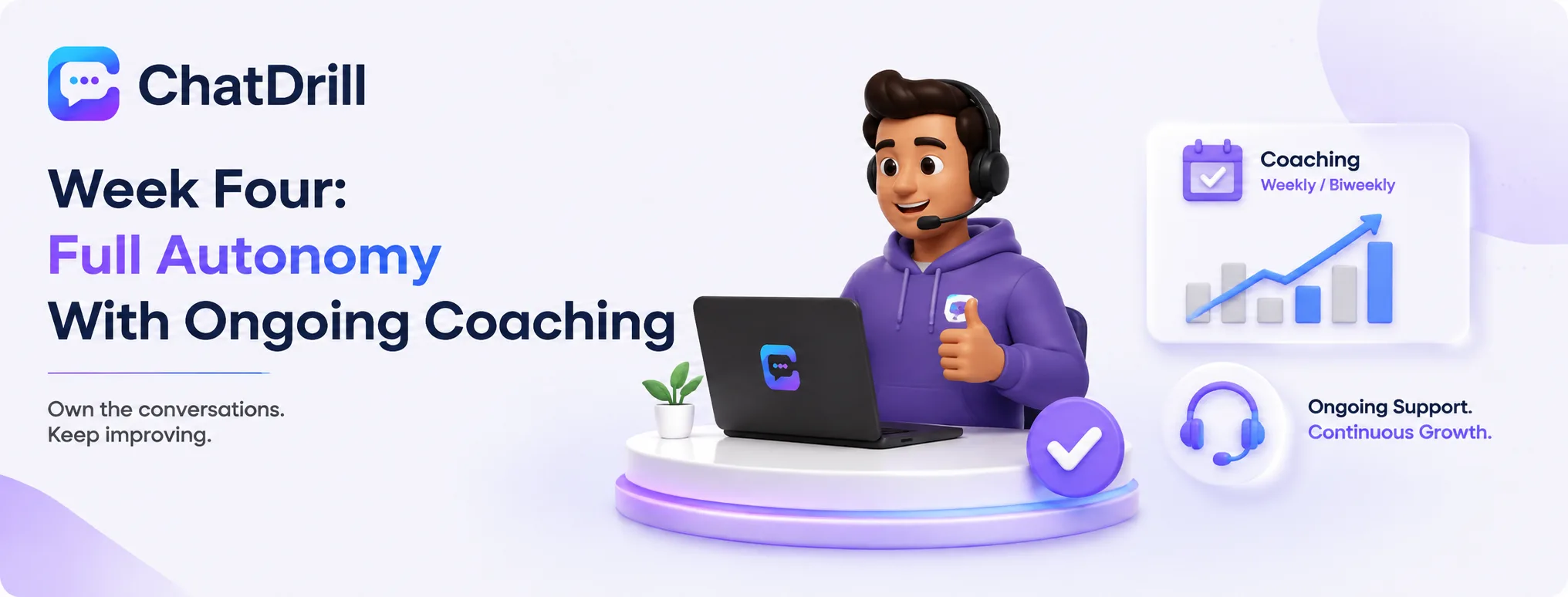
The fourth week moves to full conversation handling autonomy across the normal range of question types, with regular but less frequent coaching check-ins replacing daily supervision.
Transitioning to full autonomy
By this point, the agent should be handling the normal range of conversation types independently, with escalation reserved for genuinely unusual or high-stakes situations rather than routine uncertainty.
This transition should feel like a natural progression from week three's expanding independence, not an abrupt jump.
Establishing an ongoing coaching cadence
Moving from daily feedback to a regular but less frequent cadence, weekly or biweekly, maintains ongoing development support without the intensity appropriate only for initial ramp-up.
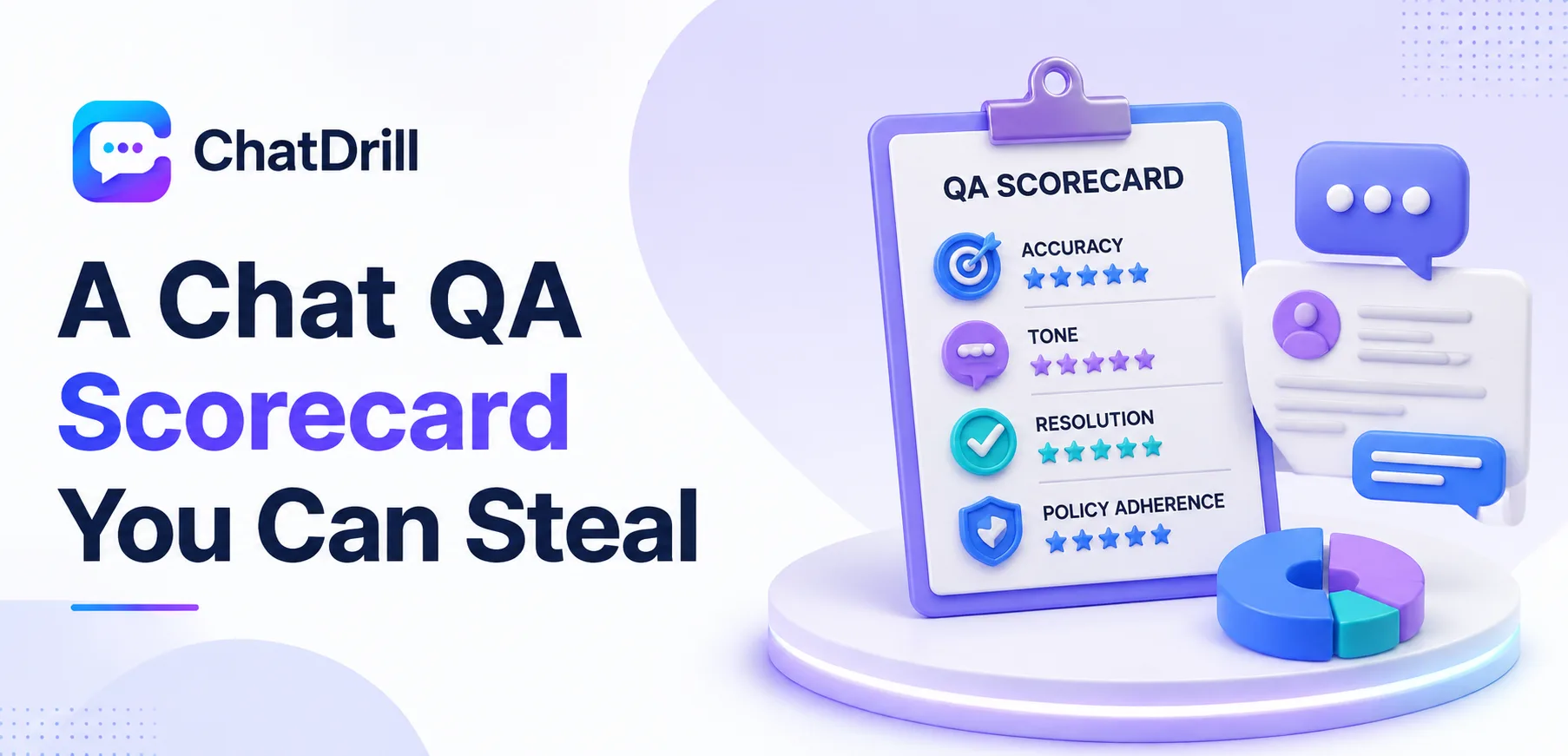
This ongoing coaching should incorporate genuine QA scoring data, connecting formal performance measurement to continued growth.
Common Mistakes in Chat Agent Onboarding
The most common mistakes are moving to live conversations too quickly, providing sparse or delayed feedback, and treating the 30-day mark as a rigid deadline regardless of individual readiness.
Moving to live conversations too quickly
Skipping or rushing through foundational training and shadowing to get a new agent handling live conversations faster tends to produce inconsistent habits that take longer to correct later than they would have taken to build correctly from the start.
Respecting the full foundational period, even when there's pressure to ramp up staffing quickly, produces a more genuinely competent agent sooner in real terms.
Sparse or delayed feedback
Saving all feedback for an end-of-week review, rather than providing frequent, immediate feedback, slows genuine skill development and can let small habits become entrenched before being addressed.
Frequent, small feedback loops, especially during the early weeks, accelerate genuine improvement more than infrequent, larger reviews.
Treating 30 days as a rigid deadline
Pushing every agent to full independence exactly at the 30-day mark regardless of individual readiness can set someone up to struggle if they genuinely need a bit more support time.
Using 30 days as a general structure while remaining flexible about individual pacing produces better long-term outcomes than rigid adherence to the calendar alone.
How ChatDrill Supports New Agent Onboarding
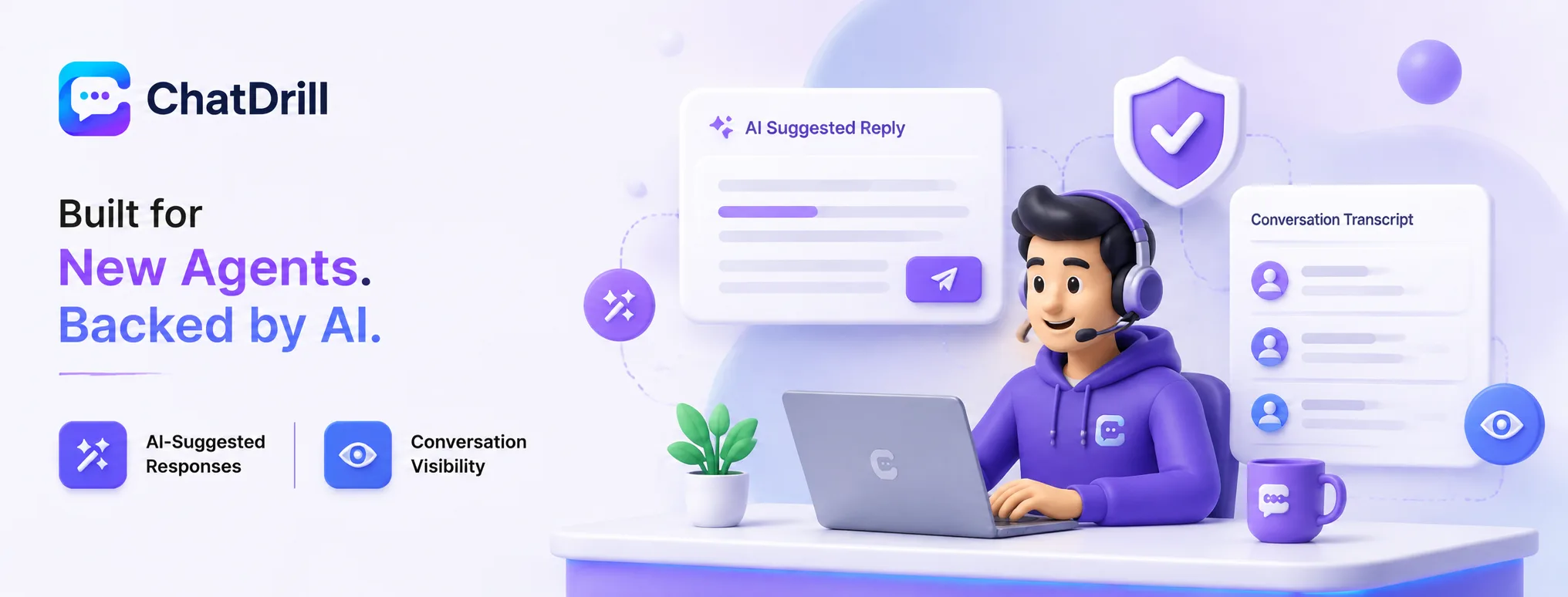
ChatDrill gives a new agent AI-suggested responses to lean on during early live conversations and gives mentors a direct window into real conversation transcripts for faster, more specific coaching.
AI-suggested responses as a safety net during ramp-up
During week two and three, when a new agent is handling live conversations with limited experience, ChatDrill's AI-suggested reply feature offers a starting point they can adapt or send directly, reducing the pressure of drafting every response from scratch.
This support doesn't replace genuine skill-building, but it does reduce the risk of an inexperienced agent giving an inaccurate answer during exactly the period when their own product knowledge is still developing.
As the agent gains confidence through weeks three and four, they naturally rely on these suggestions less, giving a mentor a concrete, visible signal of genuine skill progression.
Transcript visibility for faster, specific coaching
Because every conversation is logged and searchable within ChatDrill, a mentor can review a new agent's actual conversations directly, rather than relying only on live shadowing or secondhand summaries.
This visibility supports the frequent, specific feedback loops that accelerate onboarding, a mentor can point to an exact exchange rather than giving only general impressions.