
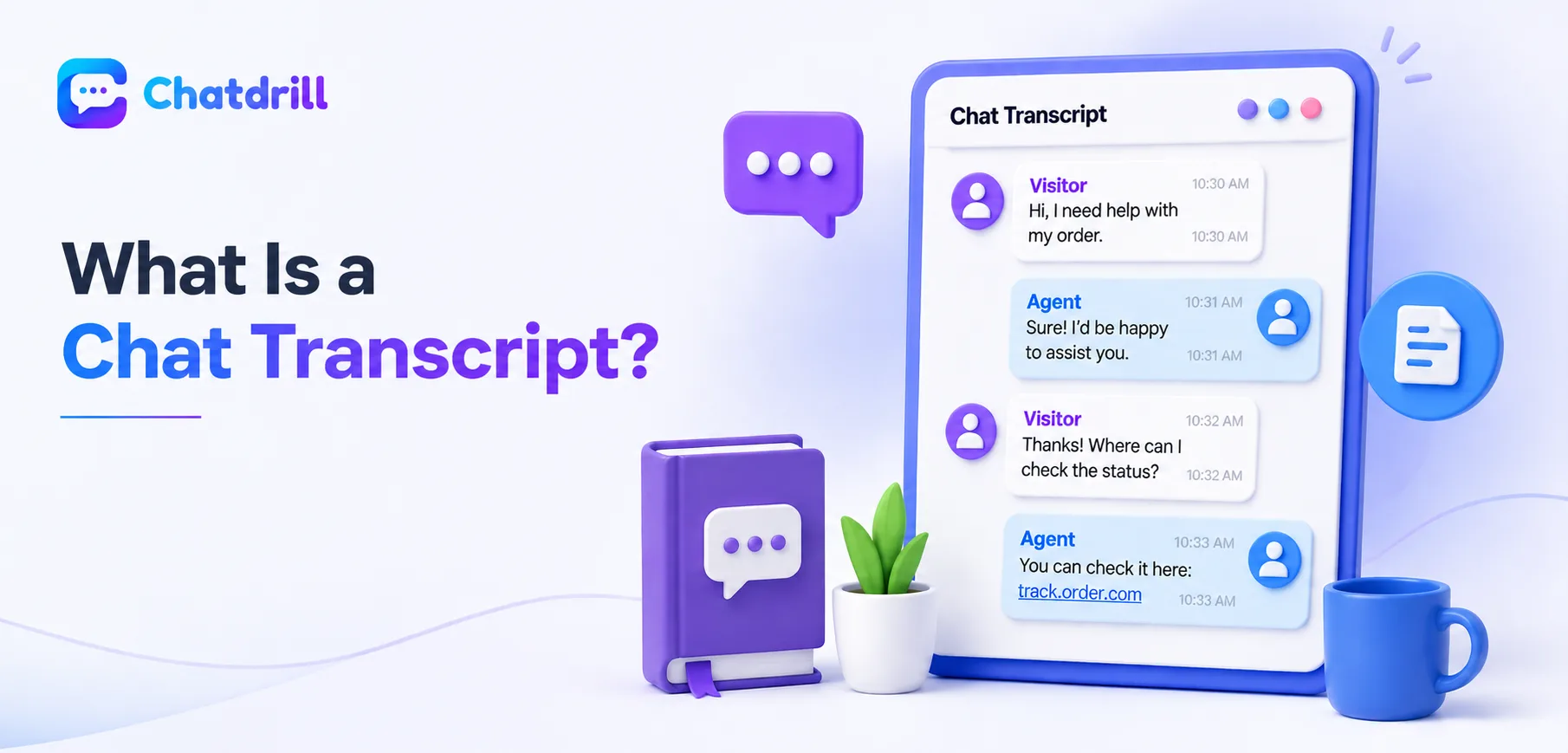
A chat transcript is simply the full written record of a conversation, every message from both the visitor and whoever or whatever responded, preserved after the live conversation ends.
Quick answer: A chat transcript is the complete, saved text record of a conversation between a visitor and a support agent or chatbot, preserved after the conversation ends for reference, quality review, training, and analytics purposes.
While it might seem like a purely administrative detail, transcripts actually serve several genuinely important, distinct purposes across support operations, quality assurance, and even legal or compliance needs.
Understanding what a transcript captures, and how it gets used beyond the original conversation itself, clarifies why maintaining accurate, accessible chat records matters more than it might initially seem.
This guide covers the definition, what a transcript typically includes, its main uses, related considerations like privacy, and how ChatDrill manages chat transcripts.
The Full Definition Explained [major informational gain]
[major informational gain]
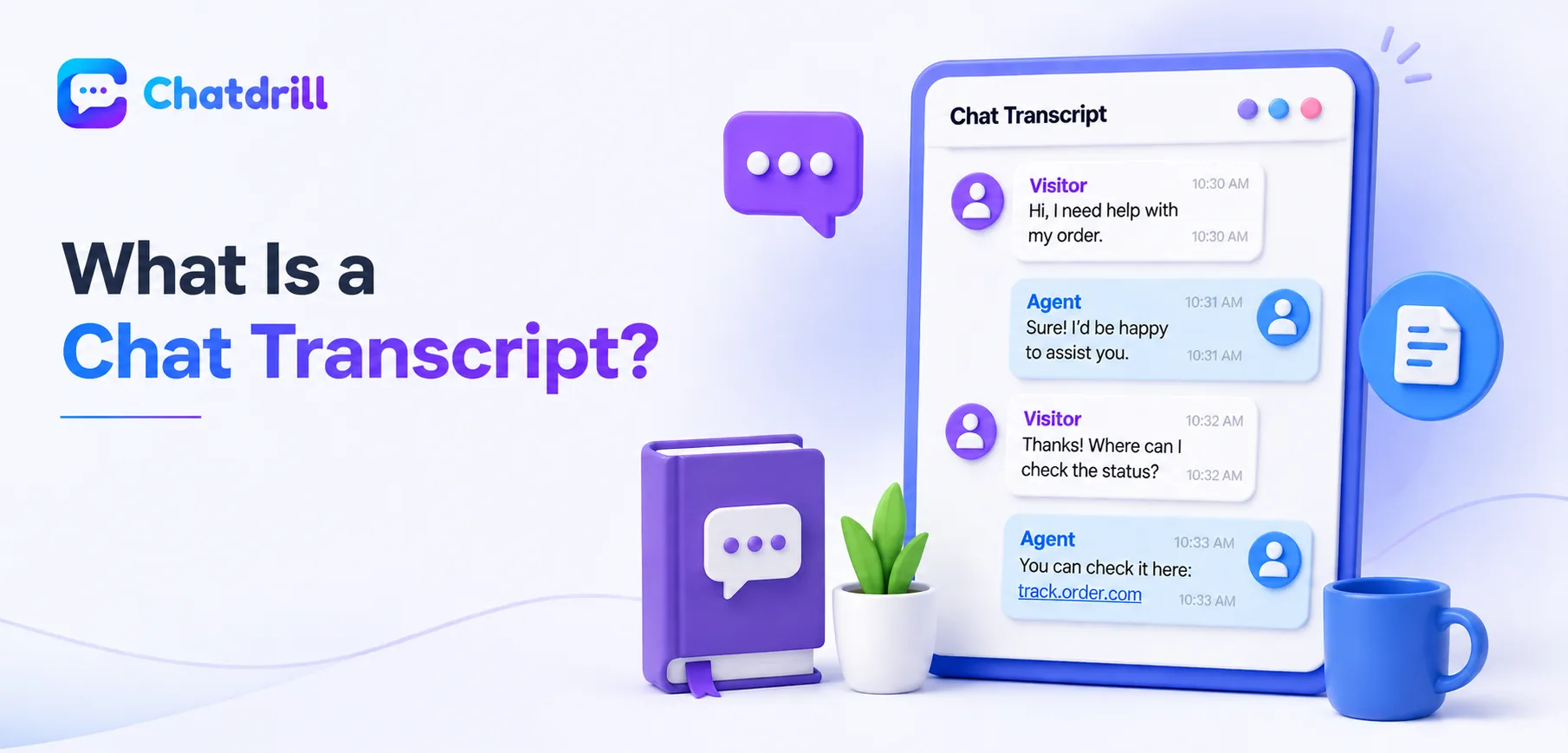
A chat transcript is the complete, timestamped text record of every message exchanged during a conversation, preserved after that conversation concludes.
What gets captured
A transcript typically includes every message sent by the visitor and the agent or bot, along with timestamps, and often metadata like which agent handled the conversation and how long it lasted.
Some systems also capture any files shared, pre-chat survey responses, or post-chat survey results as part of the same complete record.
How and where transcripts are stored
Transcripts are typically stored within the chat platform itself, searchable and retrievable later, and often exportable to other systems like a CRM or a separate archive for longer-term record-keeping.
This storage and retrievability is what makes a transcript genuinely useful well beyond the moment the conversation actually happened.
Main Uses of Chat Transcripts [major informational gain]
[major informational gain]
Transcripts support quality review, agent coaching, dispute resolution, and identifying broader patterns across many conversations.
Quality review and coaching
Reviewing real transcripts against quality standards or specific coaching goals gives a manager concrete, evidence-based material for feedback, rather than relying on vague impressions or secondhand accounts.
This use case is one of the most valuable, turning transcripts into an active tool for improving support quality over time rather than a passive archive.
Dispute resolution and pattern identification
A transcript provides an objective record if a dispute arises about what was said or promised during a conversation, protecting both the business and the customer with an accurate account rather than relying on memory.
Reviewing transcripts in aggregate also reveals broader patterns, common question types, recurring complaints, or emerging issues, that a single conversation alone wouldn't show.
Privacy and Retention Considerations [major informational gain]
[major informational gain]
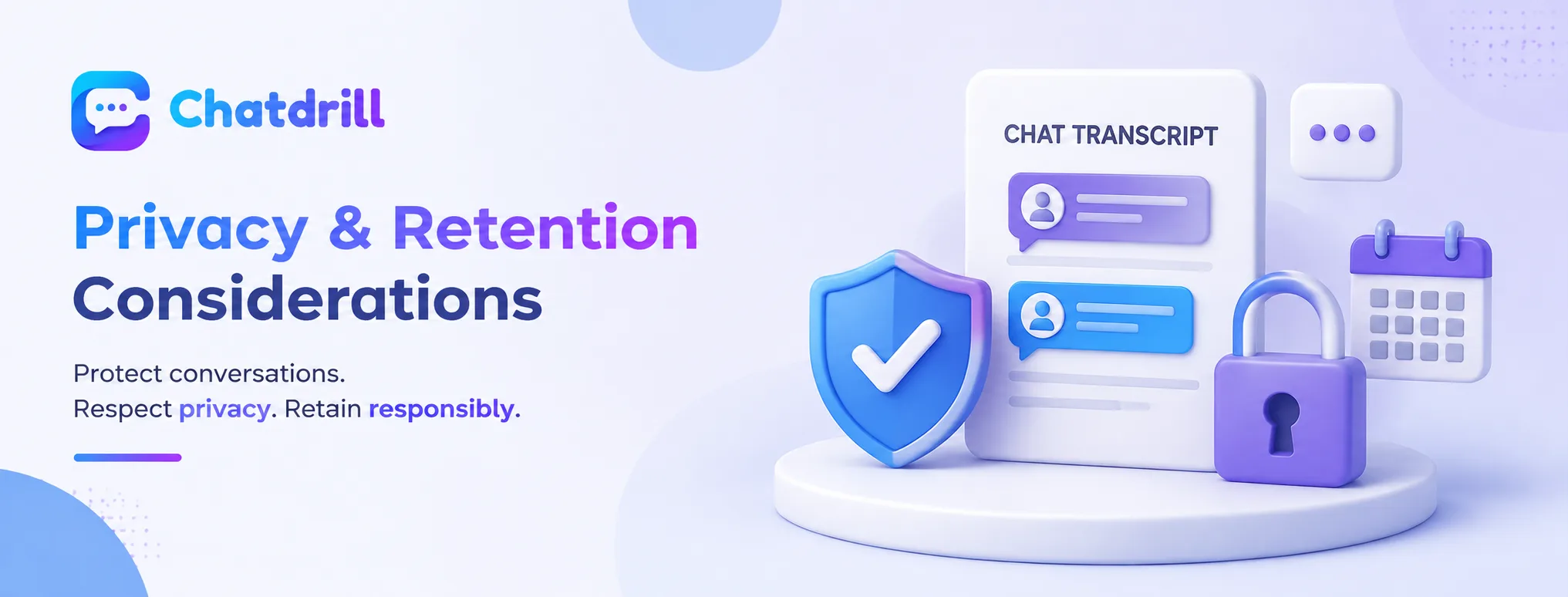
Because transcripts often contain personal information, businesses need clear policies on how long they're retained and who can access them.
What personal information transcripts might contain
A transcript can capture a visitor's name, email, order details, or other personal information shared during the conversation, meaning it needs to be handled with the same care as any other record containing personal data.
This consideration matters especially for businesses operating under privacy regulations that govern how long personal data can be retained and who can access it.
Setting a reasonable retention policy
Establishing a clear retention period, how long transcripts stay accessible before being archived or deleted, balances genuine business need for historical reference against privacy and data minimization principles.
This policy should be documented and applied consistently, rather than left ambiguous or decided ad hoc for each individual transcript.
Transcripts vs Related Concepts [major informational gain]
A transcript is distinct from a conversation summary and from real-time chat monitoring, though all three can draw from the same underlying conversation data.
Transcript vs summary
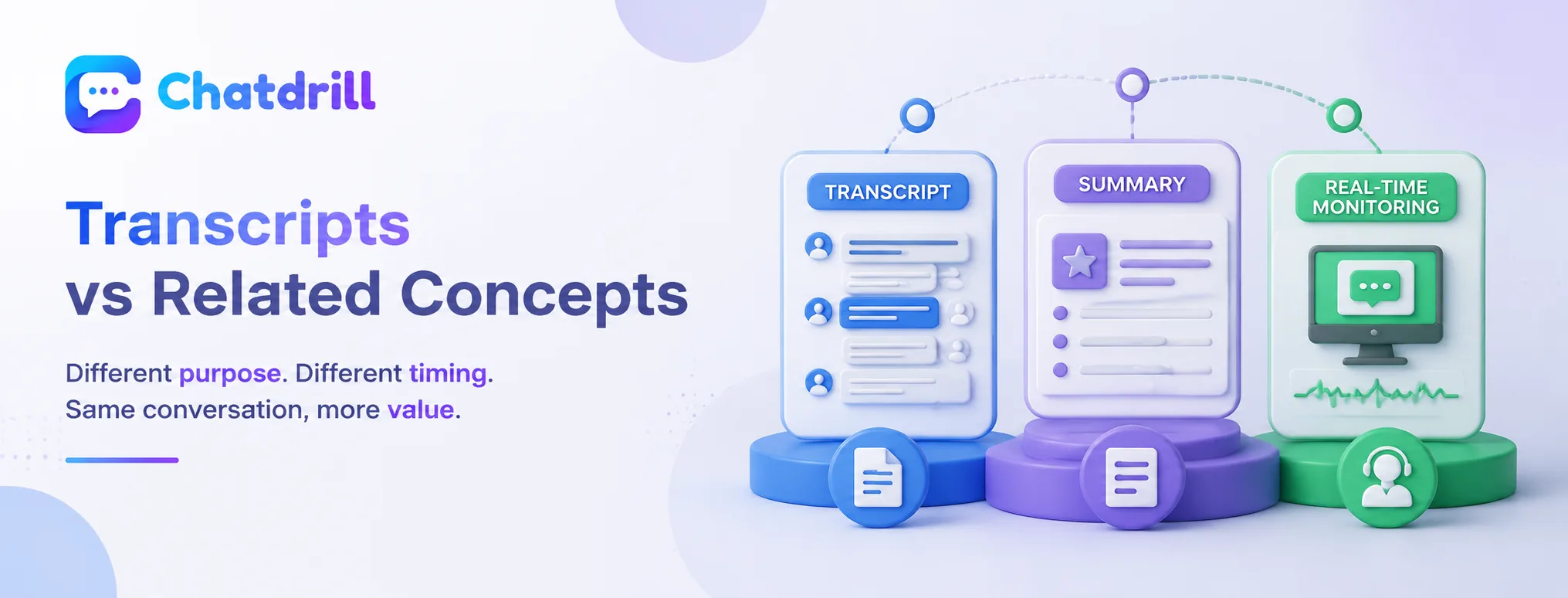
A transcript is the complete, verbatim record of every message, while a summary is a condensed, interpreted version highlighting the key points, often generated afterward either manually or by AI.
Both have value, a transcript for complete accuracy and a summary for quick review without reading the full exchange.
Transcript vs real-time monitoring
Real-time monitoring involves observing a conversation as it happens, useful for live coaching or intervention, while a transcript is reviewed after the fact, useful for retrospective analysis and record-keeping.
Both serve quality purposes but at genuinely different points in a conversation's lifecycle.
How ChatDrill Manages Chat Transcripts [major informational gain]
[major informational gain]
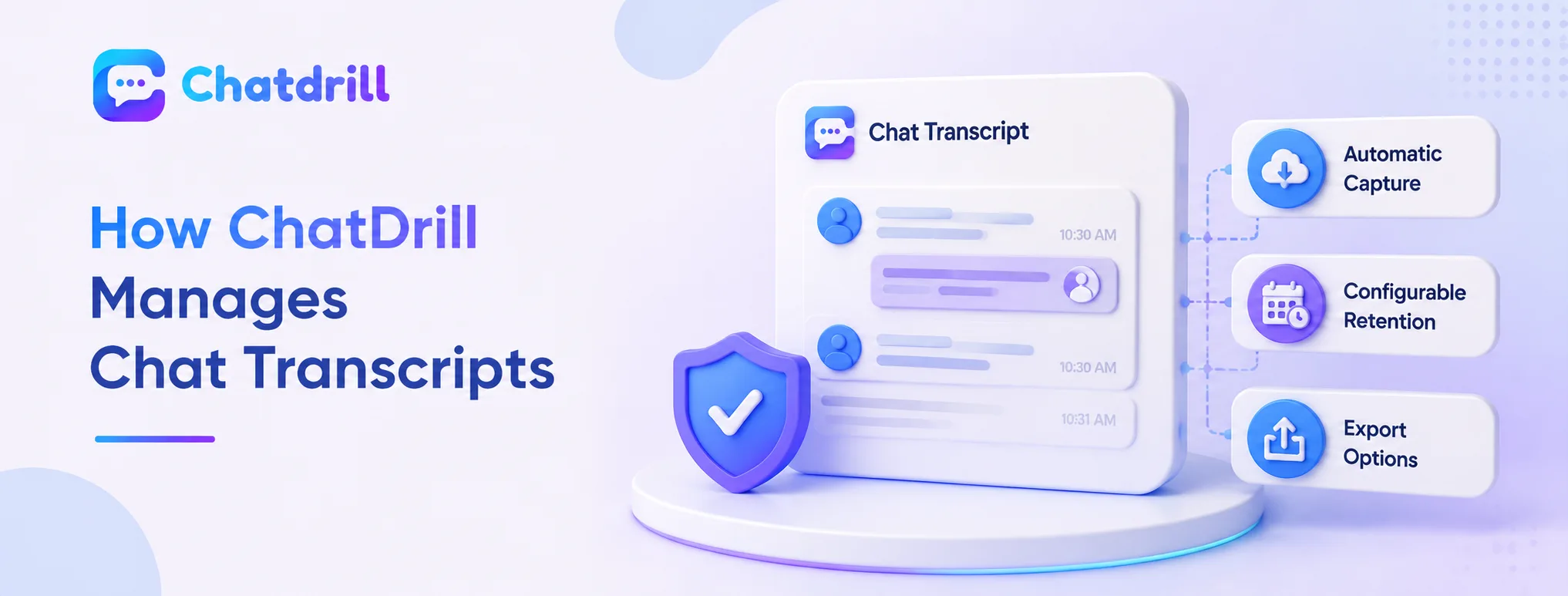
ChatDrill automatically captures, stores, and makes transcripts searchable, with configurable retention settings and export options.
Automatic capture and searchability
ChatDrill automatically saves a complete transcript for every conversation, including timestamps and relevant metadata, making it easy to search and retrieve specific conversations later for review or reference.
This automatic capture means no conversation record is lost simply because no one thought to manually save it.
Configurable retention and export options
ChatDrill supports configuring how long transcripts are retained and offers export options to other systems, letting a business align transcript handling with its own specific privacy policy and operational needs.
This flexibility helps a business maintain compliant, well-managed transcript practices without sacrificing the genuine value transcripts provide.