
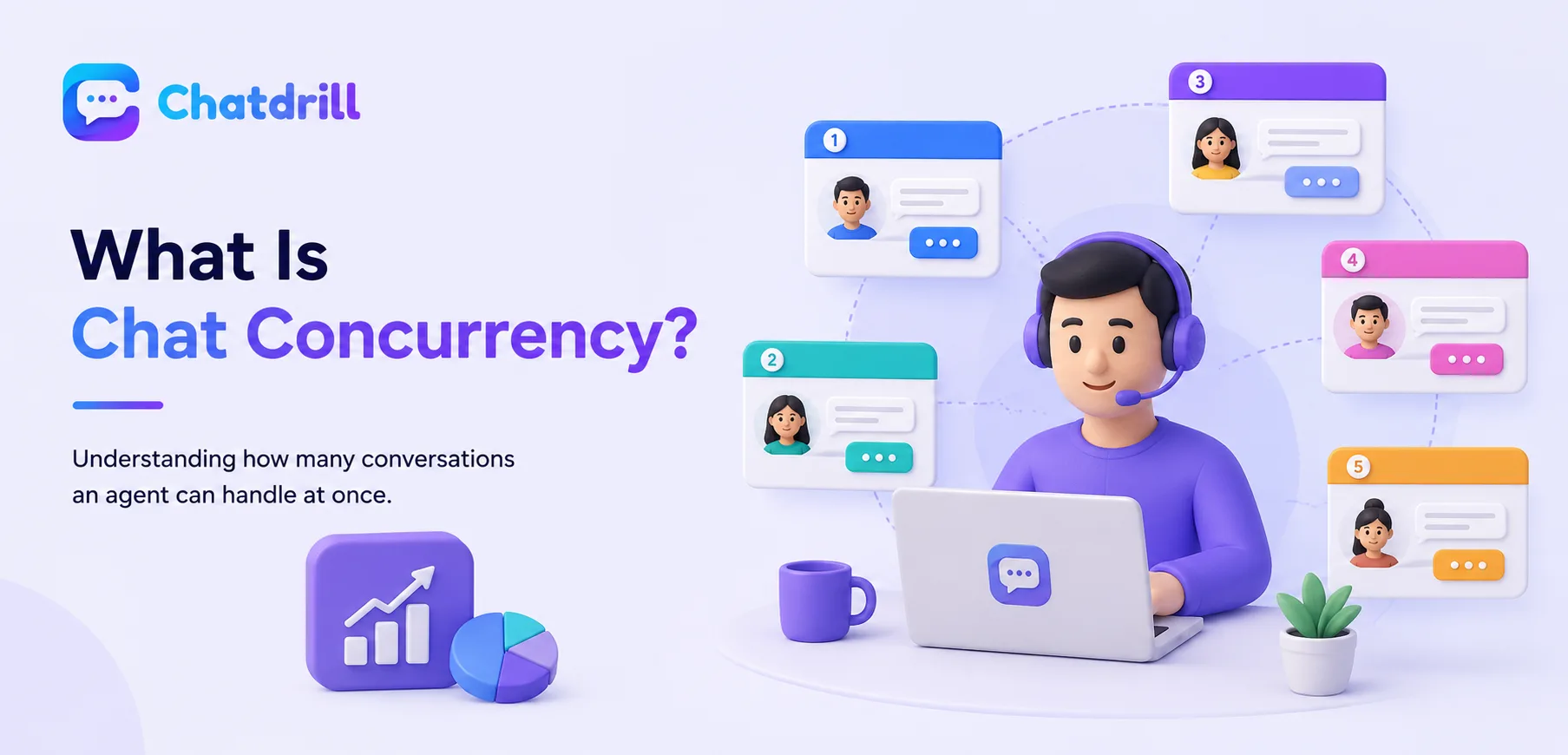
Chat concurrency is a term that comes up constantly in support-operations conversations but rarely gets explained plainly, it simply refers to how many chat conversations one agent is juggling simultaneously at a given moment.
Quick answer: Chat concurrency is the number of live chat conversations a single agent (or an AI system) handles at the same time, and it's one of the core levers support teams adjust to balance efficiency against response quality.
This number matters enormously in practice, since it directly shapes both how efficiently a support team operates and how good each individual customer's experience actually is.
Understanding concurrency as a concept, distinct from total chat volume or team headcount, clarifies why two teams handling similar overall volume can have very different staffing needs and customer experience outcomes.
This guide covers the definition, how concurrency is typically measured and set, what influences the right number, and how ChatDrill helps manage concurrency in practice.
The Full Definition Explained [major informational gain]
[major informational gain]
Chat concurrency specifically counts simultaneous, active conversations assigned to one agent, distinct from total daily volume or overall team size.
What counts as concurrent
A concurrency count includes only conversations an agent is actively responsible for at a given moment, not the total number of chats they might handle across an entire shift.
An agent with a concurrency of 4, for example, is handling up to four separate, active conversations at once, regardless of how many total conversations they complete across the full day.
Why this differs from total volume
Total daily chat volume measures overall workload across a shift, while concurrency measures the momentary intensity of that workload at any single point in time.
Two teams can have identical total daily volume but very different concurrency levels depending on how that volume is distributed and how many agents are staffed simultaneously.
How Concurrency Is Measured and Set [major informational gain]
[major informational gain]
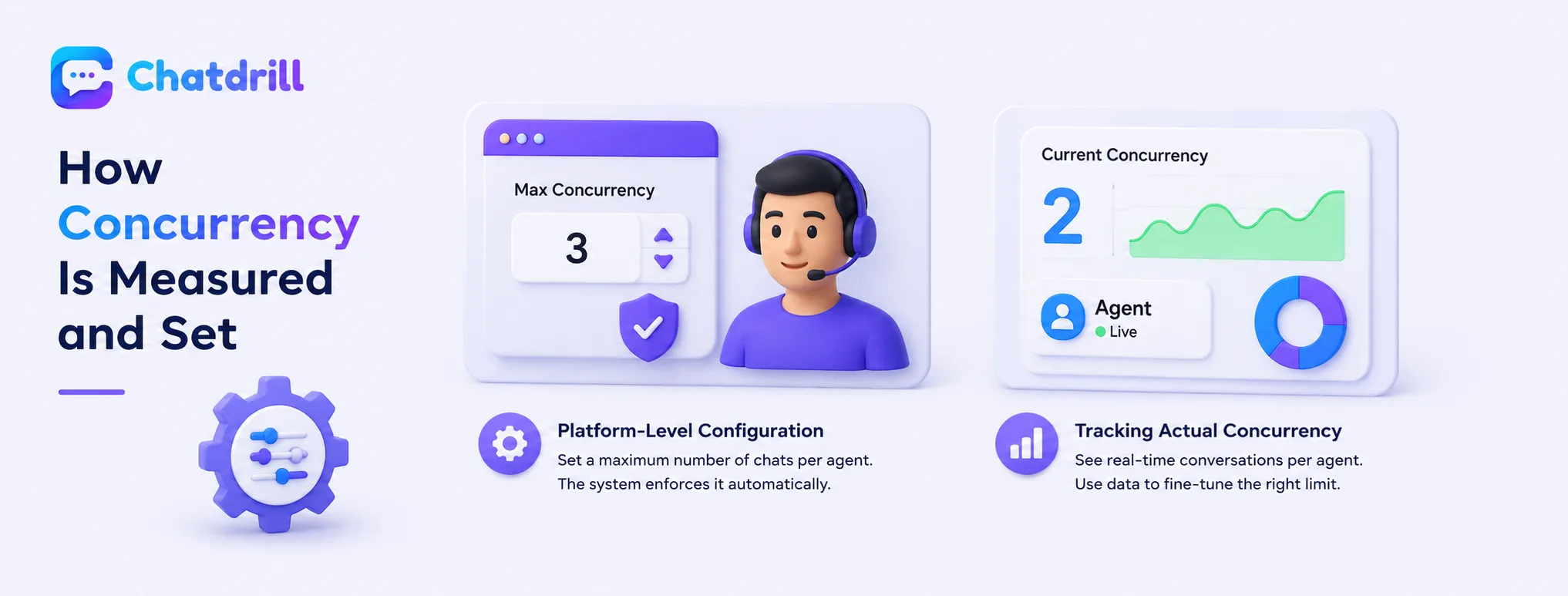
Most chat platforms let a business configure a maximum concurrency limit per agent, which the system then enforces automatically when routing new conversations.
Platform-level configuration
A chat platform typically includes a setting for maximum concurrent conversations per agent, which the routing system checks before assigning a new incoming chat to that agent.
Once an agent reaches their configured limit, new conversations route to another available agent or queue rather than adding further load to someone already at capacity.
Tracking actual concurrency in practice
Beyond the configured maximum, most platforms also report actual, real-time concurrency, showing how many conversations an agent is genuinely handling at any given moment, which may sit below the configured ceiling during quieter periods.
Reviewing this real, observed concurrency data over time reveals whether the configured limit reflects genuine typical demand or needs adjustment.
What Influences the Right Concurrency Number [major informational gain]
[major informational gain]
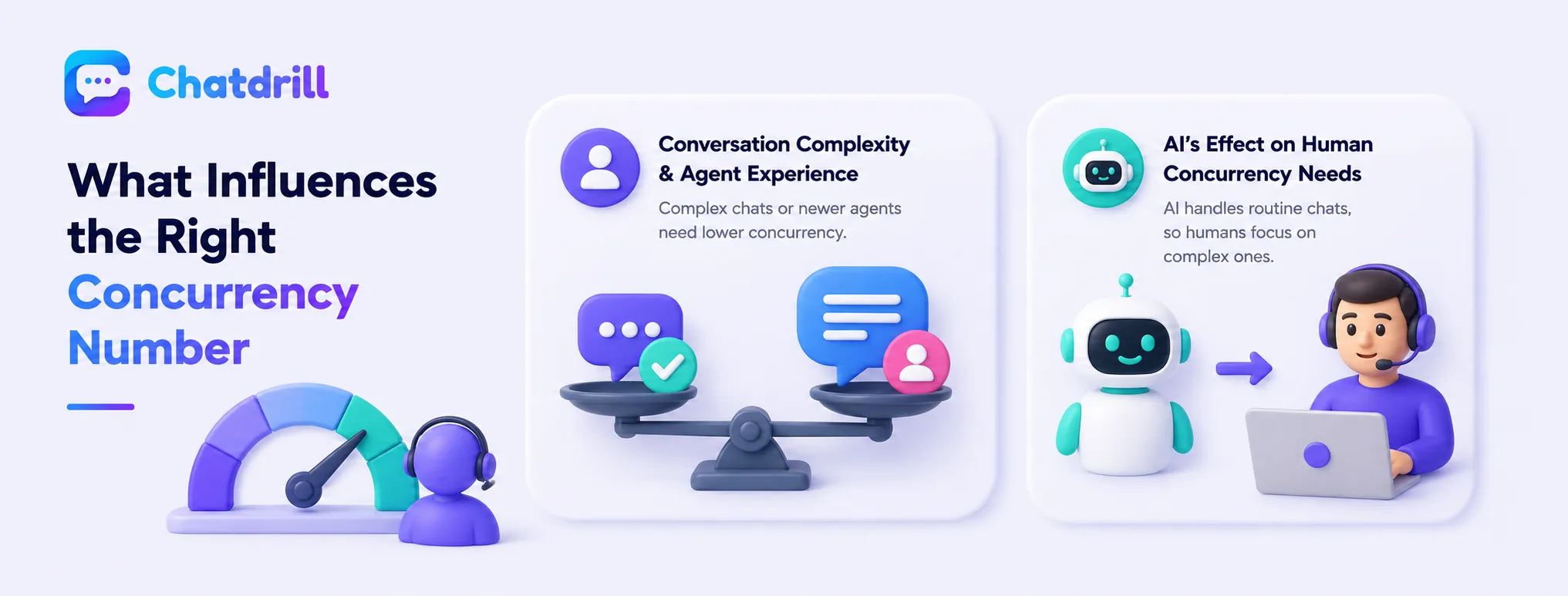
The appropriate concurrency level depends heavily on conversation complexity, agent experience, and how much AI is absorbing routine volume before it reaches a human.
Conversation complexity and agent experience
Simple, quick questions support a higher concurrency level than genuinely complex, technical conversations requiring sustained focus, and a more experienced agent generally handles higher concurrency comfortably than someone still new to the role.
This means there's no single universal "correct" concurrency number, the right figure depends on your specific conversation mix and team composition.
AI's effect on human concurrency needs
When AI resolves a meaningful share of routine questions automatically, the conversations reaching human agents concentrate more heavily in complex territory, which often argues for a lower human concurrency setting than raw volume alone would suggest.
This shift is worth revisiting periodically as AI training matures and absorbs more volume over time.
Concurrency vs Related Metrics [major informational gain]
[major informational gain]
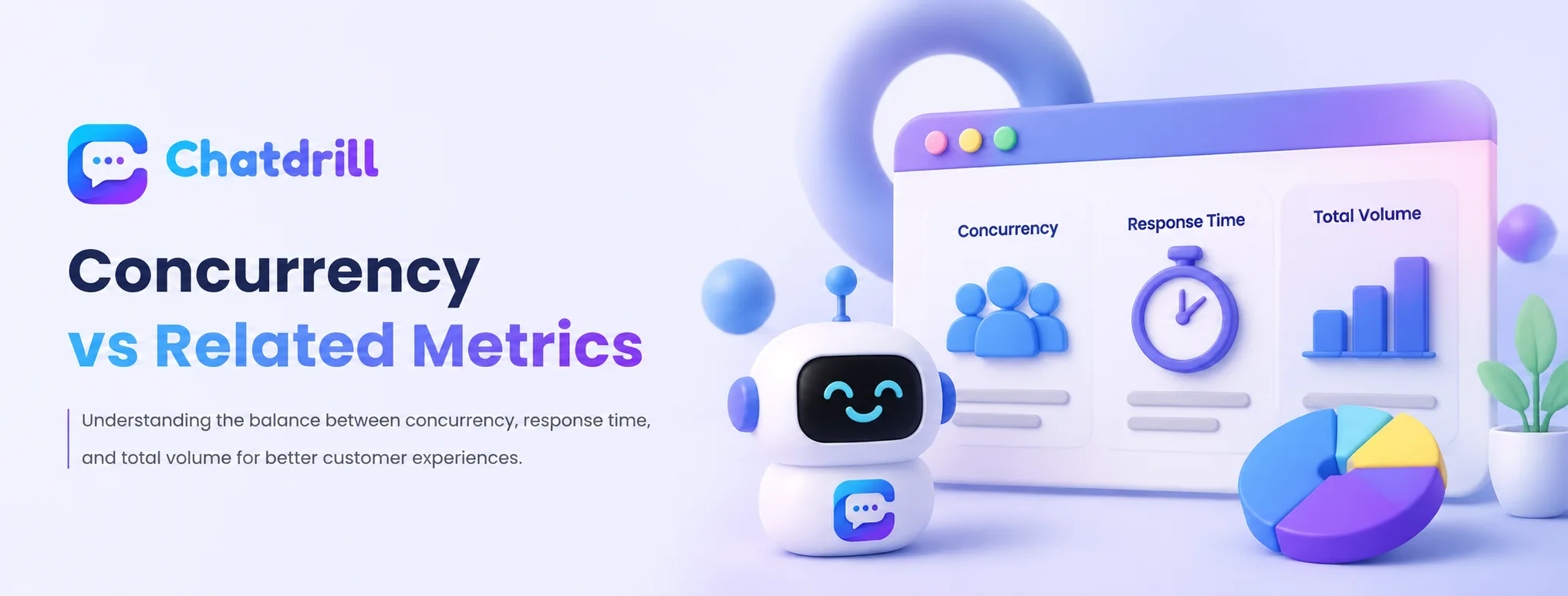
Concurrency is distinct from response time and total volume, though all three metrics interact closely in shaping the overall customer experience.
Concurrency vs response time
Concurrency measures how many conversations an agent handles at once, while response time measures how quickly a message gets a reply, and pushing concurrency too high tends to directly degrade response time as a downstream effect.
Understanding this relationship helps a team diagnose whether a response time problem actually stems from an overly aggressive concurrency setting.
Concurrency vs total daily volume
Total volume tells you how much work happened over a full period, while concurrency tells you how intensely that work was distributed at any given moment, two related but genuinely distinct planning inputs.
A team should track both, since optimizing one without considering the other risks either agent overload or inefficient underuse of available capacity.
How ChatDrill Manages Concurrency [major informational gain]
[major informational gain]
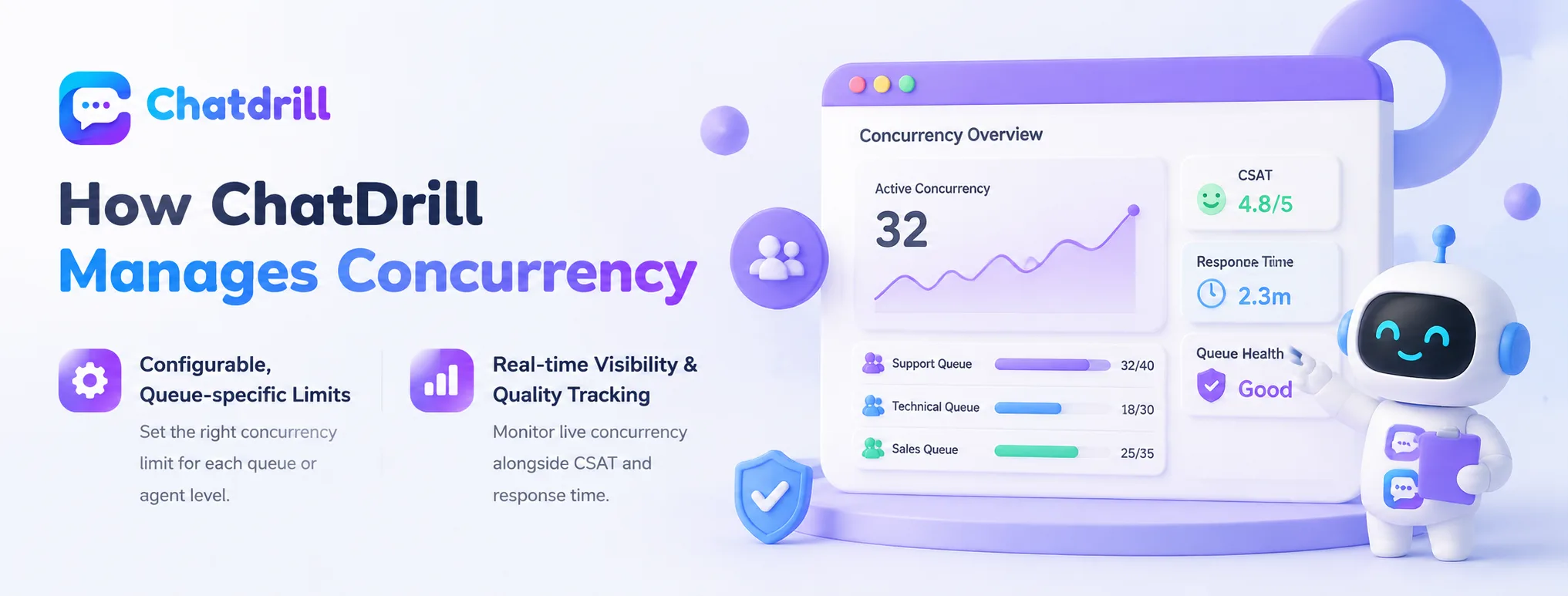
ChatDrill lets you configure concurrency limits per agent or queue and provides real-time visibility into actual concurrency levels to inform ongoing adjustments.
Configurable, queue-specific limits
ChatDrill supports setting different concurrency limits for different queues or agent experience levels, letting a simpler support queue run at a higher limit than a genuinely complex technical queue.
This granularity lets your concurrency setting reflect actual complexity differences rather than applying one blanket number uniformly.
Real-time concurrency visibility and quality tracking
ChatDrill's dashboard shows real, current concurrency levels alongside quality metrics like CSAT and response time, letting you directly observe how concurrency changes affect actual customer experience.
This visibility supports the kind of data-driven concurrency tuning that produces a genuinely sustainable, well-calibrated setting over time.