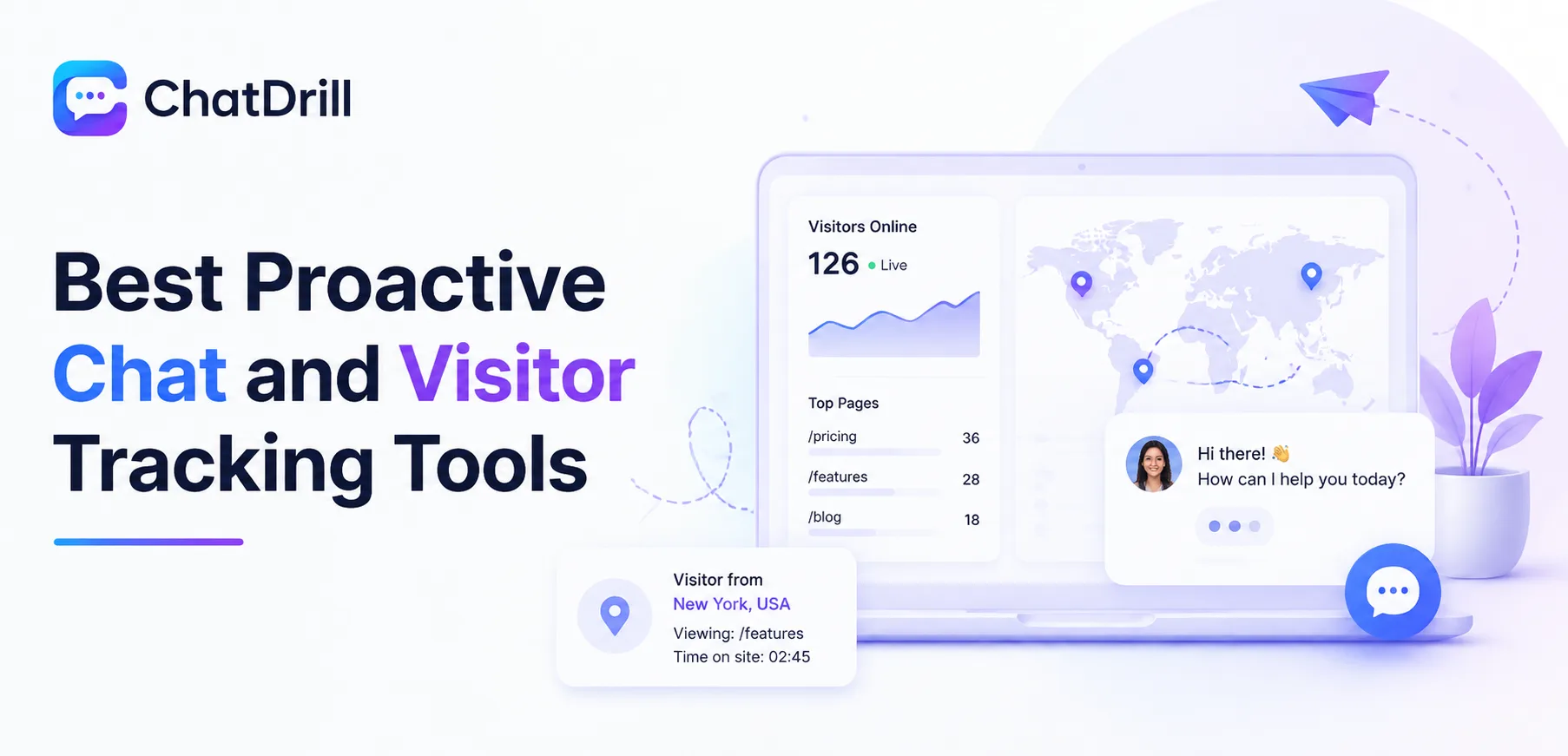

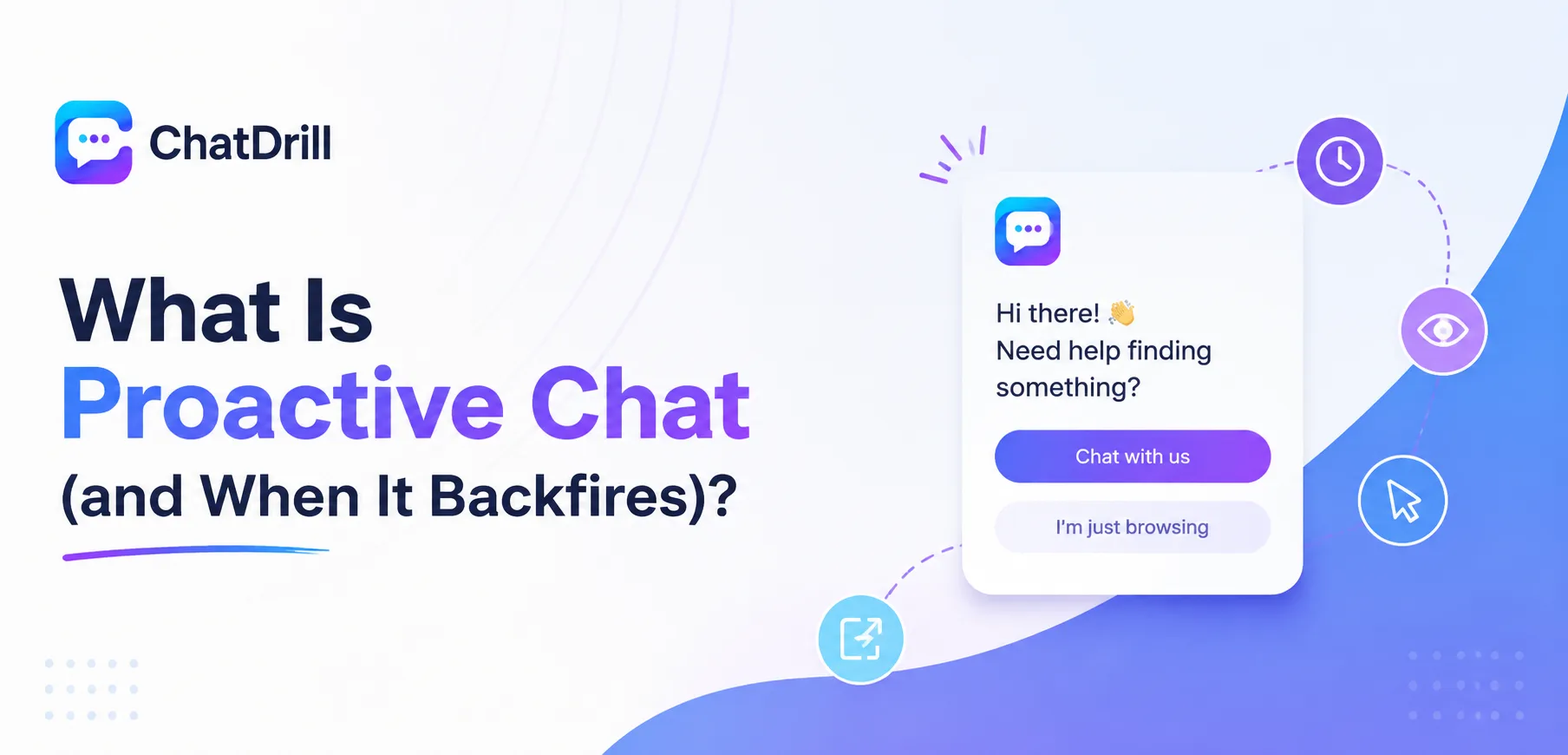
Proactive chat is a chat widget that opens automatically based on visitor behavior, time on page, scroll depth, exit intent, rather than waiting passively for a visitor to click and start the conversation themselves.
Used well, it catches a hesitating visitor at exactly the moment they might benefit from help, recovering interest that would otherwise quietly fade as they leave the page without ever engaging.
Used poorly, it feels like exactly what it technically is, an interruption, popping up too early, too often, or with a message that has nothing to do with what the visitor is actually doing.
The line between these outcomes comes down almost entirely to configuration, timing, targeting, and message relevance, not whether to use proactive chat at all.
This guide covers what proactive chat actually is, how the triggers work, its genuine benefits, the specific ways it backfires, and how to configure it so it feels helpful rather than intrusive.
What Is Proactive Chat?
Proactive chat is a chat widget configured to open automatically based on a visitor's behavior on a page, rather than requiring the visitor to manually click and initiate the conversation themselves.
Simple definition
Instead of sitting passively as a closed bubble waiting to be clicked, a proactively triggered widget opens on its own, usually with a specific greeting message, based on a rule the business has configured.
This shifts chat from a reactive tool, only available if a visitor thinks to use it, into an active one that can initiate engagement at the right moment.
The underlying premise is straightforward, a visitor showing specific behavior, hesitation on a pricing page, repeated visits to a product, is worth reaching out to before they leave without ever engaging.
Proactive vs passive chat
Passive chat waits for a visitor to click the widget; proactive chat opens automatically based on a trigger condition, a meaningful behavioral difference in how engagement happens.
Most modern platforms, including ChatDrill, support both simultaneously, a widget available for manual click at any time, with specific proactive triggers layered on top for defined scenarios.
This combination gives a business flexibility, relying on passive availability as a baseline while using proactive triggers specifically where behavioral data suggests they'll add genuine value.
How Proactive Chat Triggers Work
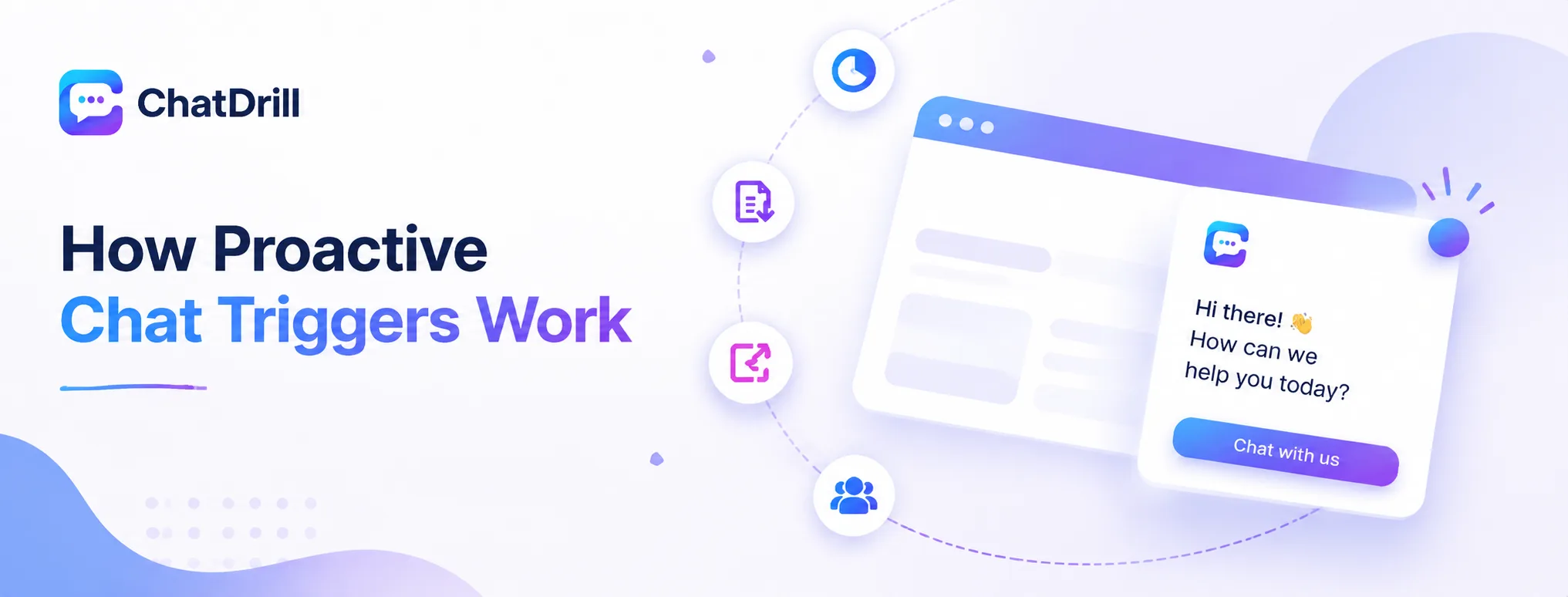
Proactive triggers fire based on a defined condition, time spent on a page, scroll depth, exit intent, or a specific page visited, opening the widget automatically once that condition is met.
Common trigger conditions
Time-on-page triggers fire after a visitor has been on a specific page for a set duration; scroll-depth triggers fire once a visitor has scrolled past a certain point; exit-intent triggers fire when a visitor shows signs of leaving.
Page-specific triggers can also fire based purely on which page a visitor is viewing, useful for targeting a high-intent page like pricing regardless of how long the visitor has been there.
Referral-source triggers, firing differently depending on where a visitor came from, add another layer of targeting for a business wanting to tailor engagement based on acquisition channel.
Combining conditions for precision
More sophisticated setups combine multiple conditions, a visitor on the pricing page for over 20 seconds who also scrolled past the FAQ section, for more precisely targeted engagement than any single condition alone.
This combination capability is what separates a genuinely well-tuned proactive strategy from a blunt, one-size-fits-all trigger applied uniformly.
Building this precision takes some iteration, starting with a single condition and adding combinations as data reveals which specific behavior patterns correlate most strongly with genuine engagement value.
The Genuine Benefits of Proactive Chat
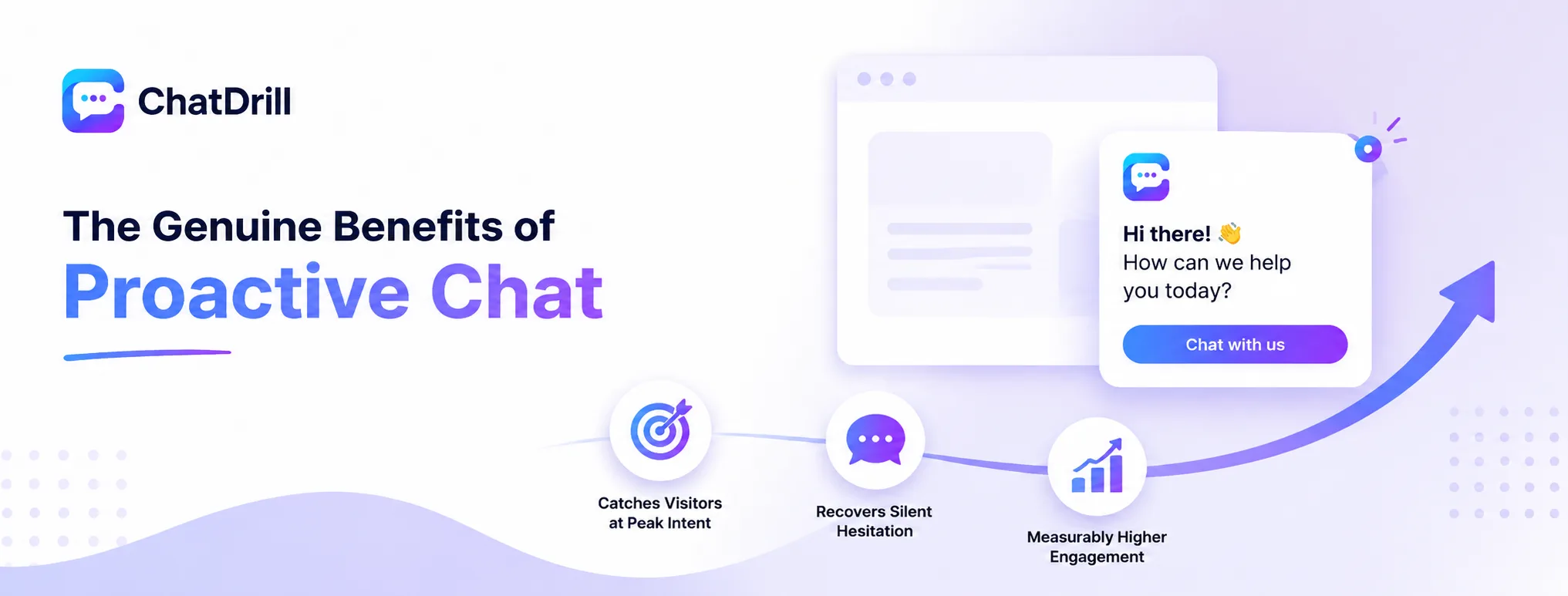
Proactive chat catches visitors at peak intent, recovers hesitation that would otherwise go unaddressed, and consistently shows higher engagement rates than a purely passive, click-to-open widget.
Catching visitors at peak intent
A visitor lingering on a pricing page is often actively deciding, and a well-timed prompt catches that decision moment rather than waiting for the visitor to leave and potentially never return.
This timing advantage is the core value proposition of proactive chat, engaging exactly when engagement is most likely to matter.
Waiting for a passive click misses this window entirely for many visitors, who simply move on rather than seeking out chat themselves even when a genuine question exists.
Recovering silent hesitation
Many visitors with a genuine question never think to open a passive chat widget on their own, meaning proactive engagement surfaces and resolves hesitation that would otherwise go completely unaddressed.
This is a meaningfully different visitor population than those who click a passive widget themselves, expanding the total reach of chat as a channel.
Recognizing this expanded reach is part of why proactive chat consistently shows measurable conversion lift beyond what passive chat alone achieves.
Measurably higher engagement
Well-configured proactive triggers consistently show higher engagement rates than a purely passive widget, since they actively invite participation rather than requiring a visitor to take the first step.
This engagement lift is worth measuring directly, comparing conversation rates from triggered versus passively opened chats to confirm the tactic is genuinely working for your site.
Tracking this data over time also reveals which specific triggers perform best, informing where to focus further optimization effort.
When Proactive Chat Backfires
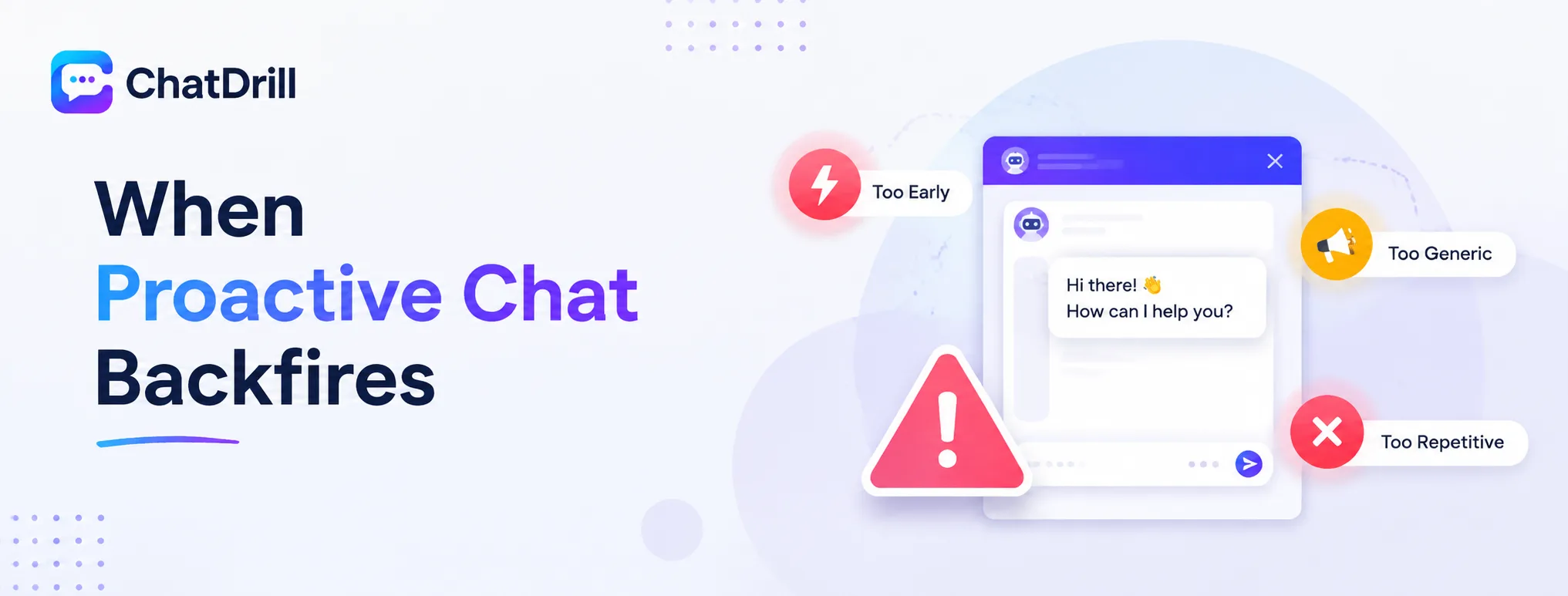
Proactive chat backfires when it fires too early before a visitor has engaged with the page, when it uses a generic message unrelated to what the visitor is actually doing, and when it fires repeatedly and starts to feel like harassment rather than help.
Firing too early
A trigger firing the instant a page loads, before a visitor has had any chance to engage with the content, feels like an interruption rather than a helpful, well-timed offer.
This is one of the most common and easily fixed mistakes, simply adding a reasonable delay before the trigger fires meaningfully improves how it's received.
Visitors who dismiss an overly hasty trigger are also less likely to engage with a later, better-timed one during the same visit, making this mistake costlier than it first appears.
Using a generic, irrelevant message
A greeting with no connection to the specific page or apparent visitor behavior feels random and unhelpful, undermining the trust a well-timed, relevant message would otherwise build.
Investing in page-specific message content, rather than one generic greeting reused everywhere, is what actually makes proactive chat feel helpful instead of intrusive.
This investment doesn't need to be extensive, even a small reference to the specific page context meaningfully improves how a message lands compared to a fully generic one.
Firing repeatedly or too aggressively
A trigger that fires again and again for the same visitor, or across every single page regardless of relevance, tends to feel like harassment rather than assistance.
Setting sensible limits, firing once per session, reserving triggers for genuinely high-intent pages, keeps the tactic from wearing out its welcome.
A visitor who has already dismissed a trigger once is unlikely to respond positively to the same prompt reappearing repeatedly during the same visit.
How to Configure Proactive Chat Well
Configuring proactive chat well means using a sensible delay before firing, writing page-specific messages that reference what the visitor is actually doing, and limiting triggers to genuinely high-intent pages rather than applying them everywhere.
Using a sensible delay
A 15 to 20 second delay after page load lets a visitor engage with the content first, before a proactive prompt appears, avoiding the interruption of an instant trigger.
This delay is worth testing and tuning per page, since the right timing can vary based on how quickly a visitor typically forms intent on that specific page.
A/B testing different delay lengths against actual engagement data, rather than guessing at one universal number, tends to produce the best results over time.
Writing page-specific messages
A message referencing the specific page, "noticed you're checking out our pricing, happy to answer any questions", performs meaningfully better than a generic "how can I help?" applied everywhere.
This specificity requires some upfront effort per page but consistently pays off in higher, more genuine engagement rates.
Reviewing which messages actually get the best response rates over time helps refine wording further, since even small phrasing changes can measurably affect how a trigger performs.
Limiting to high-intent pages
Reserving proactive triggers for pages where visitor intent is genuinely high, pricing, checkout, demo request, rather than applying them site-wide, preserves the tactic's impact where it matters most.
This restraint also avoids the fatigue effect of a visitor encountering triggered chat prompts on every single page they browse.
Expanding to additional pages only after confirming strong performance on initial high-intent pages keeps the rollout deliberate rather than diluting impact through overly broad application.