
A podcast or media company's chat use case spans a genuinely distinct combination, engaging an audience around specific content, handling advertiser and sponsorship inquiries, and often supporting a subscriber or membership base, distinct from a typical product-focused business.
Quick answer: For podcasts and media companies, the best live chat software supports audience engagement questions about episodes, sponsorships, and advertising inquiries alongside genuine subscriber or membership support, with accessible, flexible platforms like Crisp and Tidio worth evaluating first, alongside ChatDrill for AI trained specifically on your episode archive and advertising rate details.
This combination shapes what genuinely matters in a chat platform choice, favoring flexibility to handle these varied interaction types over a tool built purely around a single, narrow use case like ecommerce support.
Understanding this specific mix of needs helps a media company or podcast choose a genuinely well-suited platform rather than a tool built around assumptions that don't reflect this particular business model.
This guide covers what podcasts and media companies specifically need, genuinely strong options, common evaluation mistakes, key questions to ask, and how ChatDrill fits this use case.
What Podcasts and Media Companies Specifically Need
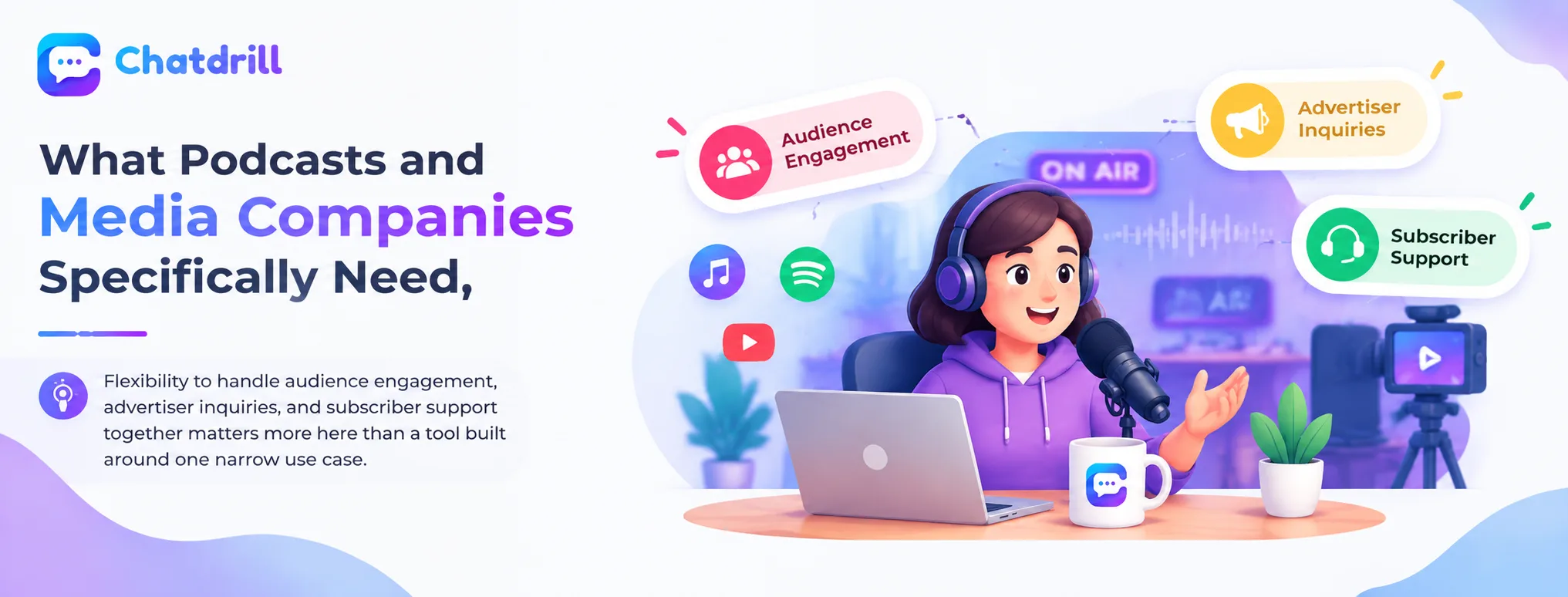
Flexibility to handle audience engagement, advertiser inquiries, and subscriber support together matters more here than a tool built around one narrow use case.
Audience engagement around specific content
A listener or viewer reaching out with a question about a specific episode, guest, or piece of content represents a genuinely distinct interaction type a media-focused chat configuration should handle naturally.
This content-specific engagement differs meaningfully from a typical product support question, benefiting from AI trained on your actual episode or content archive rather than generic product-support assumptions.
Advertiser inquiries alongside subscriber support
A media company or podcast often fields genuinely distinct inquiry types simultaneously, a potential advertiser asking about sponsorship rates, and an existing subscriber asking about membership access, both needing appropriate, accurate handling.
A genuinely flexible platform should accommodate this variety without forcing every interaction type into an identical, generic conversation flow.
Genuinely Strong Options for This Use Case
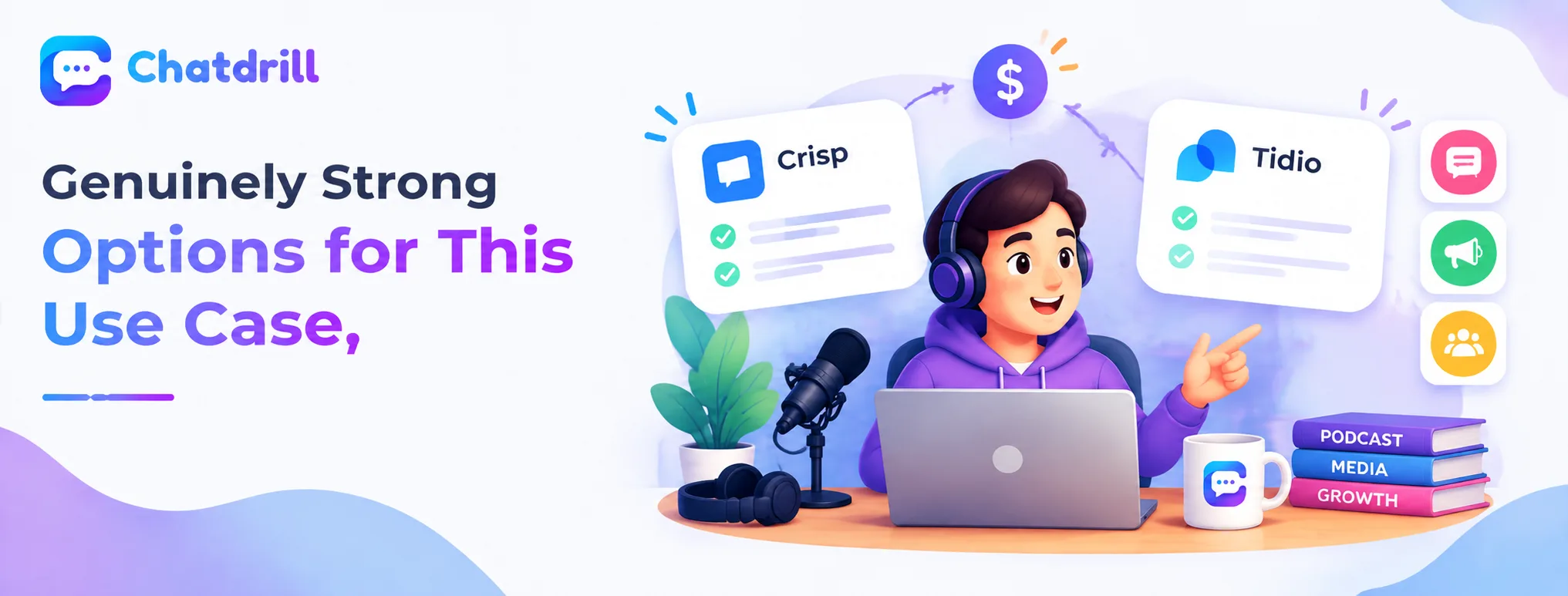
Crisp and Tidio's flexibility and accessible pricing make them reasonable starting points for a media company's genuinely varied chat needs.
Crisp for flexible, accessible configuration
Crisp's flexible configuration options and accessible free tier make it a genuinely practical starting point for a podcast or media company wanting to handle varied inquiry types without a significant upfront investment.
This flexibility supports configuring different response patterns for genuinely different inquiry types, audience questions versus advertiser inquiries, within the same platform.
Tidio for accessible automation across inquiry types
Tidio's AI-assisted automation, combined with accessible pricing, offers a media company a practical way to automate common audience and subscriber questions without requiring significant technical investment.
This automation capability helps a smaller media operation or independent podcast handle genuine chat volume without proportionally increasing staffing.
Common Evaluation Mistakes for Media Companies
Treating this as a purely generic support use case, and failing to train AI on actual content specifics, are common evaluation mistakes.
Treating this as a purely generic support use case
Evaluating chat purely against generic customer-support criteria misses the genuinely distinct combination of audience engagement, advertiser inquiries, and subscriber support this guide identifies as characteristic of media businesses specifically.
Considering this specific combination during evaluation, rather than applying a generic support-tool checklist, produces a more genuinely appropriate choice.
Failing to train AI on actual content specifics
Deploying a generic chatbot without training it on your actual episode archive, advertising rates, or membership structure produces generic, less useful responses to the content-specific questions your audience genuinely asks.
Investing in this specific training, rather than assuming a generic AI configuration suffices, directly improves the genuine relevance of automated responses for this particular use case.
Key Questions to Ask Before Choosing
Confirming genuine flexibility across inquiry types and asking about content-specific AI training capability are the most useful evaluation steps here.
Can this handle genuinely different inquiry types well?
Testing whether a candidate platform can be configured to handle both audience engagement and advertiser inquiries appropriately, rather than forcing every interaction into one generic flow, confirms fit with the flexibility this guide identifies as important.
This dual-scenario testing avoids the common evaluation gap of assessing chat software against only one side of a media company's genuinely varied needs.
Can the AI be trained on my actual content and rates?
Confirming that a candidate platform's AI can be trained specifically on your episode archive, advertising rates, and membership details ensures automated responses reflect genuinely accurate, content-specific information.
This capability directly supports the relevance this guide identifies as essential for genuinely serving a media company's specific audience and business needs.