

A B2B marketplace's chat use case is genuinely dual-sided, needing to support buyers evaluating suppliers or products alongside sellers managing their own listings and account questions, a distinctly more complex structure than a typical single-sided ecommerce or SaaS business.
Quick answer: For B2B marketplaces, the best live chat software supports the dual-sided nature of this business model, helping both buyers evaluating suppliers and sellers managing listings, with strong CRM integration and lead qualification capability, making Intercom and HubSpot's chat tool commonly cited for this depth, alongside ChatDrill for AI trained on both buyer and seller-facing questions.
This duality shapes what genuinely matters in a chat platform choice, favoring strong CRM integration and flexible qualification capability over a tool built purely around one straightforward, single-audience use case.
Understanding this specific structural complexity helps a B2B marketplace choose a genuinely well-suited platform rather than a tool that only serves one side of its actual, dual-audience business model.
This guide covers what B2B marketplaces specifically need, genuinely strong options, common evaluation mistakes, key questions to ask, and how ChatDrill fits this use case.
What B2B Marketplaces Specifically Need
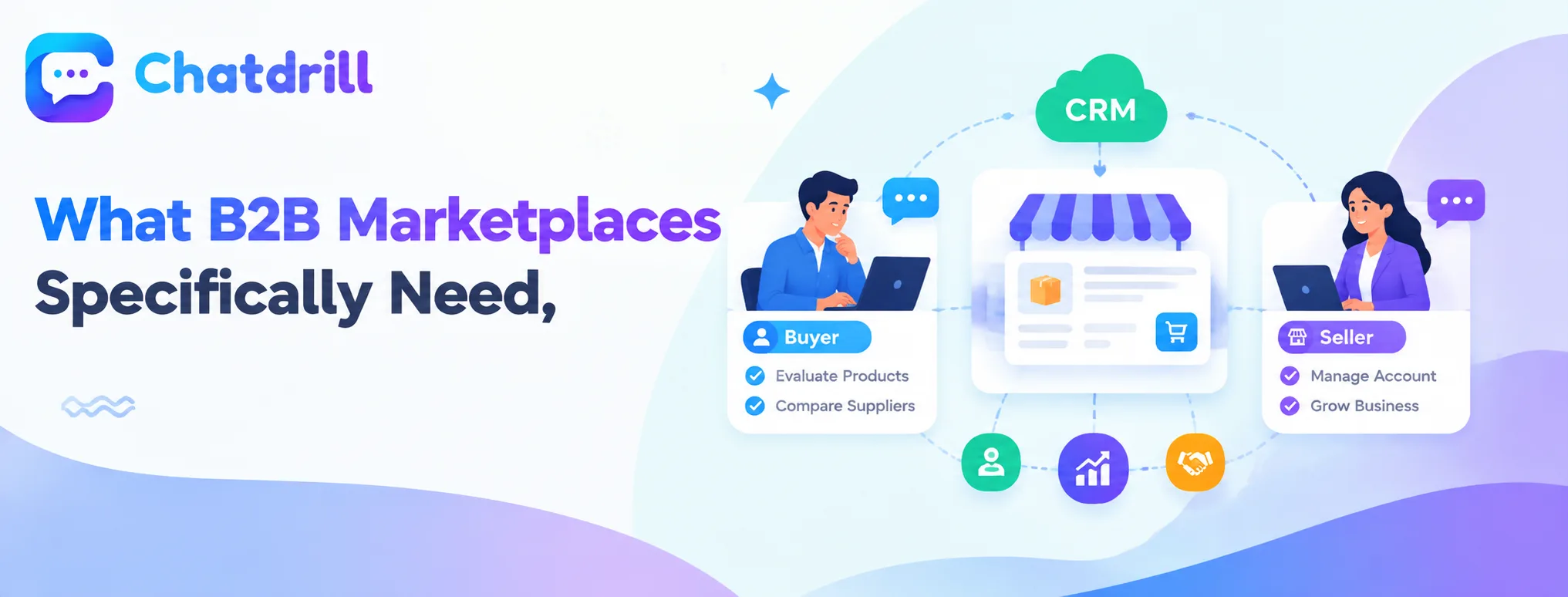
Support for both buyer-side evaluation and seller-side account management, plus strong CRM integration, matter more here than a single-audience tool.
Supporting genuinely different buyer and seller needs
A buyer evaluating suppliers on a B2B marketplace typically needs help with product specifications, supplier credibility, or pricing negotiation questions, while a seller needs support with listing management, account settings, or payment processing, genuinely distinct interaction categories.
A chat platform genuinely well suited to this business model should accommodate both categories thoughtfully, rather than forcing a generic, one-size-fits-all conversation flow onto two structurally different audiences.
Strong CRM integration for genuine lead management
B2B marketplace transactions typically involve a longer, more considered sales cycle than a typical B2C purchase, making genuine integration with CRM and lead-management systems particularly valuable for tracking buyer engagement through this extended process.
This integration need reflects the broader B2B sales cycle characteristics relevant across B2B business models generally, applied here specifically to the marketplace context.
Genuinely Strong Options for This Use Case
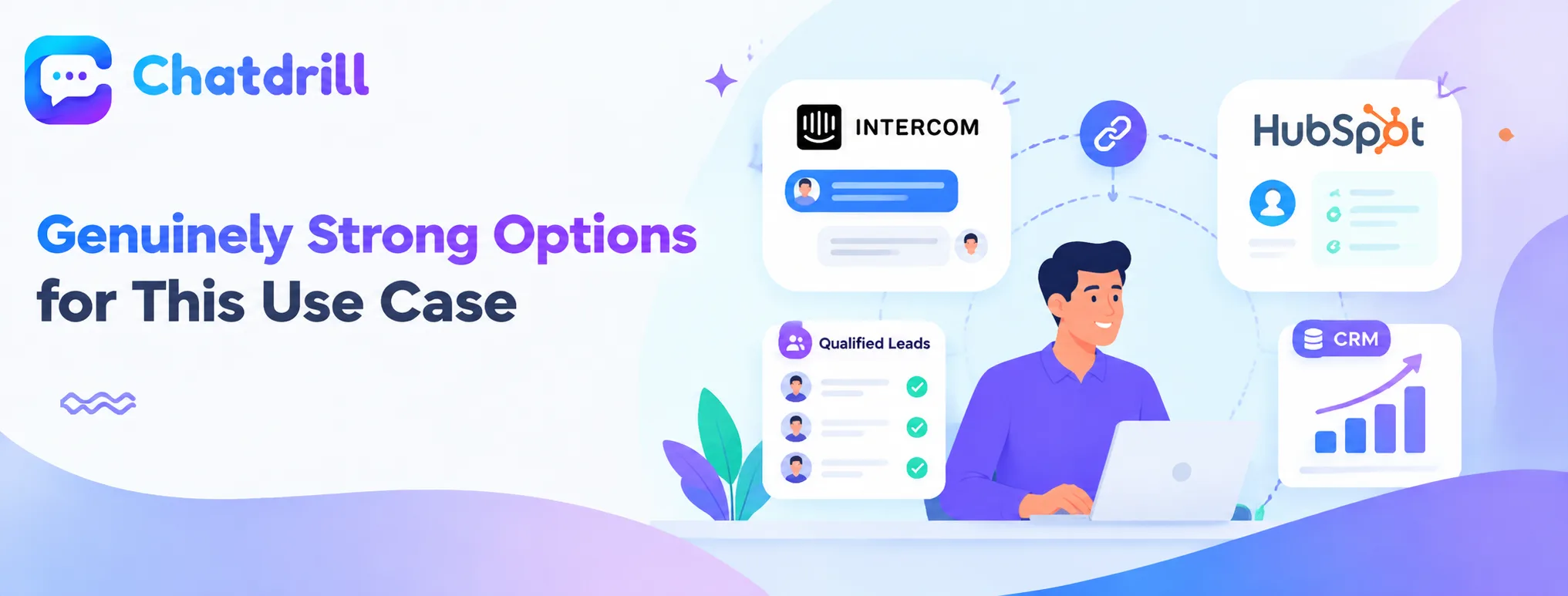
Intercom and HubSpot's chat tool are commonly cited for the CRM integration and lead qualification depth this business model genuinely benefits from.
Intercom for comprehensive B2B engagement capability
Intercom's comprehensive proactive engagement and lifecycle messaging capability suits a B2B marketplace wanting sophisticated, tailored communication for both buyer evaluation and seller account management across the full relationship lifecycle.
This depth comes with a correspondingly higher price point, making it more appropriate for an established marketplace than an early-stage one just launching.
HubSpot's chat tool for genuine CRM-native integration
HubSpot's chat capability, integrated directly within its broader CRM platform, offers genuinely native connection between chat conversations and lead or account data, valuable for a marketplace already using HubSpot for broader relationship management.
This native integration reduces the friction of connecting chat data with actual buyer and seller account information compared to a standalone chat tool without this direct connection.
Common Evaluation Mistakes for B2B Marketplaces
Choosing a tool built purely for one audience side, and underestimating CRM integration importance, are common evaluation mistakes.
Choosing a tool built for only one audience side
Evaluating chat platforms primarily against buyer-support criteria, without considering genuine seller-side needs, or vice versa, misses the dual-sided complexity this guide identifies as central to a marketplace's actual chat requirements.
Evaluating candidate platforms against both audience needs specifically, rather than assuming strength for one implies strength for the other, produces a more genuinely appropriate choice.
Underestimating CRM integration importance
Choosing a chat tool without confirming genuine, deep CRM integration misses the opportunity to connect chat conversations meaningfully with the extended, considered B2B sales cycle this business model typically involves.
Prioritizing this integration specifically, rather than assuming any generic chat platform serves this longer sales-cycle context equally well, produces a more genuinely useful choice.
Key Questions to Ask Before Choosing
Confirming genuine dual-audience configuration capability and testing CRM integration depth directly are the most useful evaluation steps here.
Can this be configured differently for buyers and sellers?
Testing whether a candidate platform genuinely supports distinct configuration, different automated responses, different routing, for buyer-side and seller-side conversations confirms fit with the dual-audience need this guide identifies as central.
This specific test avoids the common evaluation gap of assessing chat software against only one side of a marketplace's genuinely dual-sided business model.
How deep is the genuine CRM integration?
Confirming exactly what data flows between chat conversations and your CRM, not just a superficial connection, reveals whether the integration genuinely supports the extended B2B sales cycle this business model typically involves.
This specific inquiry matters given how directly genuine CRM integration depth affects a marketplace's ability to track and nurture buyer engagement through a longer consideration process.