

Help Scout is fundamentally built around email-first, shared-inbox support, with its Beacon widget adding live chat as a secondary, complementary capability rather than the platform's core architectural focus.
Quick answer: Help Scout is fundamentally an email-first shared inbox platform, with its Beacon widget adding chat as a secondary capability, genuinely well suited to a support team whose core workflow centers on email, while ChatDrill is built chat-first with AI-assisted real-time resolution as its core focus, making the right choice depend on which channel genuinely represents your team's primary support volume.
Comparing ChatDrill against Help Scout means recognizing this genuinely different starting architecture, email as the primary channel with chat added on, versus chat as the primary, foundational focus from the start.
This guide covers the core positioning difference, Help Scout's genuine strengths, common evaluation mistakes, key questions to ask, and how ChatDrill compares for chat-first support needs.
The Core Positioning Difference

Help Scout's email-first architecture with chat as a secondary addition represents a genuinely different foundation than ChatDrill's chat-first, AI-assisted focus.
Help Scout's email-first foundation
Help Scout is built fundamentally around a shared email inbox, with its Beacon widget adding live chat capability as a secondary, complementary feature rather than the platform's core architectural focus.
This email-first design suits a support team whose core workflow genuinely centers on email-style, asynchronous communication, with chat serving a supporting, additional role.
ChatDrill's chat-first, AI-assisted focus
ChatDrill is built with real-time chat and AI-assisted resolution as its core, primary focus from the start, a genuinely different foundation than a platform where chat was added onto an email-first architecture.
This distinction means the right choice depends on whether your team's primary support volume genuinely centers on email or real-time chat specifically.
Help Scout's Genuine Strengths
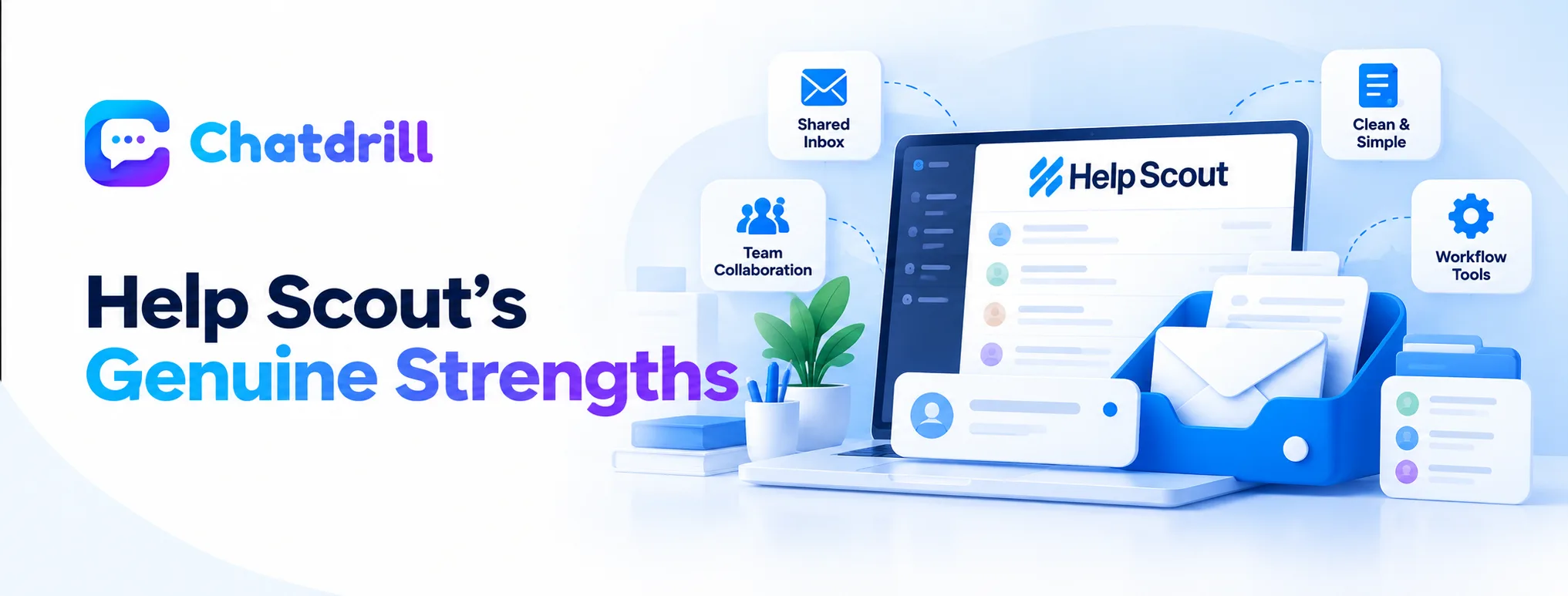
Mature, well-refined email management capability and a genuinely clean, simple interface represent Help Scout's most compelling capabilities.
Mature, well-refined email management
Help Scout's email management capability, refined specifically for this core use case over a longer product history, offers genuine depth for a team whose primary support channel is email specifically.
This maturity reflects deliberate, focused investment in serving email-centric support workflows particularly well.
A genuinely clean, simple interface
Help Scout is widely recognized for a clean, intuitive interface that many support teams find genuinely pleasant and easy to learn, a real, worthwhile design quality regardless of the specific channel focus.
This interface quality reflects genuine, deliberate design investment that benefits a team's daily experience using the platform.
Common Evaluation Mistakes
Assuming Help Scout's Beacon chat matches a chat-first platform's AI depth, and choosing based on interface polish alone without confirming channel fit, are common mistakes.
Assuming equivalent chat and AI depth
Assuming Help Scout's Beacon chat widget, added onto its core email-first platform, matches the AI-assisted resolution depth of a platform built chat-first from the ground up risks a genuine capability gap for a business prioritizing real-time chat specifically.
Testing the actual, specific chat capability directly, rather than assuming feature parity, reveals whether either platform genuinely fits your particular, chat-focused needs.
Choosing based on interface polish without channel fit
Selecting Help Scout purely for its genuinely appealing interface, without confirming whether email or chat genuinely represents your team's primary support channel, risks a mismatch between a pleasant tool and your actual workflow needs.
Honestly evaluating your team's actual, primary communication channel first, as this guide's positioning section recommends, produces a more genuinely appropriate choice.